Scientists measured nanoscale structural alterations in the brains of mice after chronic corticosterone administration using a novel nanoscale optical imaging technique and gene expression analysis.


Scientists measured nanoscale structural alterations in the brains of mice after chronic corticosterone administration using a novel nanoscale optical imaging technique and gene expression analysis.
How T cells maintain homeostasis and maximize the size of the peripheral T cell pool are important questions that have fascinated both immunologists and mathematicians.

Unique selection pressures can lead to curious outcomes.

Bacteria are able to build biofilm bridges to connect with adjacent bacterial colonies.

Researchers in Germany exploit enzymes to break down and recycle the most widely-used plastic for packaging.

Improving the density and longevity of information storage.
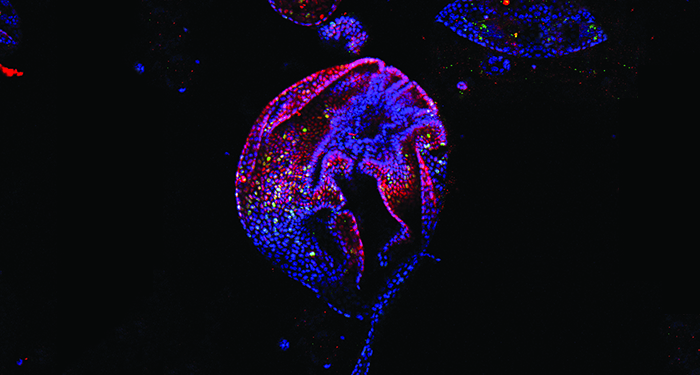
Intact whole-mount immunostaining of organoids after growth for 14 days.
Arsenic trioxide is a promising novel latency-reversing agent to achieve the goal of eradicating HIV-1.
The human gut microbiome governs not only our physical health but mental well-being.
Brain organoids model normal human brain development and can be used to answer questions related to development, evolution, and disease.
 New theory suggests gravity is not a fundamental force
 Higgs boson may be driving the Universe’s expansion
 Water-powered gadgets may be on the horizon thanks to new evaporation-based energy device
 Scientists discover a new class of antibiotics
 Micron-sized hidden dimensions could solve two of physics’ deepest puzzles
 A new type of dark matter could explain mysterious radiation from the Milky Way’s core