Cone-shaped gold nanoparticles are activated by ultrasonic waves, with applications in cost-effective targeted drug delivery.
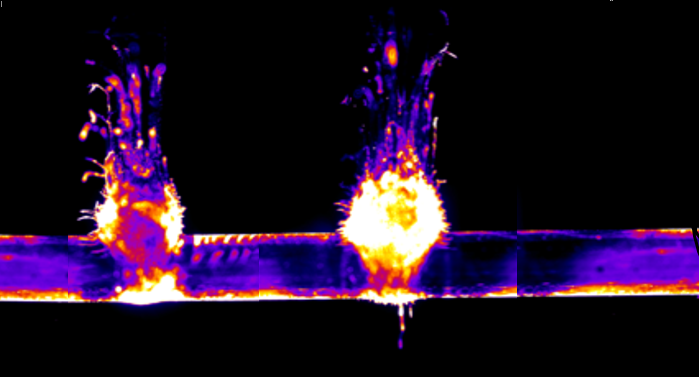

Cone-shaped gold nanoparticles are activated by ultrasonic waves, with applications in cost-effective targeted drug delivery.
![Microfluidic Devices for Affordable Personalized Healthcare [Video]](https://www.advancedsciencenews.com/wp-content/uploads/2018/04/adma201705759_ASN_image.jpg)
Muhammad Mustafa Hussain and co-workers from King Abdullah University of Science and Technology address the potential of complementary metal-oxide semiconductor (CMOS)-based microfluidic devices for affordable personalized healthcare.

A colloidal nanocrystal layer enables 2D to 3D shape transformations of “hard” inorganic materials.

A team from the USA have developed a technique for making gold nanoparticles from old SIM cards .
![3D Microflower Cathode Promotes Oxygen Diffusion in Lithium–Oxygen Batteries [Video]](https://www.advancedsciencenews.com/wp-content/uploads/2018/04/aenm201800089_ASN_image.png)
Dr. Mingsen Zheng, Prof. Quanfeng Dong, and co-workers from Xiamen University design a plant-inspired, high-performance cobalt sulfide–porous carbon foil (PCF) electrode for lithium–air (Li–O2) batteries.
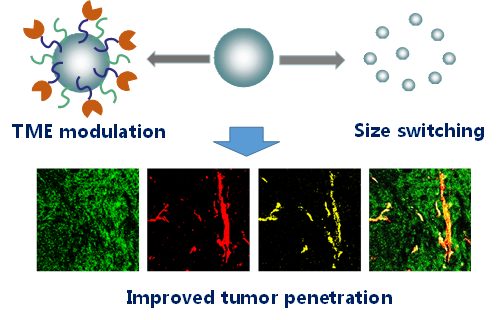
Rational design of nanoparticles with state-of-the-art strategies can effectively improve the penetration as well as therapeutic efficacy of cancer nanomedicines
![Separating Chiral Molecules with Thermoresponsive Nanotubes [Video]](https://www.advancedsciencenews.com/wp-content/uploads/2018/04/smll201800030_ASN_image.jpg)
Dr. Naohiro Kameta from the National Institute of Advanced Industrial Science and Technology (AIST) and colleagues design thermoresponsive poly(ethylene glycol) (PEG)-coated nanotubes for simple and efficient separation of chiral molecules.

An Israeli team of researchers found a self‐calibration point for near‐infrared human finger tissue measurements.

The ability to fabricate a multilayer functional ceramic with tailored pore structure using the preceramic-paper technology in conjunction with calendaring, lamination and sintering is demonstrated.

A team of researchers from the UK present the application of wavelength modulated Raman spectroscopy for the automated label‐ and fluorescence‐free classification of fixed squamous epithelial cells in suspension, such as those produced during a cervical smear test.


 Micron-sized hidden dimensions could solve two of physics’ deepest puzzles
 Turning Periods into Power: Menstrual Blood a Valuable Resource for Medical Diagnostics
 Surfactants Steer Supraparticle Structure
 Bone loss in obesity traced to gut microbiota
 Edible electronics realize safe, complex monitoring devices
 Fermilab Confirms Muon g-2 Measurements