ETH researchers have developed plasmonic particles that are relatively easy to produce and have a wide range of applications, including cancer treatment.
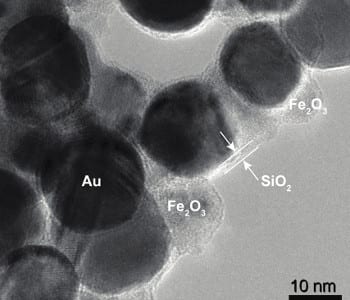

ETH researchers have developed plasmonic particles that are relatively easy to produce and have a wide range of applications, including cancer treatment.

Interview with Professor Joanna Aizenberg as new member of the Editorial Advisory Board of the journal Advanced Materials.

A combination of nanotechnology and a unique twisting property of light could lead to new methods for ensuring the purity and safety of pharmaceuticals.
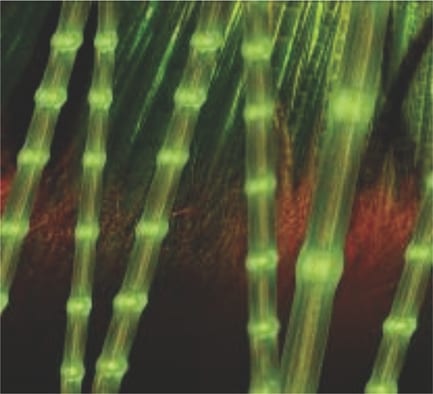
A biomimetic one-step fabrication approach is utilized to generate bamboo-like hybrid fibers at the micro- and nanoscale.
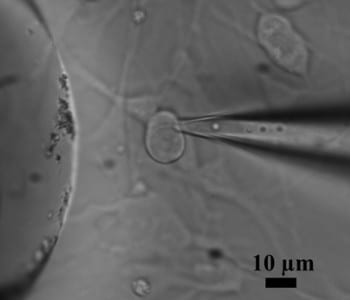
Silica-coated gold nanorods with absorption at precisely 780 nm cause action potentials in nerve cells when exposed to laser light.
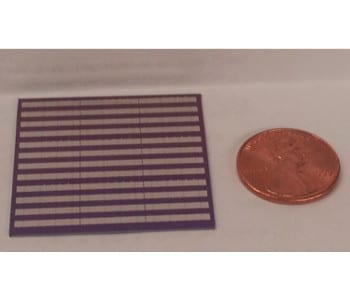
Researchers create an artificial chemical sensor based on one of the human body’s most important receptors.
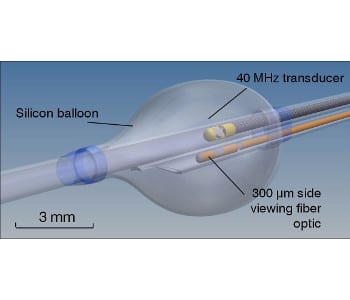
Multispectral fluorescence lifetime imaging system with ultrasound guidance could improve intravascular diagnostics and analysis of atherosclerotic lesions.
A study to investigate how nanoparticles could be used to improve the diagnosis and treatment of cardiovascular disease has received £3 million funding.

Interview of Professor Zhenan Bao on the occasion of her addition to the Editorial Advisory Board of the journal Advanced Materials.
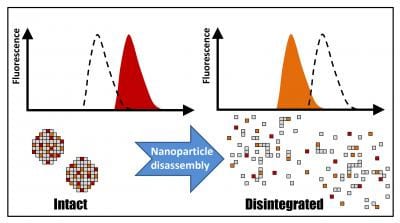
New method allows researchers to directly measure nanoparticle degradation in real time within biological environments.
 French WEST reactor breaks record in nuclear fusion
 New theory suggests gravity is not a fundamental force
 Quantum entanglement visualized for the first time ever
 An anti-inflammatory peptide may hold the key to low-back pain relief
 “Cosmic vine” discovered by the James Webb Space Telescope
 The Road to Better Presentation of Data: The Do’s and Don’ts
 Could a nuclear explosion set Earth’s atmosphere on fire?
 The dramatic story behind general relativity’s Nobel Prize snub
 Calculating the true environmental costs of AI
 Ibuprofen’s effect on red blood cells: A prickly affair