Biomaterials are engineered to improve the safety and efficacy of current cancer immunotherapies.


Biomaterials are engineered to improve the safety and efficacy of current cancer immunotherapies.

Science fact catches up with science fiction: by exploiting magnetic levitation, biomanufacturing – creating living 3D structures – is now possible in zero gravity. Utkan Demirci discusses how this works.

Researchers investigated whether a spider silk protein developed in the laboratory could be suitable for engineering cardiac tissue.

Researchers in Barcelona have proposed a new mechanism for bone repair. They hope that the work might pave the way for advances in self-healing prostheses.

An integrative approach of modeling and hydrogen-deuterium exchange helps to describe the enzyme that regulates glycogen levels in muscles and liver.
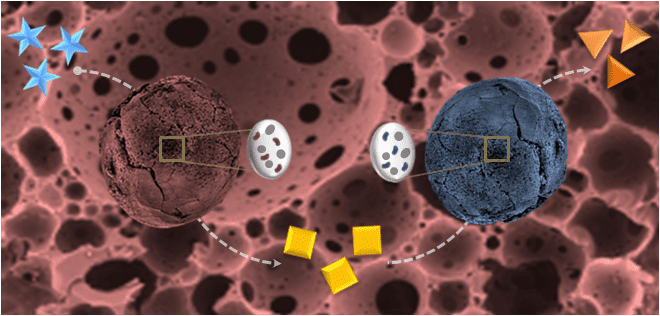
Bacteria trapped inside porous beads function as efficient living biocatalysts and can be assembled to perform preprogrammed sequences of reactions.

A team of American scientists used photoacoustic computed tomography to image the blood vascular network of a whole mouse brain through the intact skull, with high resolution and substantial depth.
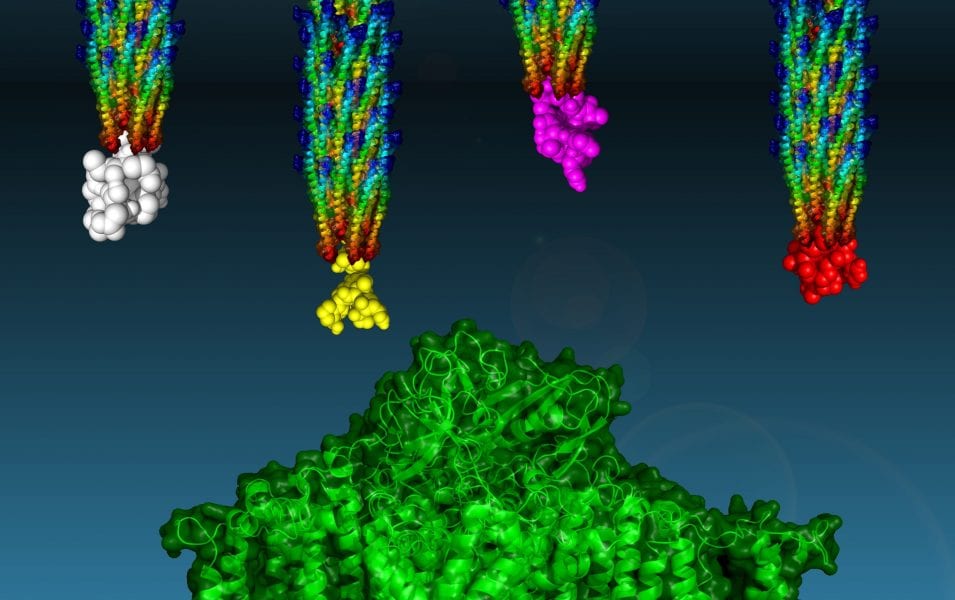
Biophotovoltaic devices by incorporation of oriented Photosystem I via phage display.

Researchers design a bio-inspired batoid robot from non-toxic hydrogels operated with Au microelectrodes.

Water is a resource that humans cannot live without. It is considered one of the major global challenges faced by our world. Current desalination techniques have limitations, including salt accumulation, and extracting water from ground sources has been less studied....
 New theory suggests gravity is not a fundamental force
 Higgs boson may be driving the Universe’s expansion
 Water-powered gadgets may be on the horizon thanks to new evaporation-based energy device
 Scientists discover a new class of antibiotics
 Micron-sized hidden dimensions could solve two of physics’ deepest puzzles
 A new type of dark matter could explain mysterious radiation from the Milky Way’s core