Luis Liz-Marzán on nanoparticles, a concerning trend in science, and his future research plans.


Luis Liz-Marzán on nanoparticles, a concerning trend in science, and his future research plans.

Solvation free energies contribute to the driving force of molecular processes in solution and play a significant role for the relative stability of biomolecular conformations or the formation of complexes. Changes in solvation free energy are the origin of solvent‐mediated interactions such as the hydrophobic effect in water.

RNA processing has emerged as a key mechanistic step in the regulation of the cellular response to environmental perturbation.

A review of optogenetically engineered cells and their applications.

PISA allows for the complete synthesis of chemical systems without using biochemistry.

New research from India shows that vitamin E may prove beneficial to alleviate chemotherapy associated side effects in cancer patients.
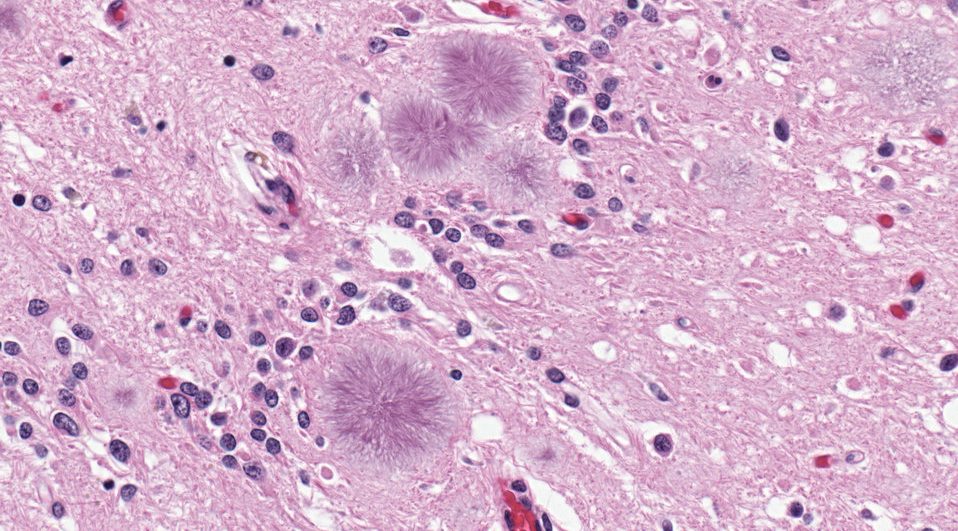
Amyloid peptides have a bad rep as the villains of human diseases like Alzheimer’s. But research is showing that they might not be all bad after all.
![Human Pulse Diagnosis with a Wearable Piezoelectret Sensing System [Video]](https://www.advancedsciencenews.com/wp-content/uploads/2018/10/adfm201803413_thumbnail.jpg)
A wearable piezoelectret sensor has been developed for pressure-based human pulse measurement.
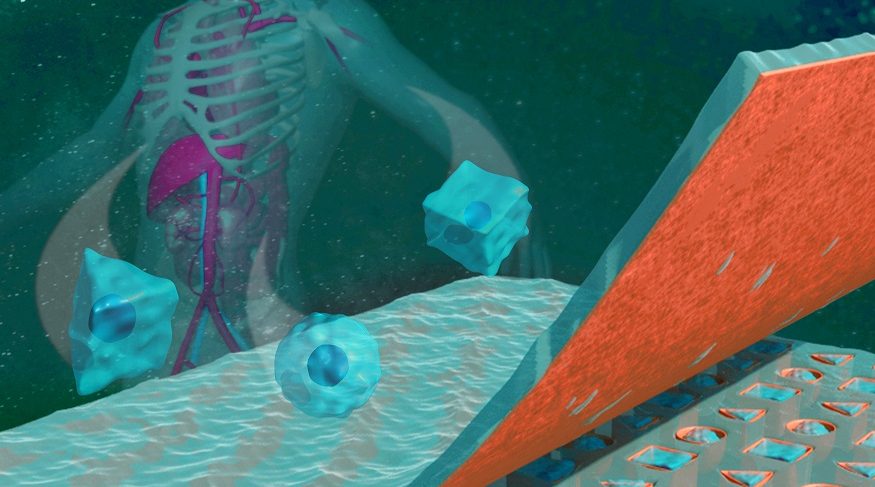
How best to engineer synthetic microenvironments for developing and maintaining living tissues inside synthetic compartments is discussed.

A hybrid dual‐wavelength optoacoustic biomicroscope is developed to provide better insights into cerebrovascular function and facilitate efficient studies into neurological and vascular abnormalities of the brain.
 New theory suggests gravity is not a fundamental force
 Higgs boson may be driving the Universe’s expansion
 Water-powered gadgets may be on the horizon thanks to new evaporation-based energy device
 Scientists discover a new class of antibiotics
 Micron-sized hidden dimensions could solve two of physics’ deepest puzzles
 A new type of dark matter could explain mysterious radiation from the Milky Way’s core