Implantable silk composite microneedles for programmable vaccine release kinetics and enhanced immunogenicity in transcutaneous immunization.
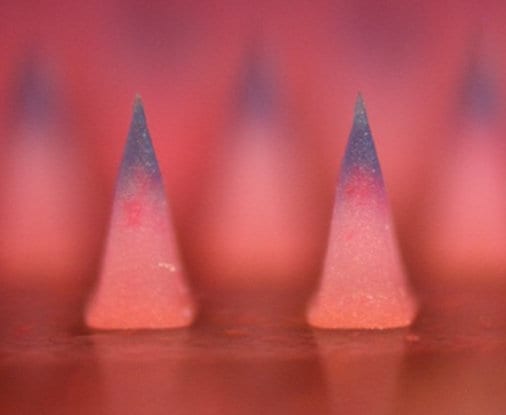

Implantable silk composite microneedles for programmable vaccine release kinetics and enhanced immunogenicity in transcutaneous immunization.
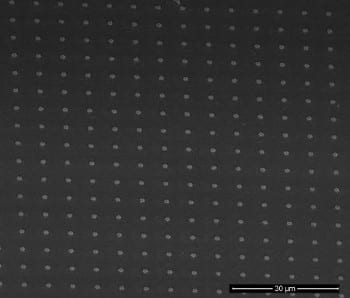
Caltech researchers devise a method to protect the materials in a solar-fuel generator.
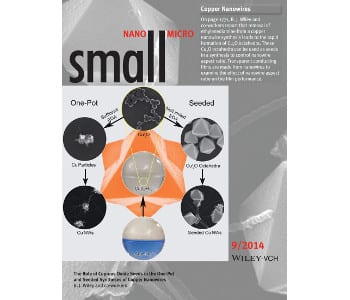
New research from Duke University may clarify the questions remaing in the synthesis of Cu nanowires via the EDA-mediated method.
Rice, Göttingen, VU researchers track single-molecule proteins in living cells.

Procedure spins extremely tough filaments from tiny cellulose fibrils by aligning them all in parallel during the production process.
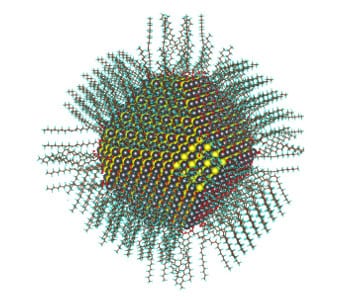
Results explain the passivation mechanism of semiconducting nanocrystal surfaces.
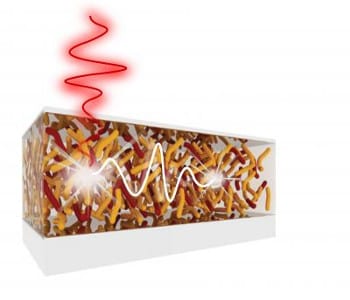
Scientists from the University of Southampton have developed a new hybrid energy transfer system that mimics the processes responsible for photosynthesis.
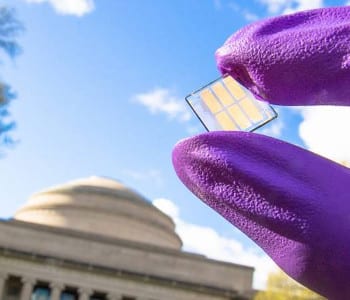
Rate of improvement of quantum dot devices is one of the most rapid seen for a solar technology.
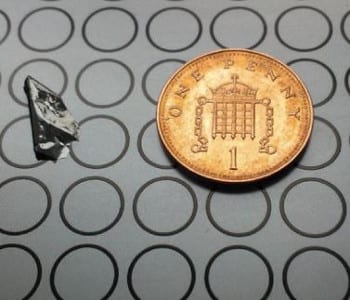
Triazine-based graphitic carbon nitride has the potential to improve transistors used in electronic devices.

Optical frequency comb technology for ultra-broadband radio-frequency photonics.
 New theory suggests gravity is not a fundamental force
 Higgs boson may be driving the Universe’s expansion
 Water-powered gadgets may be on the horizon thanks to new evaporation-based energy device
 Scientists discover a new class of antibiotics
 Micron-sized hidden dimensions could solve two of physics’ deepest puzzles
 A new type of dark matter could explain mysterious radiation from the Milky Way’s core