
Eric Betzig, Howard Hughes Medical Institute, Stefan Hell, Max Planck Institute for Biophysical Chemistry, and William Moerner, Stanford University, share award for the development of super-resolved fluorescence microscopy.
Technology
Modeling blood capillaries to prevent shock
Monitoring of blood capillary/vessel patterns with spatially resolved diffuse reflectance spectrometry might allow for the early detection of clinical shock.

LEDs win Japanese researchers 2014 Nobel Prize in Physics
2014 Nobel Prize in Physics awarded to inventors of efficient blue LEDs.
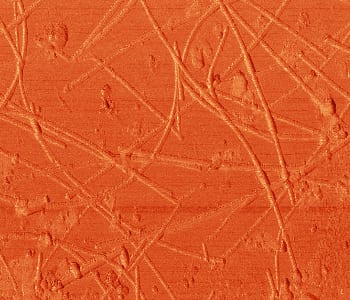
Graphene as a building block for flexible touchscreens
Graphene-treated nanowires could soon replace current touchscreen technology, reducing production costs and allowing for more affordable, flexible displays.
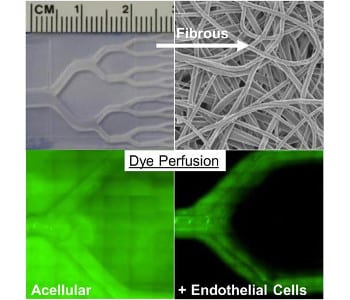
Microvascular electrospun scaffolds
A combination of 3D printing and electrospinning can be used for micropatterning fibrous scaffolds that are suturable, porous, and biodegradable.
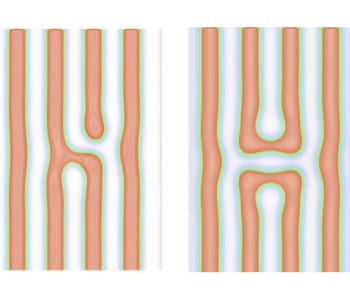
A consistent search for low-defect polymers
The Fredrickson group at UC Santa Barbara uses self-consistent field theory to explore the formation of defects in diblock copolymers.
How transparent can a layer of gold be?
Experiments have resulted in gold films with a theoretically expected transparency of over 80% in the visible range.
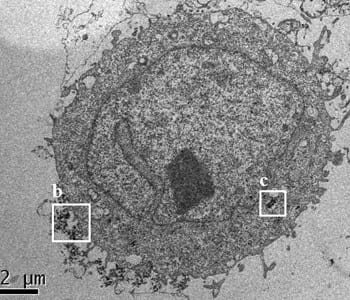
Biological and nanotoxicity assay for cellular nanoparticles
The combination of flow cytometry and X-ray fluorescence enables semi-quantitative estimation of cellular SiO2 nanoparticles and their biological effects.
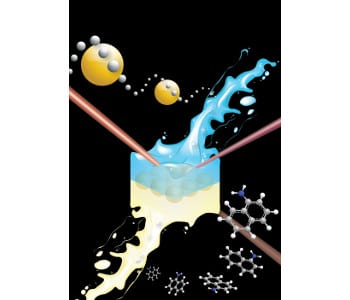
Liquid interface allows multiple interactions for detection
A liquid interface has the unique capability to provide a common meeting point for hydrophobic, hydrophilic and airborne species, allowing them all to interact.
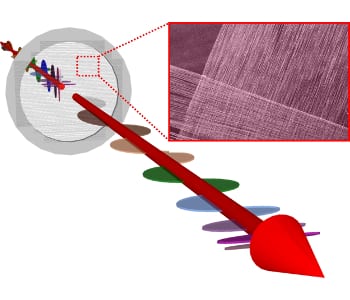
Carbon nanotube broadband polarisers
Cole et al. report the fabrication of free-standing, horizontally aligned carbon nanotube membranes.
Popular
-
 New theory suggests gravity is not a fundamental force
-
 Higgs boson may be driving the Universe’s expansion
-
 Water-powered gadgets may be on the horizon thanks to new evaporation-based energy device
-
 Scientists discover a new class of antibiotics
-
 Micron-sized hidden dimensions could solve two of physics’ deepest puzzles
-
 A new type of dark matter could explain mysterious radiation from the Milky Way’s core