Macromolecular Chemistry and Physics presents new and exciting developments in the synthesis and properties of precision polymers, guest-edited by Michael R. Buchmeiser.
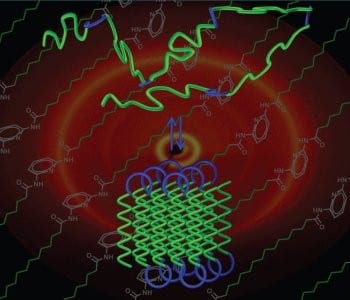

Macromolecular Chemistry and Physics presents new and exciting developments in the synthesis and properties of precision polymers, guest-edited by Michael R. Buchmeiser.
US engineering company Lockheed Martin has reported that it has developed a new design for a fusion reactor that could be in use in a decade.
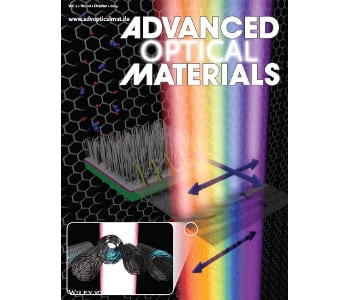
Check out the articles highlighted on the covers of the latest issue of Advanced Optical Materials.
Researchers show how a unique nano-alloy composed of palladium nano-islands embedded in tungsten nanoparticles creates a new type of catalyst.
BASF have inaugurated its expanded mobile emissions catalysts manufacturing operation in Shanghai, China.
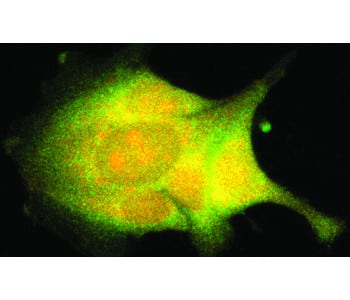
Researchers have described composite nanorods that consist of long iron segments and short gold tips and can be functionalized with biomolecules of interest.
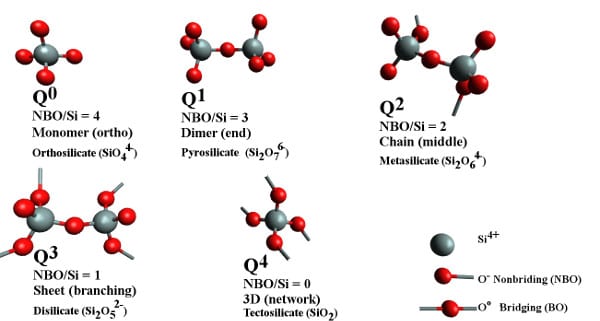
Utah researchers are leading an investigation on the chemistry of slag under the conditions of a transformational ironmaking technology being developed.
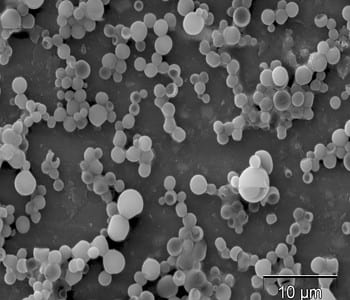
Researchers have developed a cancer imaging and therapy agent composed of PLGA microparticles encapsulating a perfluorocarbon liquid core.
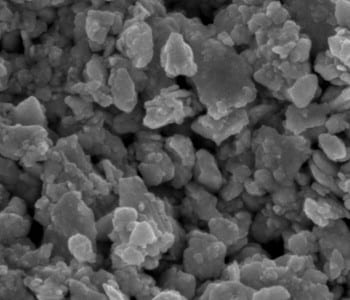
Korean researchers have developed lightweight commercial gamma radiation shielding based on tungsten/polyethylene nanocomposites.
A Chinese research group has taken a molecular engineering approach to optimize the solubility and thin-film morphology of low-bandgap polymers.
 New theory suggests gravity is not a fundamental force
 Higgs boson may be driving the Universe’s expansion
 Water-powered gadgets may be on the horizon thanks to new evaporation-based energy device
 Scientists discover a new class of antibiotics
 Micron-sized hidden dimensions could solve two of physics’ deepest puzzles
 A new type of dark matter could explain mysterious radiation from the Milky Way’s core