A fabric-based haptic sleeve controls drone flight through arm movement and helps train users by applying corrective forces to body joints.
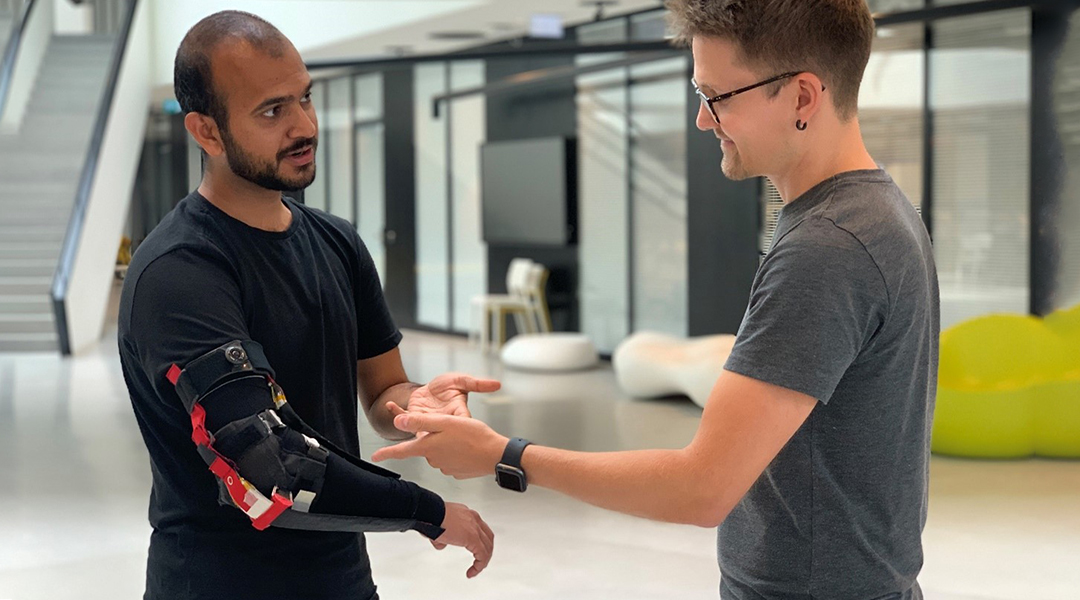

A fabric-based haptic sleeve controls drone flight through arm movement and helps train users by applying corrective forces to body joints.
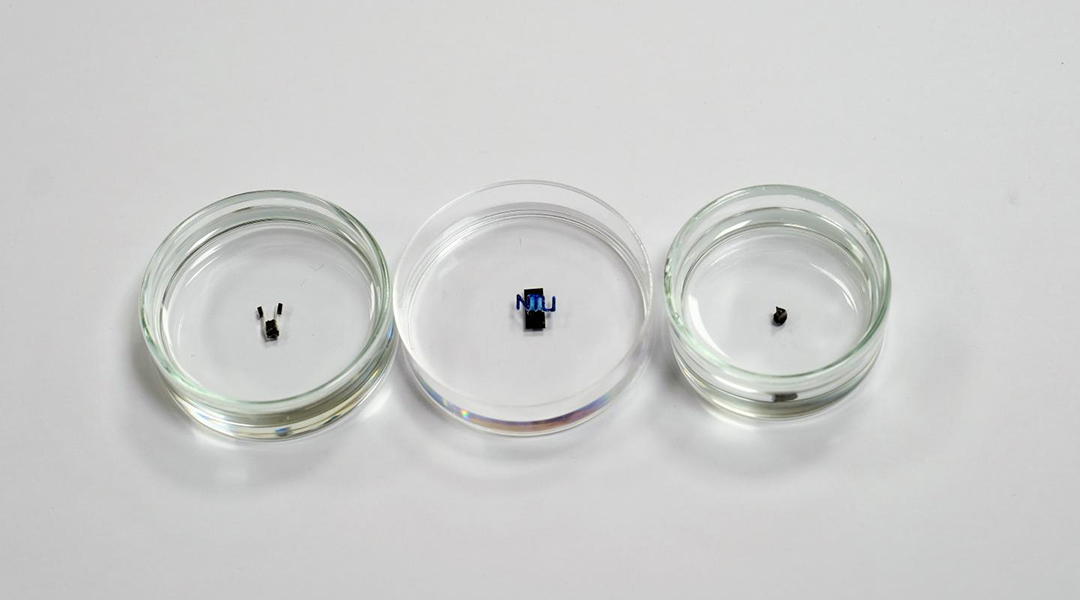
Researchers create swimming, moving, gripping miniature robots.

Researchers teach robots to make appropriate reactive human facial expressions, an ability that could build trust between humans and their robotic co-workers and care-givers.

A new material helps robots analyze and navigate their environments by scanning codes invisible to the human eye.

Asteroids are always pelting Earth, but what happens if the big one comes along? The European Space Agency’s new asteroid telescope is coming to the rescue.
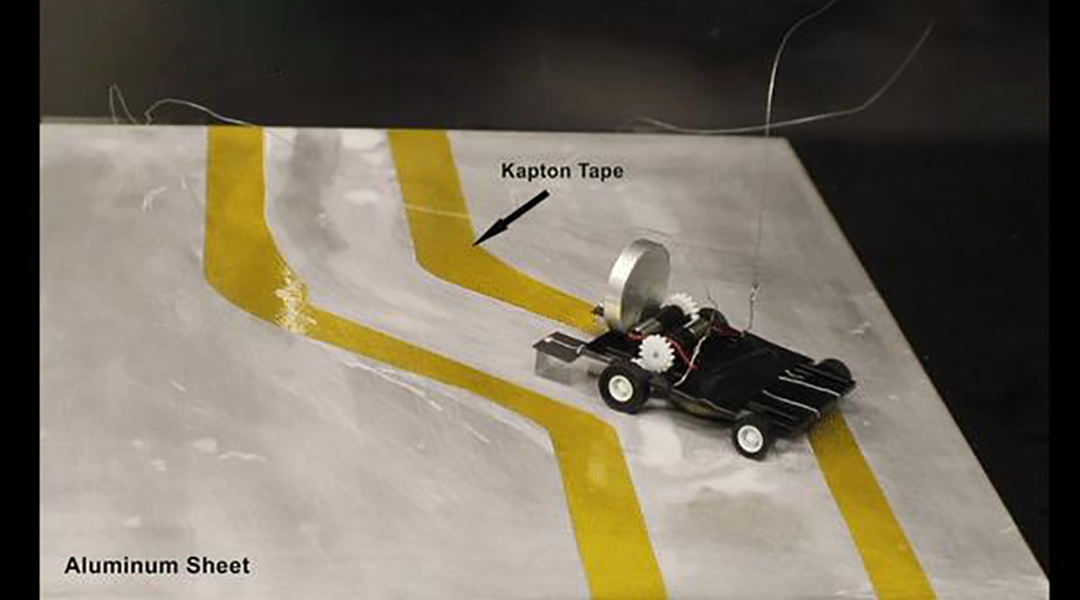
The “metal-eating” robot can follow a metal path without using a computer or needing a battery.
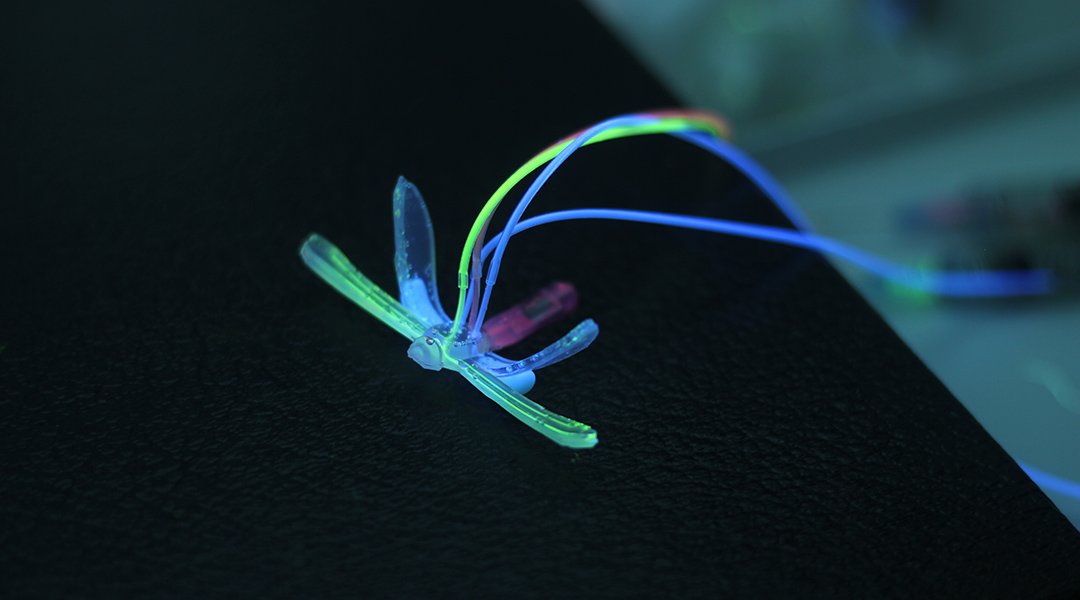
Electronics-free DraBot uses air pressure, microarchitectures, and self-healing hydrogels to watch for changes in pH, temperature, and the presence of contaminants.
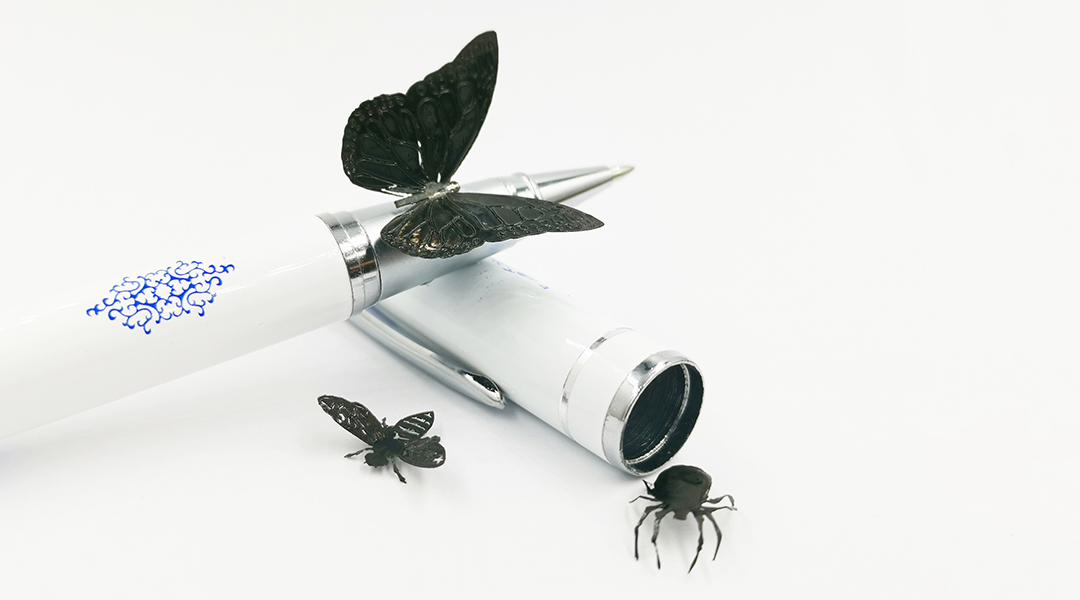
Researchers recreate the somatic nervous system in robots, allowing them to convert feeling into movement under different stimuli.
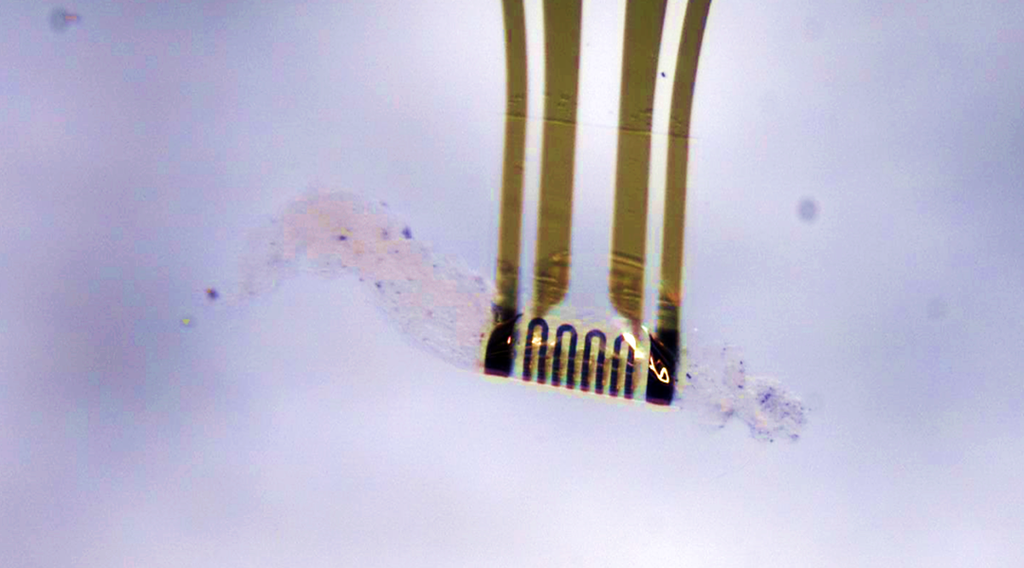
Thanks to ultra-thin sensors and artificial muscles, future flexible microelectronics will be able to take on complex shapes to better interface with delicate biological tissues without causing damage.

Building inclusive education systems will be key to ensuring no one is left behind and that advances in AI and robotics benefit everyone in society.


 Micron-sized hidden dimensions could solve two of physics’ deepest puzzles
 Turning Periods into Power: Menstrual Blood a Valuable Resource for Medical Diagnostics
 Surfactants Steer Supraparticle Structure
 Bone loss in obesity traced to gut microbiota
 Edible electronics realize safe, complex monitoring devices
 Fermilab Confirms Muon g-2 Measurements