A recent special issue of Advanced Materials, issue 45 in 2017, was dedicated to highlighting nature-inspired surface and materials research at Beihang University in Beijing, China.


A recent special issue of Advanced Materials, issue 45 in 2017, was dedicated to highlighting nature-inspired surface and materials research at Beihang University in Beijing, China.

DNA origami nanobiosensor: The binding of the bioanalyte (left) with the ssDNA-associated bioreceptor (center) on the surface of the DNA origami is transduced as a measurable change in properties (right) that can be recognized and quantified by a detector.

Nanoprobe-based methods can sample the content of a single living cell without affecting its viability.
![Building Functional Bio-Nanostructures Using “Protein Bricks” [Video]](https://www.advancedsciencenews.com/wp-content/uploads/2018/03/adma201705919_ASN_image.png)
A team of researchers construct spider-silk-based “Protein Bricks” with on-demand shape and function for biomedical applications.
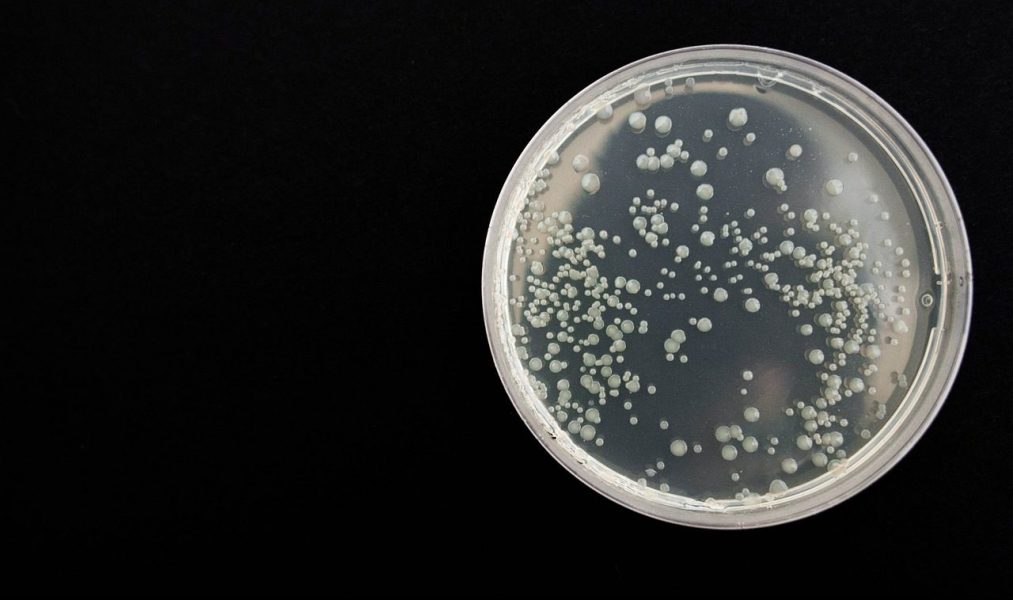
A team of Chinese researchers investigated the plasma-induced inactivation behavior of several bacteria without and with the presence of chloride.

Qantas used biofuel processed from a non-food, industrial type of mustard seed for a historic trans-Pacific 15 hour flight saving 18 000kg in carbon emissions.

Multipartite designer nanoparticles are formed from the phage lambda decoration protein and can be used in a variety of theranostic applications.

This month’s Advanced Engineering Materials covers and top papers!

Robust electronic skin by utilizing supramolecular chemistry to produce a tough, self-healing elastic material.
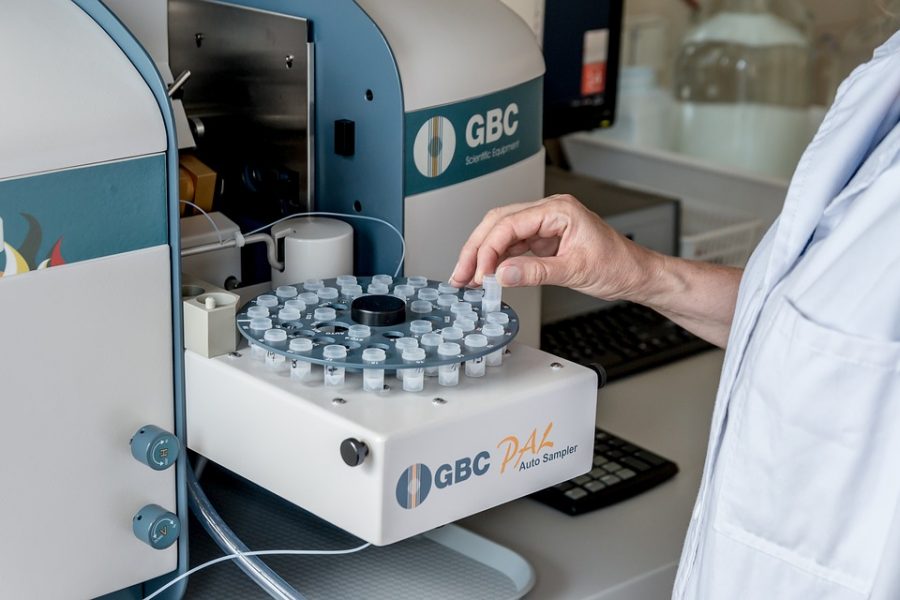
Special Issue: Biochemistry of Protein‐Protein and Protein‐Lipid Interactions: Applications to Biotechnology
 New theory suggests gravity is not a fundamental force
 Higgs boson may be driving the Universe’s expansion
 Water-powered gadgets may be on the horizon thanks to new evaporation-based energy device
 Scientists discover a new class of antibiotics
 Micron-sized hidden dimensions could solve two of physics’ deepest puzzles
 A new type of dark matter could explain mysterious radiation from the Milky Way’s core