Researchers at Texas A&M have observed dynamics that could otherwise be discounted as noise in DNA/small molecule interactions.
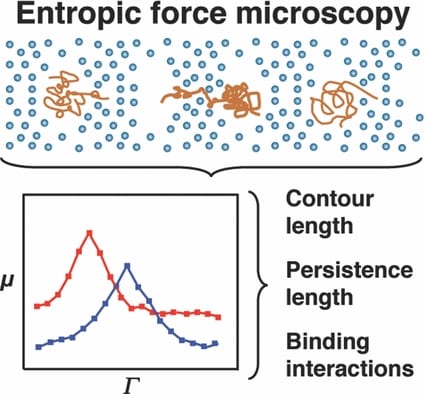

Researchers at Texas A&M have observed dynamics that could otherwise be discounted as noise in DNA/small molecule interactions.
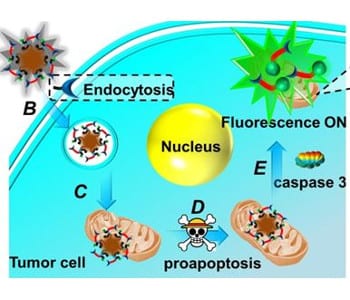
Dr. Xian-Zheng Zhang and co-workers have fabricated a biodegradable chimeric peptide for cancer therapy and real-time apoptosis imaging.
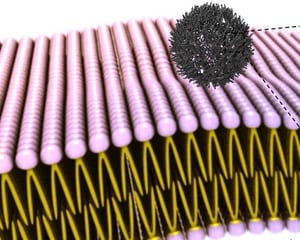
Researchers in Australia have developed a microscopic on-off light to help investigate how drug delivery systems interact with cells.
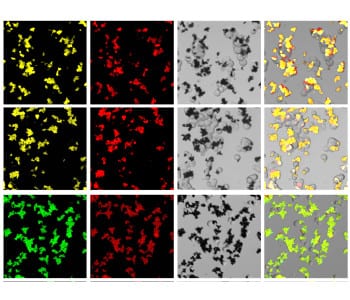
Researchers have reported a new method for detecting cancer cells, using SERS and fluorescence dual-encoded magnetic nanoprobes.
Researchers at Nankai University report the design and engineering of a recombinant protein that can be used for drug-delivering hydrogels.
Xuesi Chen and co-workers from the Changchun Institute of Applied Chemistry explore the potential of combining chemotherapy with antiangiogenic therapy.
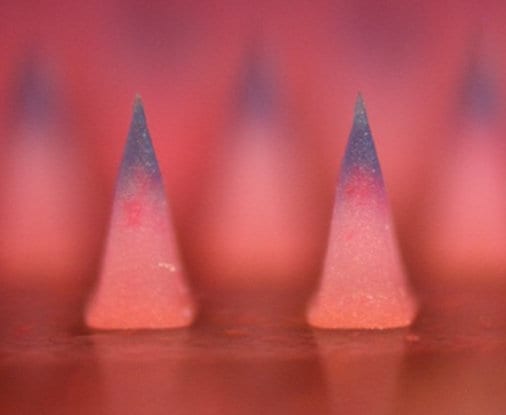
Implantable silk composite microneedles for programmable vaccine release kinetics and enhanced immunogenicity in transcutaneous immunization.
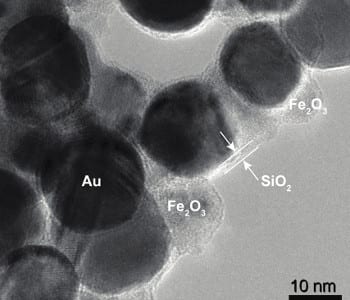
ETH researchers have developed plasmonic particles that are relatively easy to produce and have a wide range of applications, including cancer treatment.
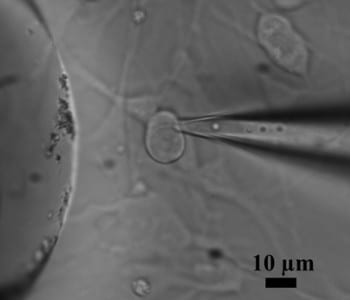
Silica-coated gold nanorods with absorption at precisely 780 nm cause action potentials in nerve cells when exposed to laser light.
A study to investigate how nanoparticles could be used to improve the diagnosis and treatment of cardiovascular disease has received £3 million funding.
 New theory suggests gravity is not a fundamental force
 Higgs boson may be driving the Universe’s expansion
 Water-powered gadgets may be on the horizon thanks to new evaporation-based energy device
 Scientists discover a new class of antibiotics
 Micron-sized hidden dimensions could solve two of physics’ deepest puzzles
 A new type of dark matter could explain mysterious radiation from the Milky Way’s core