Micro-porous PEG hydrogels are functionalized with collagen type-I that has a selective response with human hepatocarcinoma cells.
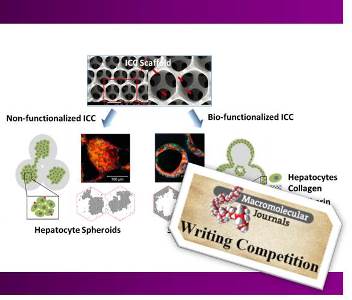

Micro-porous PEG hydrogels are functionalized with collagen type-I that has a selective response with human hepatocarcinoma cells.

A zwitterionic polynorbornen-modified surface facilitates growth and proliferation of model endothelial cells.
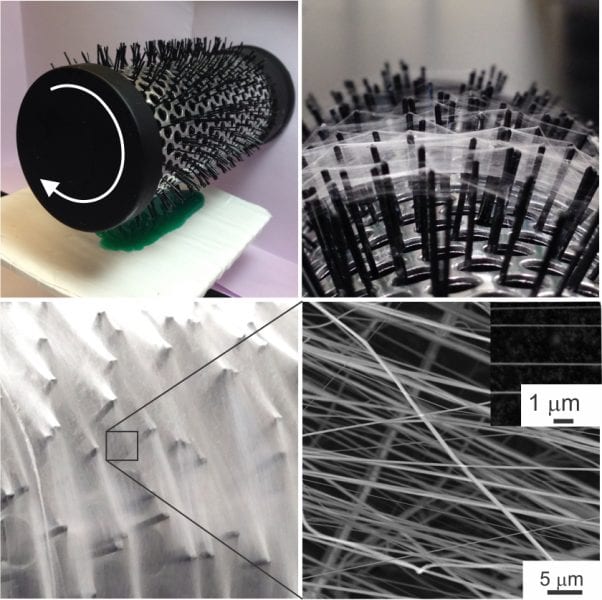
Touch- and brush-spinning methods for drawing of nanofibers, core–shell nanofibers, and their aligned 2D and 3D meshes have been developed.
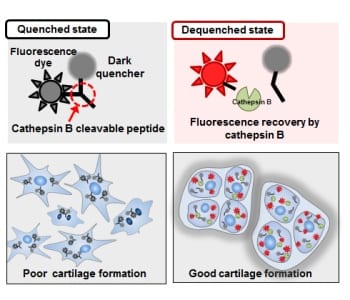
Cathepsin B molecular imaging has been shown to be a powerful tool in reflecting the potential of cartilage formation and predicting the quality of cartilage.
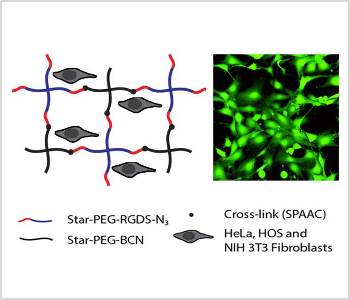
Soft biocompatible PEG hydrogels with tunable mechanical properties and RGDS-content have been prepared by Löwik et al. using a copper free-click reaction.
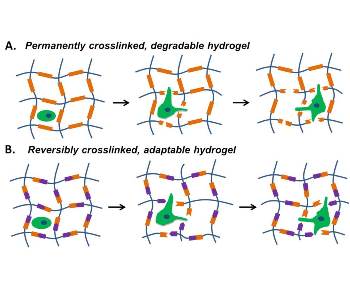
Recent advances in the design of adaptable hydrogels for cell-encapsulation, cell-culture, and cell-transplantation applications are reviewed.

Dr. Mehdi Jorfi and Prof. E. Johan Foster review the applications of nanocellulose in various biomedical applications.
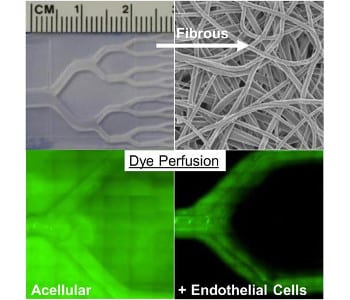
A combination of 3D printing and electrospinning can be used for micropatterning fibrous scaffolds that are suturable, porous, and biodegradable.
Japanese researchers have reported a unique method for structural organization of engineered tissue construct.

Professor Ali Khademhosseini spoke to us about his research into regenerative medicine at the 2014 ACS National Meeting in San Francisco.

 Micron-sized hidden dimensions could solve two of physics’ deepest puzzles
 Turning Periods into Power: Menstrual Blood a Valuable Resource for Medical Diagnostics
 Bone loss in obesity traced to gut microbiota
 Surfactants Steer Supraparticle Structure
 Edible electronics realize safe, complex monitoring devices
 Fermilab Confirms Muon g-2 Measurements