A recent special issue of Advanced Materials, issue 45 in 2017, was dedicated to highlighting nature-inspired surface and materials research at Beihang University in Beijing, China.


A recent special issue of Advanced Materials, issue 45 in 2017, was dedicated to highlighting nature-inspired surface and materials research at Beihang University in Beijing, China.
![Waterborne Polyurethanes for Eco-Friendly Hair Styling [Video]](https://www.advancedsciencenews.com/wp-content/uploads/2018/04/adma201706237_ASN_image.jpg)
Researchers from Living Proof, Inc., in coordination with Robert Langer of the Massachusetts Institute of Technology, describe the synthesis of over 300 waterborne polyurethanes and demonstrate their effectiveness for environmentally friendly, long-lasting, durable hair styling.
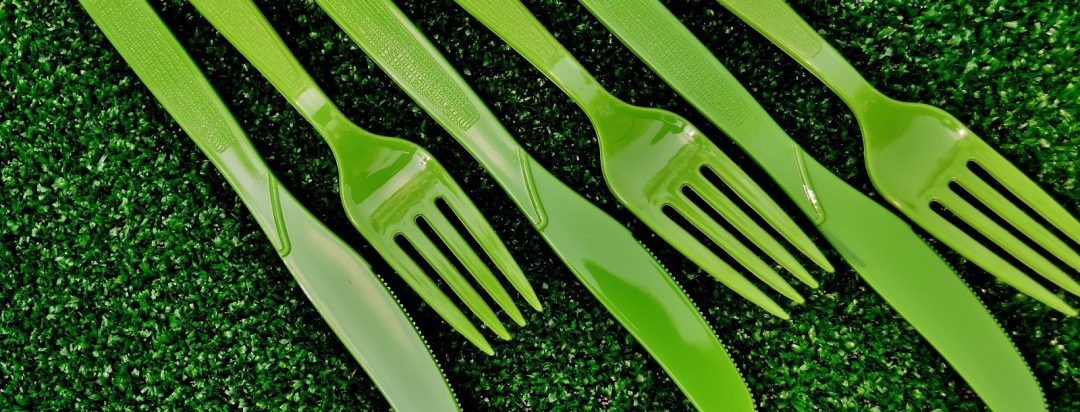
A Spanish consortium of indutry and science is seeking for new compostable materials for mass-market single-use products like tableware, packages and single-use bags.

The important role of surface-bound hydroxy groups of vanadium catalysts under reaction conditions by employing in situ DRIFTS experiments and DFT calculations is elucidated.

IR-driven transfer of plasmon-induced hot electrons in a nonmetallic branched heterostructure, by combining ultrafast transient absorption spectroscopy with theoretical simulations, is demonstrated for the first time.

A novel way to measure rainfall, namely using microwave links from cellular communication networks as path-average rain gauges, is discussed.

Betanin may help slow the progression of Alzheimer’s disease.
Novel heterojunction material for efficient water splitting and hydrogen production operating in a broad range of pH conditions.

Scholars in different fields have contrasted the fates of societies or communities that were “vulnerable” to climate change with those that seem to have been “resilient” or even consciously or unconsciously adaptive in the face of the Little Ice Age.
Historically, the focus has been: how much water does the environment need? Finding the “right” allocation of water between consumptive and environmental water uses is a question of allocative efficiency. However, once water is allocated to the environment, question becomes: how can we get the best outcomes from this water?
 New theory suggests gravity is not a fundamental force
 Higgs boson may be driving the Universe’s expansion
 Water-powered gadgets may be on the horizon thanks to new evaporation-based energy device
 Scientists discover a new class of antibiotics
 Micron-sized hidden dimensions could solve two of physics’ deepest puzzles
 A new type of dark matter could explain mysterious radiation from the Milky Way’s core