Scientists from Italy and the USA present an innovative processing method for the fabrication of 3D scaffolds for bone tissue engineering using either fused deposition or conventional hot extrusion.
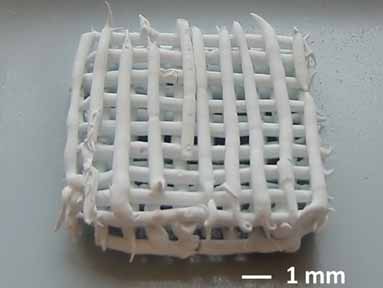

Scientists from Italy and the USA present an innovative processing method for the fabrication of 3D scaffolds for bone tissue engineering using either fused deposition or conventional hot extrusion.

Researchers for the University of California, Irvine, have developed a new drug-delivery system using protein-based nanoparticles.

Dutch researchers present a new theoretical model to explain the better than expected power conversion efficiencies reported for organic solar cells.
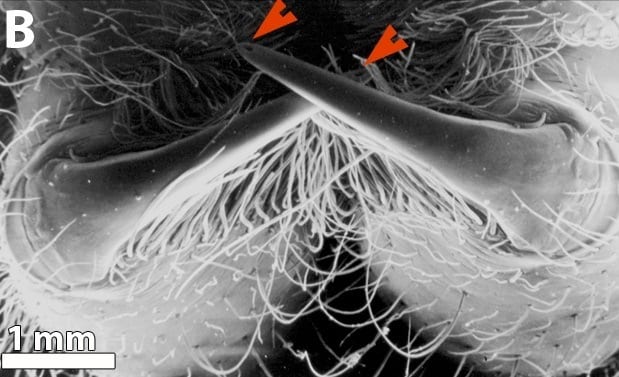
Prof. Peter Fratzl and co-workers analyzed the structure of spider fangs to gain a better understanding of chitin-based biomaterials.
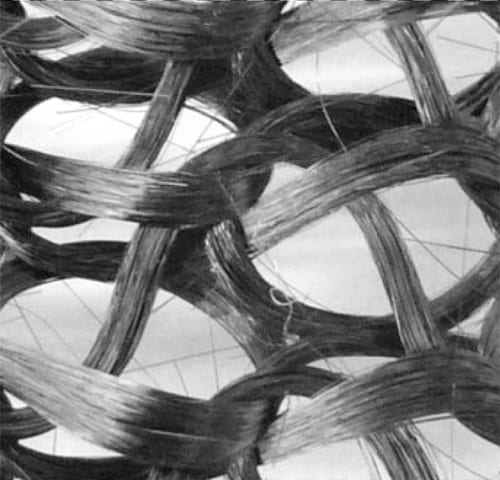
Germany scientists manufactured knitted fabrics made of silicon carbide fiber. These knitted carbon fibers offer a superior flexibility, wide range of pore size, and a higher degree of drapability.

Spider silk shows intriguing properties for cell culture. Now, researchers try to find the ideal scaffolds for applications in the field of biomedical research and regenerative medicine.

A new type of probe for detecting highly toxic cyanide anions has been developed by Professor F. Li and co-workers at Fudan University, China.
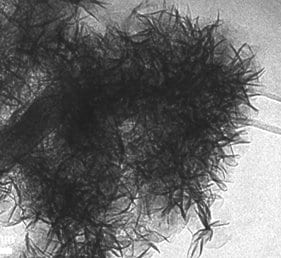
A Chinese research team have constructed a powerful new supercapacitor using two types of graphene – composite and porous.
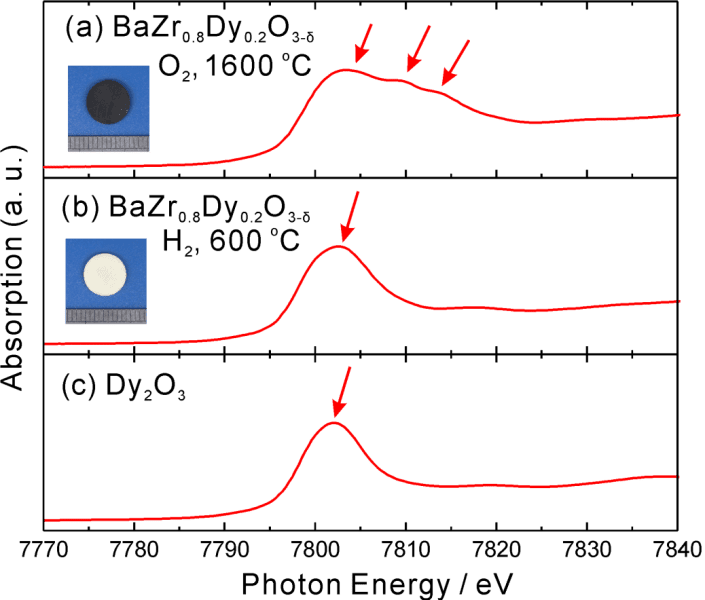
Professor Tetsuya Uda and co-workers have uncovered the first evidence of tetravalent dysprosium in a crystalline oxide material.

Researchers have utilized silver complexes as lubricating oil additives to engineer an efficient and cost-effective lubricant.
 New theory suggests gravity is not a fundamental force
 Higgs boson may be driving the Universe’s expansion
 Water-powered gadgets may be on the horizon thanks to new evaporation-based energy device
 Scientists discover a new class of antibiotics
 Micron-sized hidden dimensions could solve two of physics’ deepest puzzles
 A new type of dark matter could explain mysterious radiation from the Milky Way’s core