An open problem of many-body physics, related to isolated quantum systems, is reviewed for a Bose-Einstein condensate.

An open problem of many-body physics, related to isolated quantum systems, is reviewed for a Bose-Einstein condensate.
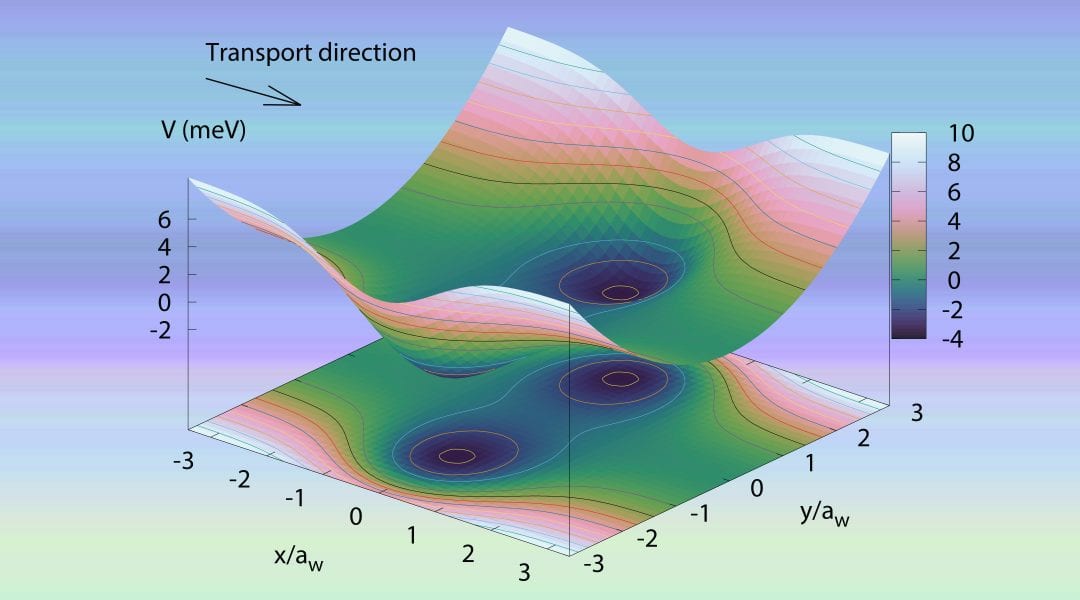
Electroluminescence caused by the transport of interacting electrons through parallel quantum dots in a photon cavity is presented.
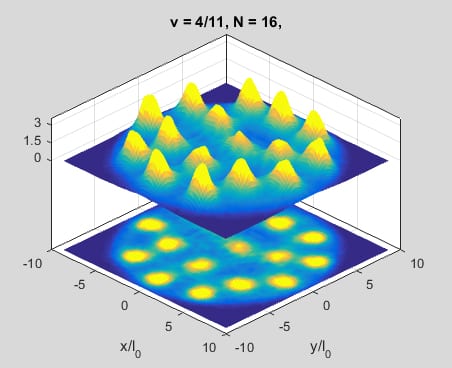
Exchange-correlation holes are commonly studied with the help of pair distribution functions. However, it would be instructive to identify configurations of arguments, λ, which correspond to maxima of system’s probability distributions.
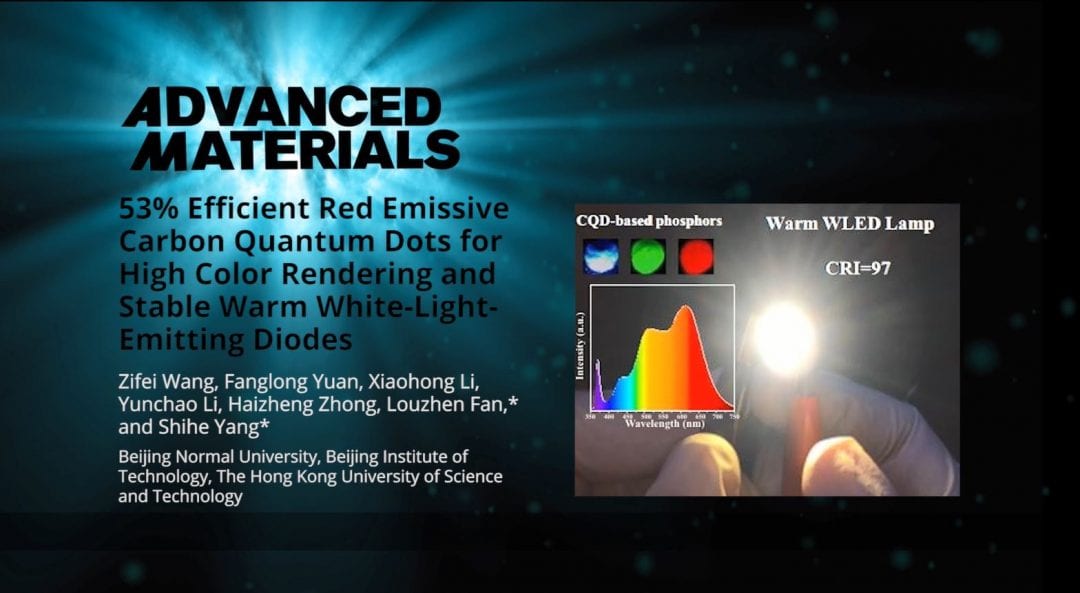
Highly efficient, red-emissive carbon quantum dots (R-CQDs) with a quantum yield of 53% are prepared and a CQD-phosphors-based warm white-light-emitting diode (WLED) is realized for the first time.

An avalanche photodiode design with a quantum dot multiplication structure attains a high maximum gain factor and a superior gain noise performance.
Many-body localized systems are central to the functioning of modern quantum computing devices. Yet, many-body localization is not completely understood.
Scientists have shown that the Landau Lifshitz gravitational energy momentum pseudo-tensor can be generalized to metric theories of gravity, where the terms of any order in the derivatives of the metric are present.
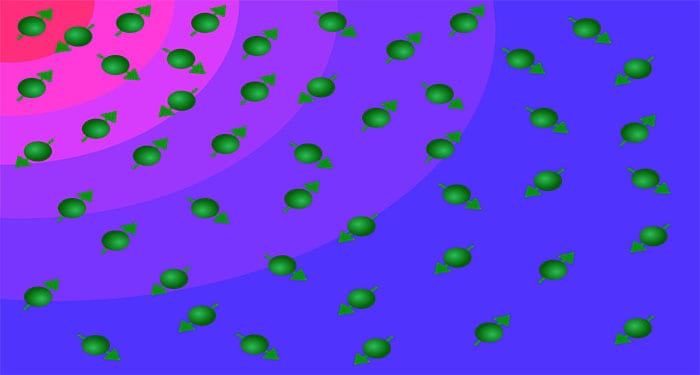
Possible mechanisms for energy transfer based on ‘rare’ or ‘non-perturbative’ effects, in physical systems that present a many-body localized phenomenology are reviewed.
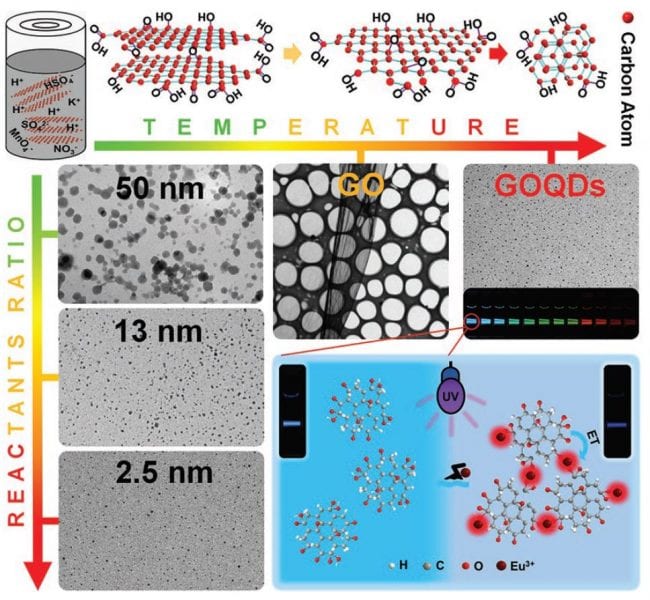
A facile one-pot solvothermal method that allows selective synthesis of pure graphene oxide (GO) and pure GO quantum dots.
A historic article by Max Planck, first published (in print) in 1901 has reached the top 5% of scores in Altmetrics.

 Water-powered gadgets may be on the horizon thanks to new evaporation-based energy device
 Micron-sized hidden dimensions could solve two of physics’ deepest puzzles
 Turning Periods into Power: Menstrual Blood a Valuable Resource for Medical Diagnostics
 Kirigami-inspired neural probes are a cut above
 Immune resilience gene signature could hold the key to healthy aging
 Surfactants Steer Supraparticle Structure