A new hybrid catalyst technology with reduced platinum content delivers lower system costs and improved ORR activity, stability, and fuel cell performance.
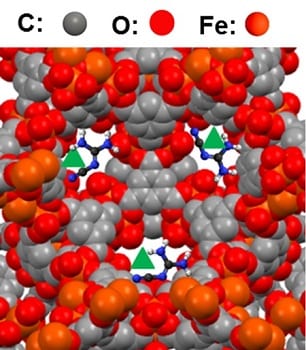

A new hybrid catalyst technology with reduced platinum content delivers lower system costs and improved ORR activity, stability, and fuel cell performance.
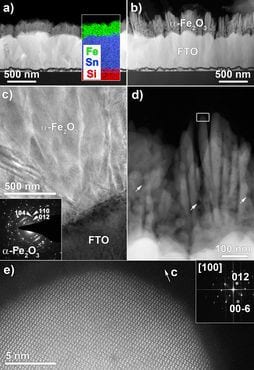
In 2014, the renowned Electron Microscopy for Materials Science (EMAT) research lab at the University Antwerp, Belgium, and Leica Microsystems started a fruitful collaboration to establish a Leica Reference Site in Antwerp.
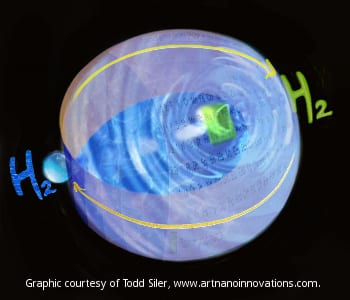
In his latest piece, Professor Ozin considers the possibility of basing a future hydrogen economy on platinum catalysts.
ChemNanoMat is a recently launched journal from Wiley-VCH and ACES that covers the latest discoveries in nanomaterials chemistry. These articles represent the top ten most downloaded papers in the month of August and are all free to access.

This themed issue of steel research international on High Manganese Steels, guest-edited by Wolfgang Bleck, presents some highlights from the HMnS 2014.

Indoor and outdoor stability measurements are used to compare the lifetime of fully roll-to-roll organic solar cell modules.
A collection of the most outstanding articles published in Energy Technology in the past twelve months.
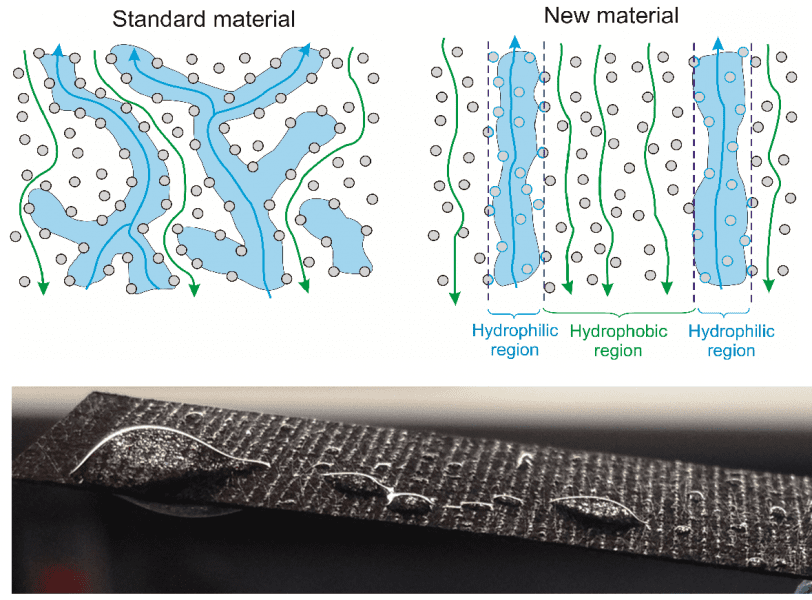
Researchers at the Paul Scherrer Institute have developed a coating technique that improves water management in fuel cells, thus raising their efficiency.

A team of researchers at Stanford University has developed shape-controlled, self-wrapping electronics based on carbon nanotubes.
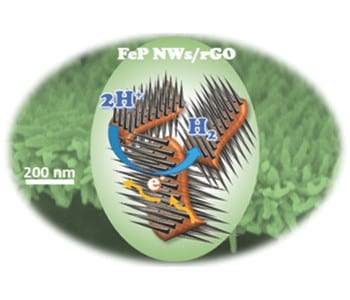
A new study in Advanced Science presents the development of a new nanocomposite material electrocatalyst for more efficient hydrogen production.

 Micron-sized hidden dimensions could solve two of physics’ deepest puzzles
 Turning Periods into Power: Menstrual Blood a Valuable Resource for Medical Diagnostics
 Surfactants Steer Supraparticle Structure
 Bone loss in obesity traced to gut microbiota
 Edible electronics realize safe, complex monitoring devices
 Fermilab Confirms Muon g-2 Measurements