Flexible perovskite photovoltaic cells on ultra-thin glass achieve remarkable efficiencies under indoor illumination.


Flexible perovskite photovoltaic cells on ultra-thin glass achieve remarkable efficiencies under indoor illumination.

Scientists have developed a method for precise, fast, and high-quality laser processing of halide perovskites, promising light-emitting materials for solar energy, optical electronics, and metamaterials.

Researchers use the ancient art of Kirigami folding to create flexible electronic devices from paper and diversify the applications of next-generation sensors, robots, and diagnostic devices.
Highly technical language alienates and frustrates readers. Even when specialized terms are defined, the damage is done

4D-printed microneedles may one day replace conventional hypodermics.

Researchers develop a biomimetic flow channel module that facilitates continuous process water analysis in washing machines.
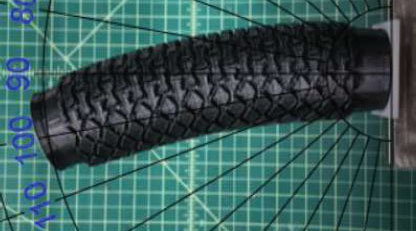
Researchers from UC Berkeley are utilizing deep learning to bypass iterative finite element calculations. Their deep learning model is trained using finite element simulation data to predict the deformation behavior of favorable designs.

Hydrogels that incorporate whole algal cells offer new possibilities in building architecture and bioremediation.

Machine learning enables the manufacturing of highly compressible nano-scale devices.
Welcome to the virtual Best of Advanced Engineering Materials 2019 issue that presents the Editors' selection of some of the most outstanding articles of the past year! Advanced Engineering Materials brings the latest breakthroughs in structural materials with a...
 New theory suggests gravity is not a fundamental force
 French WEST reactor breaks record in nuclear fusion
 Higgs boson may be driving the Universe’s expansion
 Researchers replicate gravitational lensing in the lab
 Water-powered gadgets may be on the horizon thanks to new evaporation-based energy device
 Cold shock from ice baths leads to stronger cells