A hydrogel interferometer is revealed as a simple and universal adaptive color platform.
![Bioinspired Hydrogel Interferometer for Adaptive Coloration and Chemical Sensing [Video]](https://www.advancedsciencenews.com/wp-content/uploads/2018/05/adma201800468_ASN_image.png)

A hydrogel interferometer is revealed as a simple and universal adaptive color platform.
![Early-Stage Cancer Detection with a Lanthanide-Based Metal Organic Framework [Video]](https://www.advancedsciencenews.com/wp-content/uploads/2018/04/adfm201707169_ASN_image_002.png)
Researchers from Nankai University and the Collaborative Innovation Center of Chemical Science and Engineering in Tianjin, China, demonstrate a luminescent sensor based on a lanthanide metal–organic framework (Ln-MOF) for early detection of cancer.
![Trans-Scale Biosensing Interface for Ultrasensitive Detection [Video]](https://www.advancedsciencenews.com/wp-content/uploads/2018/04/adfm201706981_ASN_image.jpg)
Dr. Fan Yang and Prof. Guo-Jun Zhang from Hubei University of Chinese Medicine, and co-workers, engineer a trans-scale biosensing interface capable of ultrasensitive microRNA detection.
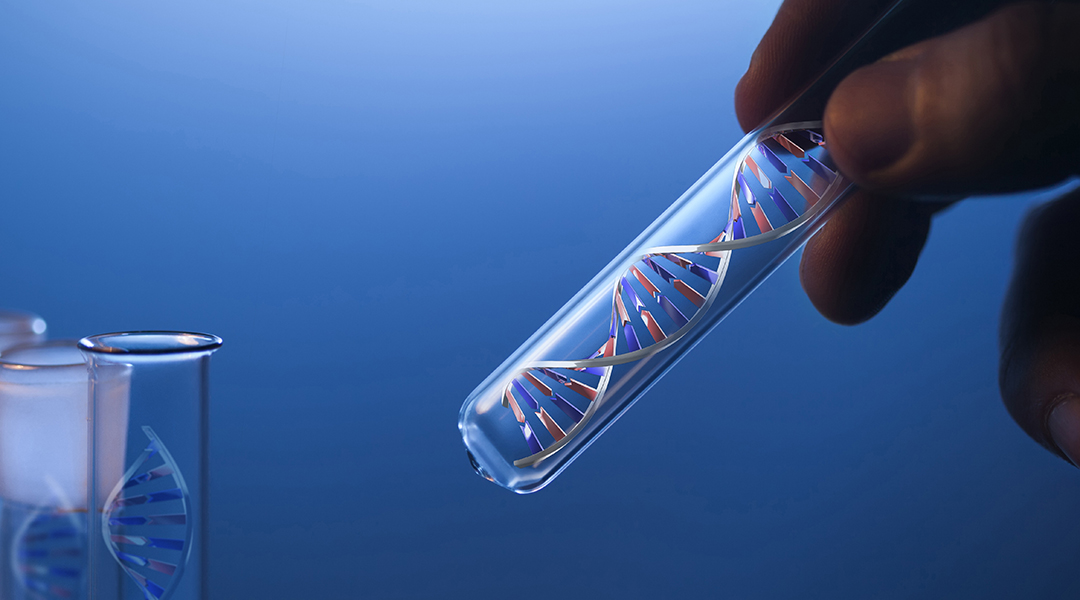
DNA origami nanobiosensor: The binding of the bioanalyte (left) with the ssDNA-associated bioreceptor (center) on the surface of the DNA origami is transduced as a measurable change in properties (right) that can be recognized and quantified by a detector.
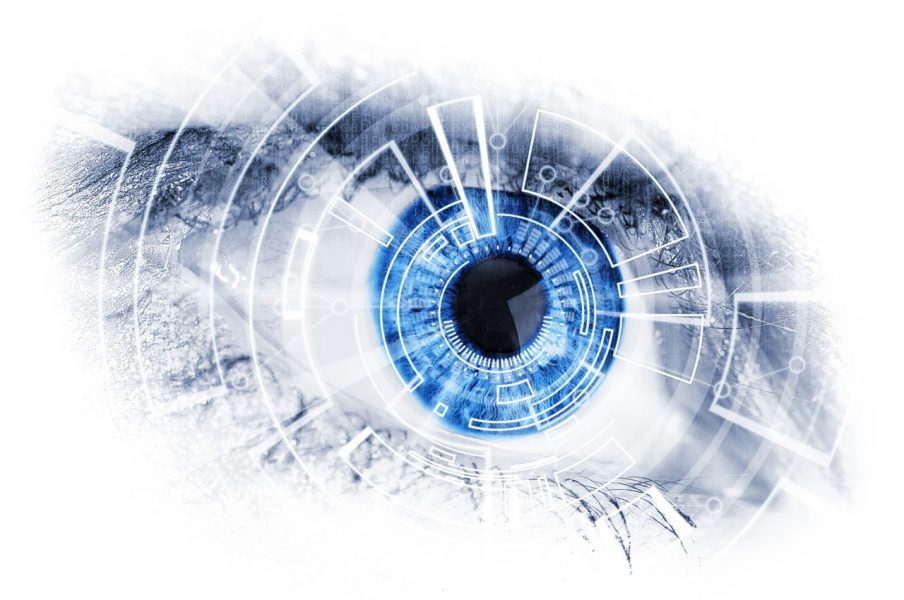
A transparent and breathable microfluidic contact lens that could help to diagnose and treat eye disease is developed.

A wearable soft microfluidic device with sequentially filling reservoirs can collect, store, and analyze sweat in situ from almost any part of the body.
![3D e-Whiskers for Complex Sensing Applications [Video]](https://www.advancedsciencenews.com/wp-content/uploads/2018/03/adma201706733_ASN_image.png)
A scalable method for fabricating electronic whiskers (e-whiskers)—a class of electronic skin—for sensing a variety of external stimuli, including proximity, texture mapping, surface roughness, material stiffness, force, and temperature.

A broadband visible-light-driven photocatalytic SERS platform with the CuO nanowires (NWs)/Cu2O hetero-nanostructures as the backbone.
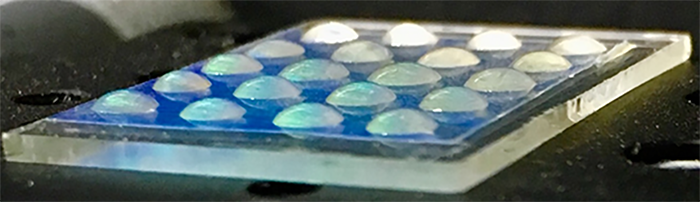
Biosensor arrays facbricated from two intertwinned polymeric networks.

Researchers create soft robots that can sense touch, pressure, movement and temperature.

 Micron-sized hidden dimensions could solve two of physics’ deepest puzzles
 Turning Periods into Power: Menstrual Blood a Valuable Resource for Medical Diagnostics
 Surfactants Steer Supraparticle Structure
 Bone loss in obesity traced to gut microbiota
 Edible electronics realize safe, complex monitoring devices
 Fermilab Confirms Muon g-2 Measurements