Edible electronics: a new class of electronics materials that are compatible with the gastrointestinal tract.
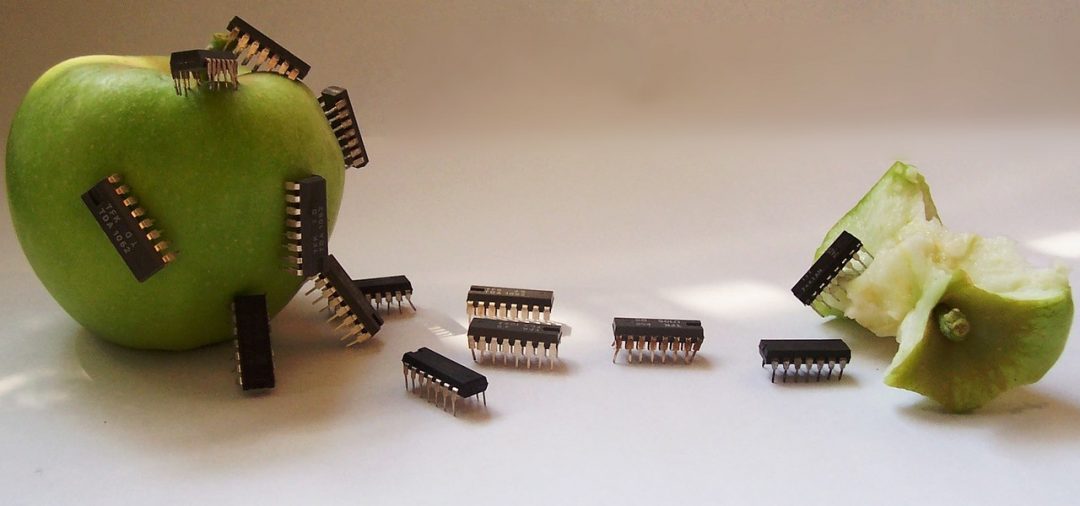

Edible electronics: a new class of electronics materials that are compatible with the gastrointestinal tract.

Researchers from Mainz and Aschaffenburg use a sugary material to help save our depleted ozone layer.

On the 1st and 2nd of October 2018 in Frankfurt/Main, Germany, experts from academia and industry, suppliers and users will discuss how smart sensors can promote “biotechnology 4.0”.

A novel on-chip dense waveguide sensor to detect single unlabeled nanoparticles.

Swiss researchers developed fibers that can detect even the slightest pressure and strain and can withstand considerable deformation.

Scientists have shown the potential of liquid crystal shells as enabling material for a vast array of future applications.
![Transforming Planar Electronic Devices into 3D Structures [Video]](https://www.advancedsciencenews.com/wp-content/uploads/2018/07/adma201801256_ASN-image_smaller.png)
A strategy for placing bezel-less image sensors for electronic devices over the entire surface of a tetrahedral, 3D sensor is demonstrated.

Wearable electronic device can be inserted into convential wound dressings.
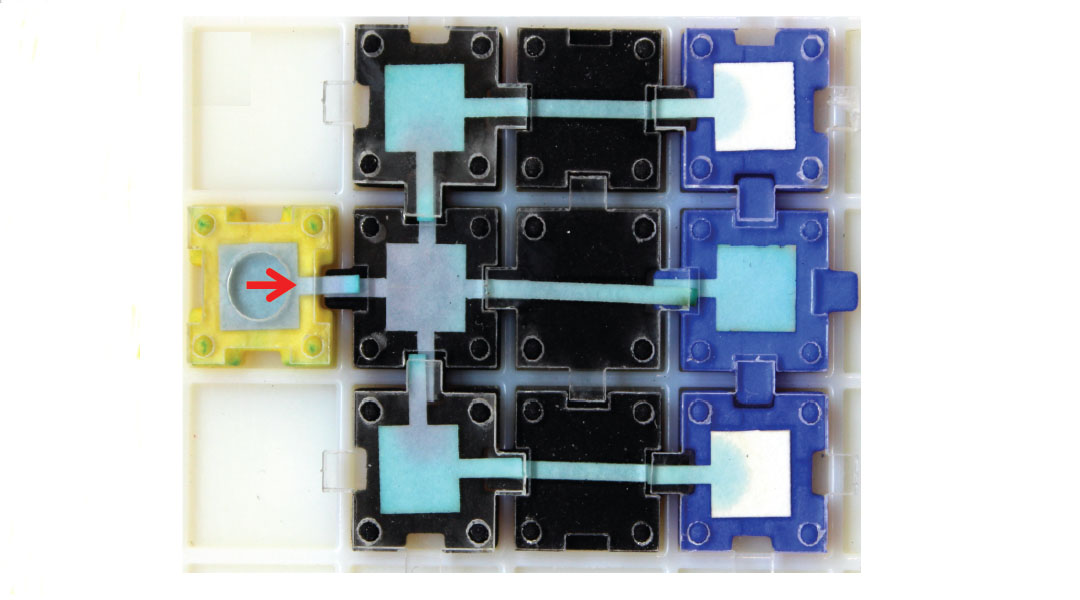
A team of researchers construct a library of pre-fabricated, reusable paperfluidic blocks for point-of-care diagnostic devices.

American researchers designed a smartphone octo‐channel optosensor (SOS) for low‐cost low‐volume lab tests as a mHealth diagnostic tool.

 Micron-sized hidden dimensions could solve two of physics’ deepest puzzles
 Turning Periods into Power: Menstrual Blood a Valuable Resource for Medical Diagnostics
 Surfactants Steer Supraparticle Structure
 Bone loss in obesity traced to gut microbiota
 Edible electronics realize safe, complex monitoring devices
 Fermilab Confirms Muon g-2 Measurements