Voltage-dependent diffraction switching makes a hybrid liquid crystal–carbon nanotube device a good candidate for high-resolution displays.
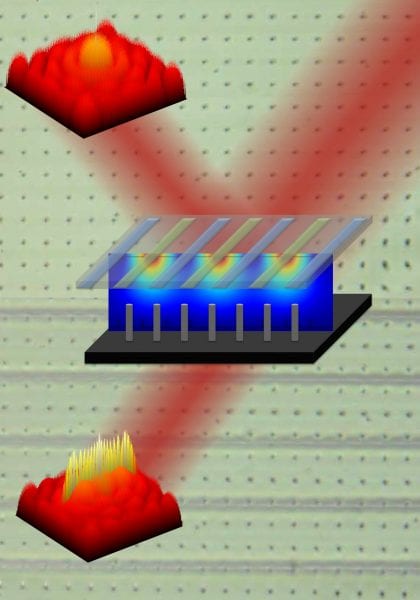

Voltage-dependent diffraction switching makes a hybrid liquid crystal–carbon nanotube device a good candidate for high-resolution displays.
New thin, planar, lightweight, and broadband polarimetric photonic devices and optics could result from recent research by a team of Los Alamos scientists.
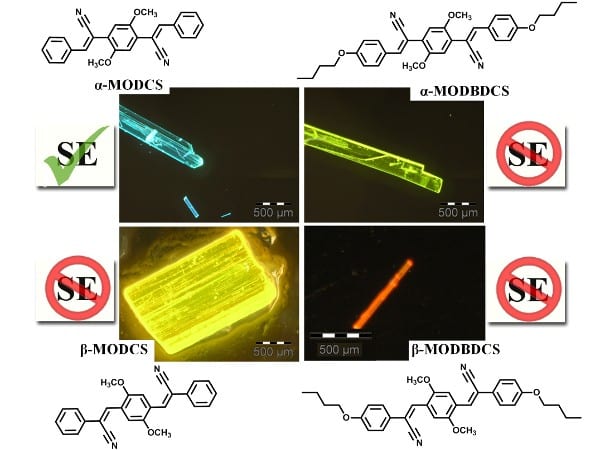
Structure–property relationships of single crystals are analysed such that their spontaneous and stimulated emission properties can be quantified based on their crystal structures.
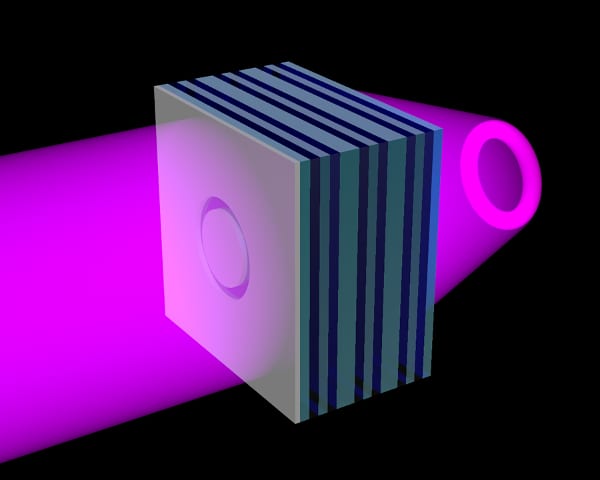
New type of lens bends and focuses ultraviolet light in such an unusual way that it can create ghostly, 3D images of objects that float in free space.
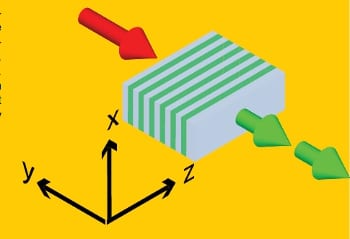
All-optical inscription of structures in an x-cut LiNbO3 crystal achieved by periodically lowering the nonlinear refractive index using ultrashort pulses.
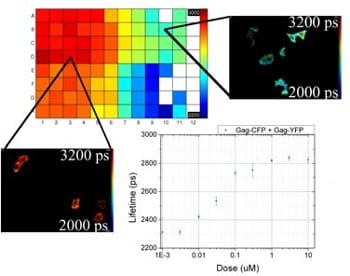
A new automated fluorescence lifetime imaging plate reader has been used to study aggregation of HIV-1 Gag proteins.
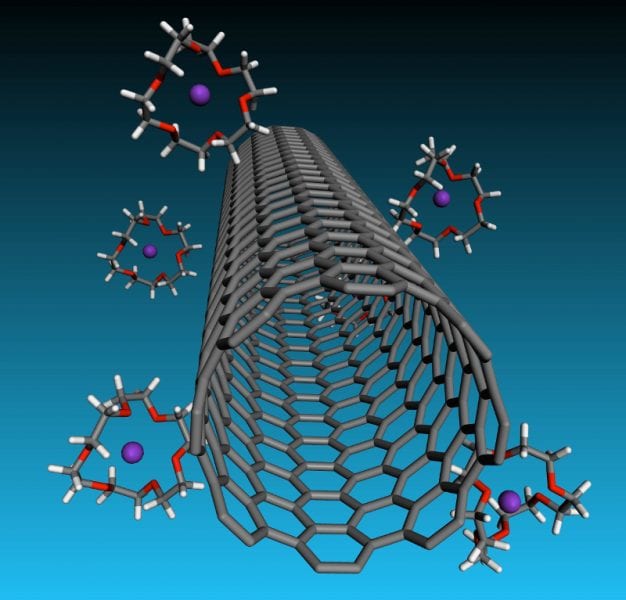
Rice University strategy turns negatively charged carbon nanotubes into liquid crystals that could enhance the creation of fibers and films.
100-nanometer-long “meta-atom” of gold and silicon oxide is capable of straightening and speeding up light waves.
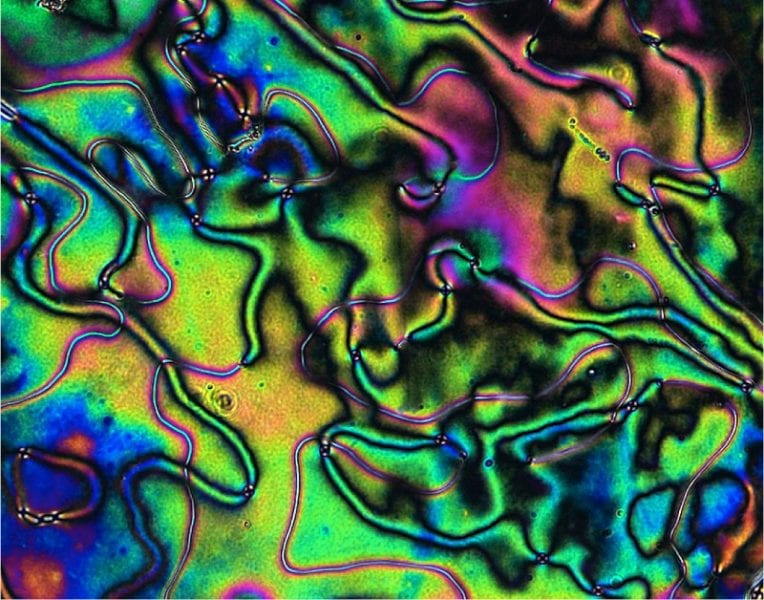
Rice University researchers find that silicone liquid crystals stiffen with repeated compression.
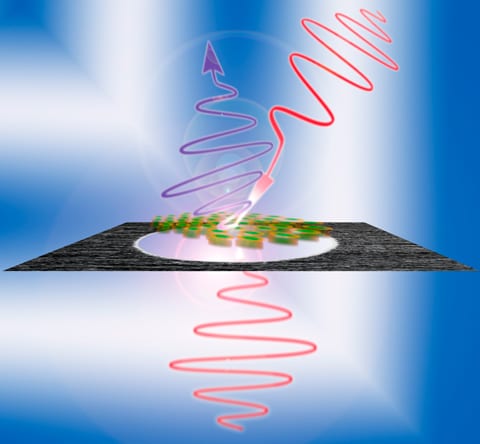
Researchers succeed in generating flashes of extreme ultraviolet radiation via the reflection from a mirror that moves close to the speed of light.
 New theory suggests gravity is not a fundamental force
 Higgs boson may be driving the Universe’s expansion
 Water-powered gadgets may be on the horizon thanks to new evaporation-based energy device
 Scientists discover a new class of antibiotics
 Micron-sized hidden dimensions could solve two of physics’ deepest puzzles
 A new type of dark matter could explain mysterious radiation from the Milky Way’s core