Researchers from Virginia Commonwealth University have found a way to fabricate precise, biocompatible architectures of silk proteins at the microscale.
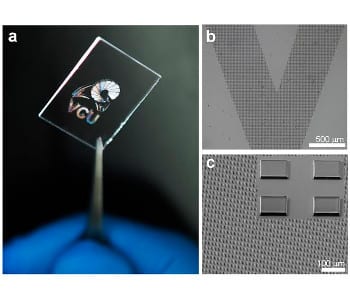

Researchers from Virginia Commonwealth University have found a way to fabricate precise, biocompatible architectures of silk proteins at the microscale.
A mechanism of growth of anisotropic metal oxides that was predicted 20 years ago has been observed for the first time.
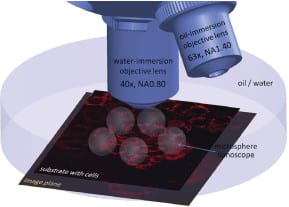
Researchers at EPFL have successfully demonstrated super-resolution biological microscopy using virtual imaging with an affordable microsphere nanoscope.

New Humboldt Professorships have been awarded, among them three prominent international physicists working on electronic, magnetic and superconducting materials.
A study to investigate how nanoparticles could be used to improve the diagnosis and treatment of cardiovascular disease has received £3 million funding.
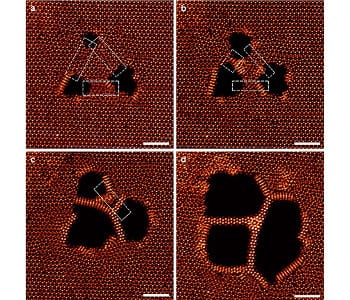
Flexible metallic wires, only three atoms wide, produced with scanning transmission electron microscope.
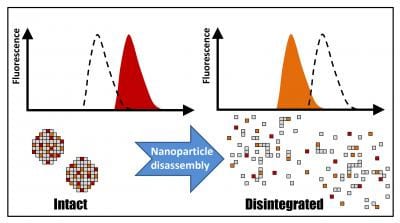
New method allows researchers to directly measure nanoparticle degradation in real time within biological environments.
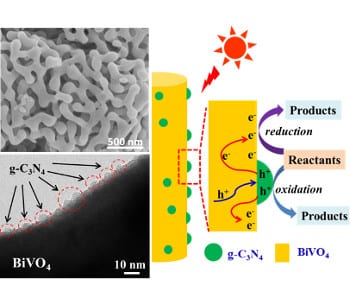
Researchers from Tianjin University describe the fabrication of an efficient nanostructured heterojunction photocatalyst.
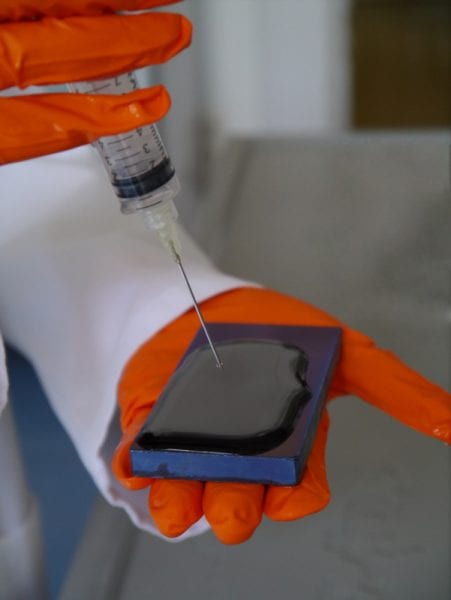
New gel to promote bone growth on implants used in orthopaedic and dental surgical procedures.
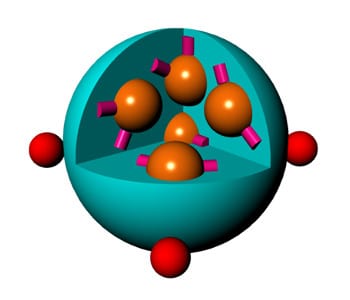
Korean scientists have developed a tumor-targeted, bioreducible nanoparticle system that can deliver cytotoxic anticancer drugs to tumor tissues.
 New theory suggests gravity is not a fundamental force
 Higgs boson may be driving the Universe’s expansion
 Water-powered gadgets may be on the horizon thanks to new evaporation-based energy device
 Scientists discover a new class of antibiotics
 Micron-sized hidden dimensions could solve two of physics’ deepest puzzles
 A new type of dark matter could explain mysterious radiation from the Milky Way’s core