
Catalysts can stop working when atoms on the surface start moving – new work means this dance of the atoms could now be observed and explained.
Manufacturing
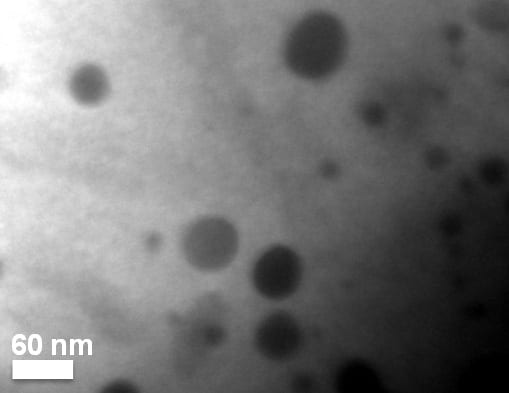
Nanoengineering boosts heat to energy conversion
Nanoengineering boosts semiconducting material’s ability to convert heat into power by 200 percent and its electrical conductivity by 43 percent.
BASF and SINOPEC consider further expansion of Nanjing joint venture
Companies considering expansion of existing ethylene oxide production and a new plant for neopentylglycol.

Greener process for steel production developed at MIT
Molten oxide electrolysis – intended to make oxygen in abundance from lunar soil – produces steel as a by-product.

Nanotech company begins testing anti-fogging technology
Early-stage nanotech company SiO2 Nanotech has begun beta testing commercial applications of its anti-fogging technology for corporate partners.

Aluminum Foam from Scrap
A group of scientists show a low cost route to manufacture high quality aluminum foam.
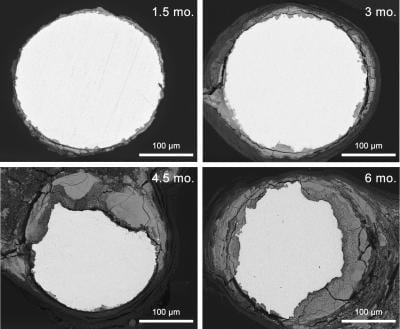
Zinc could be a "golden" bullet for bioabsorbable stents
Some materials dissolve too quickly in the body, and some hang around forever — zinc, however, may be just right.
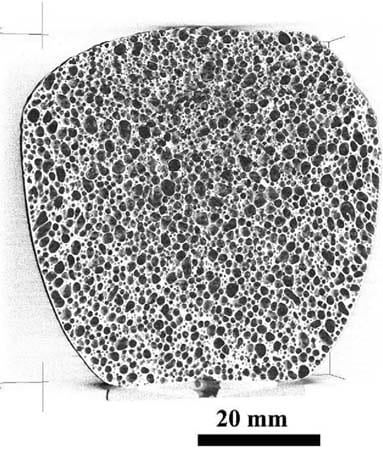
Reviewing the Development of Metallic Foams with John Banhart
The history, current status and future development of metallic foams is described in a comprehensive review in Advanced Engineering Materials.

Fabricating smart composite materials with wrinkled microstructures
MIT researchers mimic nature to produce interfacial composite materials with stimuli-responsive microstructures.
Metallic nanostructures control light to a new level
Researchers at King’s College London have achieved previously unseen levels of control over the travelling direction of electromagnetic waves in waveguides.
Popular
-
 New theory suggests gravity is not a fundamental force
-
 Higgs boson may be driving the Universe’s expansion
-
 Water-powered gadgets may be on the horizon thanks to new evaporation-based energy device
-
 Scientists discover a new class of antibiotics
-
 Micron-sized hidden dimensions could solve two of physics’ deepest puzzles
-
 A new type of dark matter could explain mysterious radiation from the Milky Way’s core