A new printing method produces flexible graphene microsupercapacitors with a planar architecture, suitable for integration in portable electronic devices.
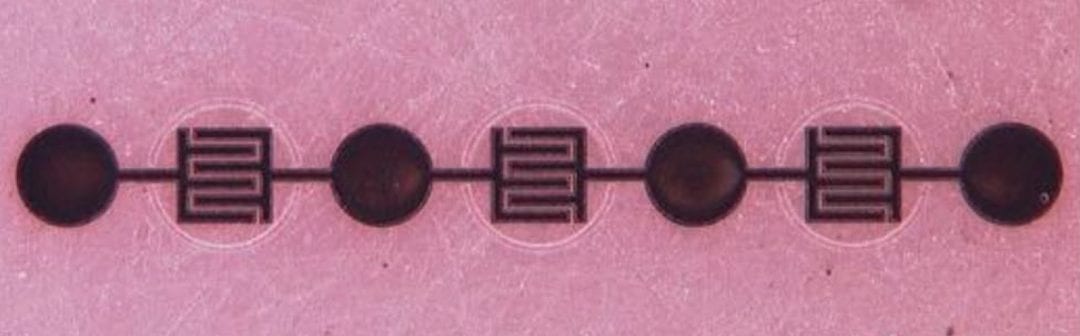

A new printing method produces flexible graphene microsupercapacitors with a planar architecture, suitable for integration in portable electronic devices.

Via a bottom-up approach this research shows the production of scalable, stable InGaN nanowire photonic crystals for high efficient LEDs.
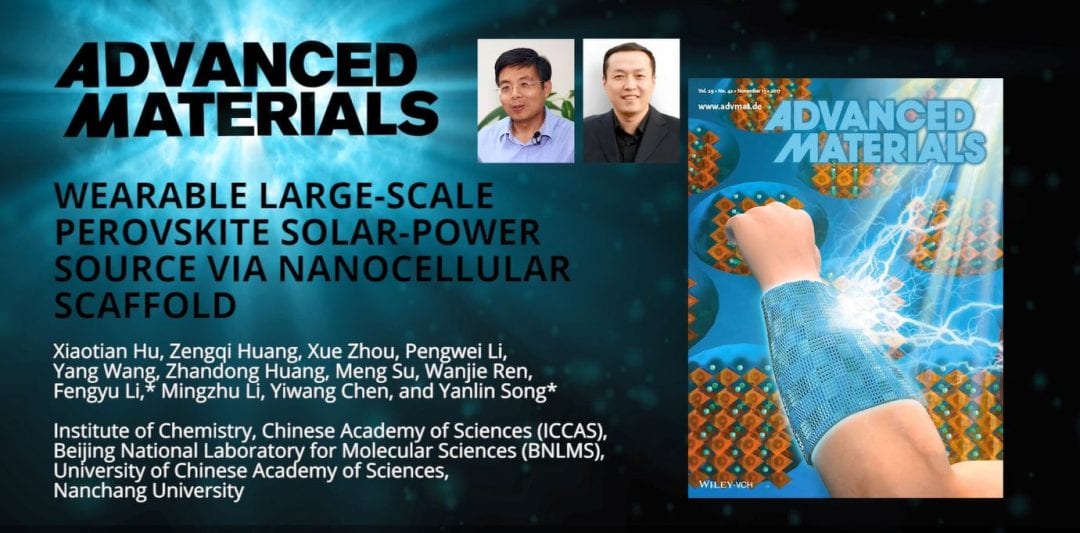
Fengyu Li and Yanlin Song from the Chinese Academy of Sciences, along with their co-workers, have designed high-performance flexible perovskite solar cells (PSCs) for wearable electronics using green printing technology.
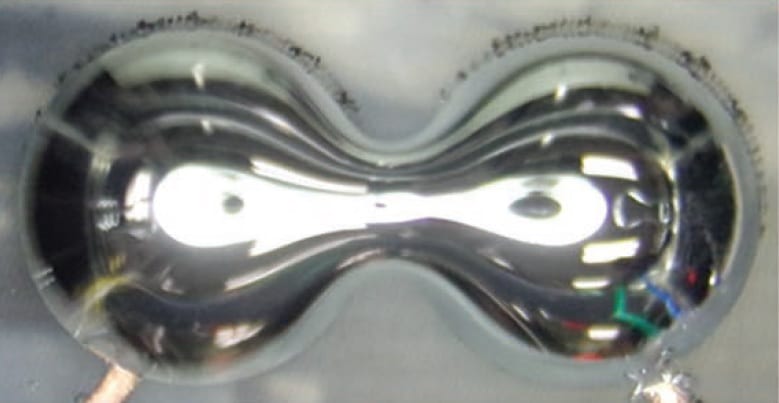
Exploiting electrochemistry to gain control over the interactions of liquid metal droplets enables reversible switching for soft circuitry.

Dr. Marta Mas-Torrent and her team are developing high-performance electrolyte-gated field-effect transistors (EGOFETs), electronic devices capable of working in an aqueous environment.

Researchers from Hong Kong Polytechnic University and the Hong Kong Polytechnic University Shenzhen Research Institute achieve remote and temporal tuning of luminescence intensity and wavelength in green- and blue-emissive piezophosphors by modulating the magnetic field. This novel method is promising for applications in magnetic optical sensing, piezophotonics, energy harvesting, nondestructive environmental surveillance, novel light sources, and displays.

Researchers from Sun Yat-sen University, China, prepare a composite based on nickel nitride and sulfide nanosheets as the anode material for lithium ion batteries. The composite has enhanced cycle stability and lithiation capacity compared to the nitride and sulfide alone.

Ting Zhang and co-workers from the Suzhou Institute of Nano-Tech and Nano-Bionics at the Chinese Academy of Sciences develop a novel superhydrophobic and piezoresistive coating for wearable sensing devices. The coating is durable in harsh conditions and can be used to detect real-time human movement when fabricated as a wearable strain sensor.
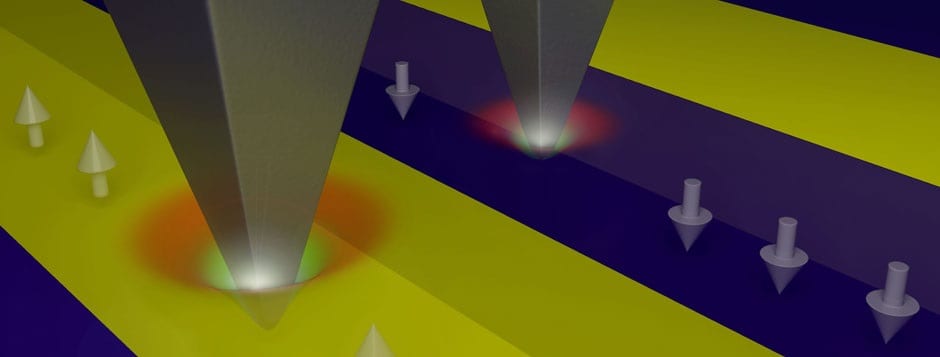
New research points to the future development of “smart mechanical materials” for use in smart coatings and ferroelectric memories.

Swiss researchers have discovered a promising approach to how we might produce batteries out of waste graphite and scrap metal.
 New theory suggests gravity is not a fundamental force
 Higgs boson may be driving the Universe’s expansion
 Water-powered gadgets may be on the horizon thanks to new evaporation-based energy device
 Scientists discover a new class of antibiotics
 Micron-sized hidden dimensions could solve two of physics’ deepest puzzles
 Turning Periods into Power: Menstrual Blood a Valuable Resource for Medical Diagnostics