Two research teams synthesize highly ordered carbonaceous structures, such as graphene, using unusual but everyday raw materials, and even waste.


Two research teams synthesize highly ordered carbonaceous structures, such as graphene, using unusual but everyday raw materials, and even waste.
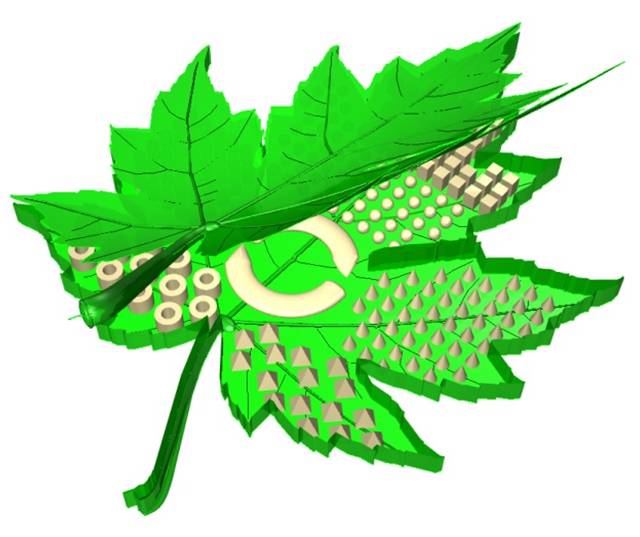
Professor Geoffrey Ozin discusses what he believes may be the largest challenge of the century—the development of an artificial photosynthetic machine.
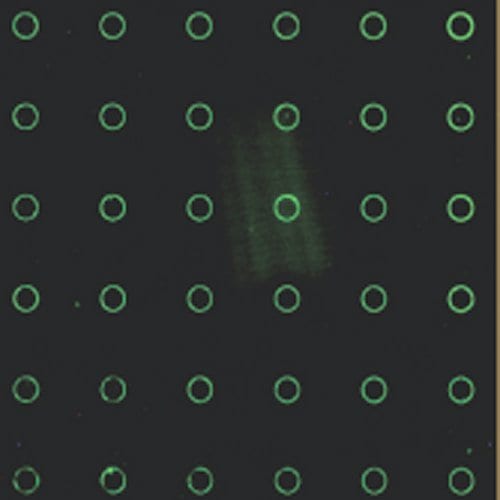
Ring-shaped arrays of DNA by using a simple self-assembly process driven by a balance of different forces, by scientists in the USA and S. Korea.
Light-triggered myosin allows real-time study of cells
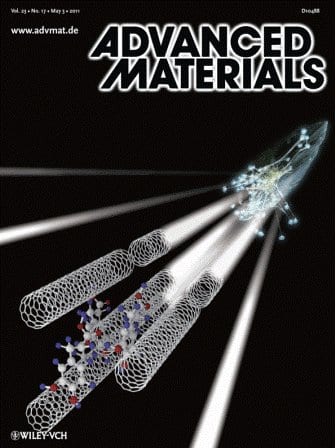
Merging the ultra-strong nature of carbon nanotubes and mussel-inspired linker molecules renders high-strength fibres via a simple spinning process.
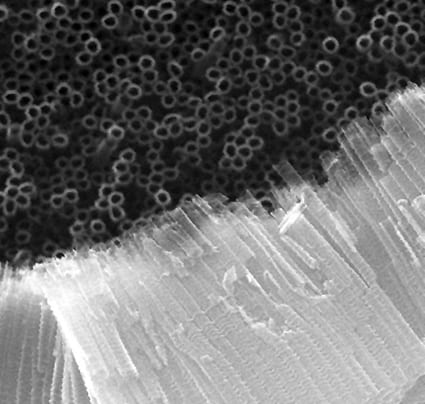
A new approach to the development of functional and biocompatible coatings for titanium metal implants aims to reduce their failure rates by altering the nano-morphology of the surface.
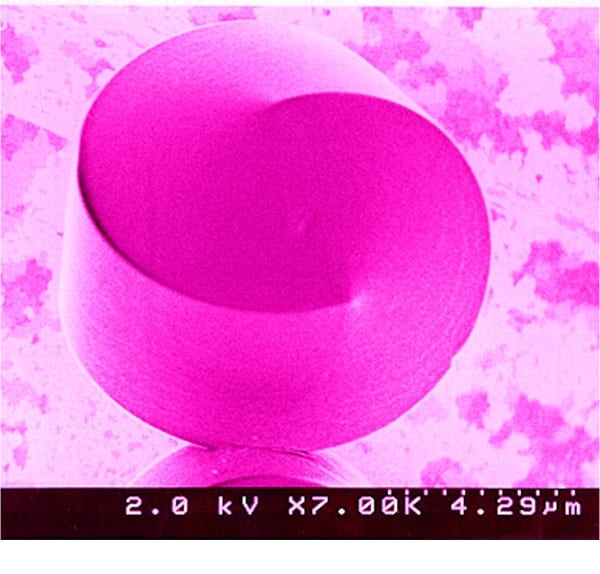
Professor Geoffrey Ozin from the University of Toronto discusses the endless possibilities of biomimicry and biotemplating.
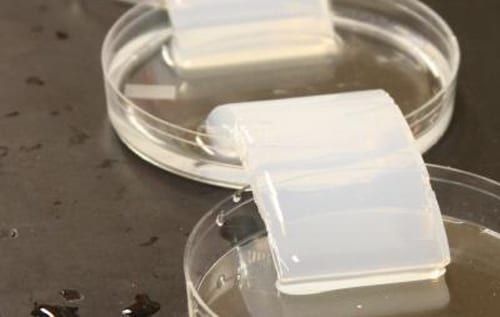
A new 3D artificial extracellular matrix provides a combination of chemical, electrical, and mechanical cues to influence stem cell differentiation.
Progress towards multifunctional biomedical applications for silica-based nanoparticles is described by Prof. Taeghwan Hyeon
The human brain is one of the most complicated machines that Nature has ever invented. Can we ever hope to artificially replicate its incredible complexity?
 New theory suggests gravity is not a fundamental force
 Higgs boson may be driving the Universe’s expansion
 Water-powered gadgets may be on the horizon thanks to new evaporation-based energy device
 Scientists discover a new class of antibiotics
 Micron-sized hidden dimensions could solve two of physics’ deepest puzzles
 A new type of dark matter could explain mysterious radiation from the Milky Way’s core