The application of biocompatible polymeric microneedle patches is discussed as a promising and straightforward method of transdermal drug delivery.
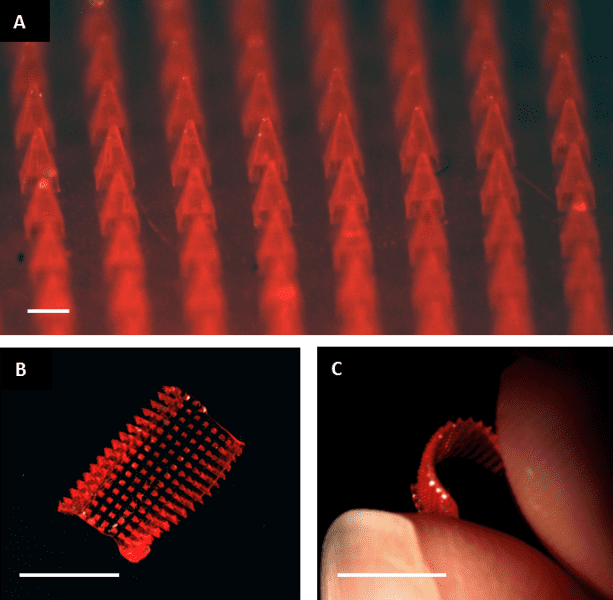

The application of biocompatible polymeric microneedle patches is discussed as a promising and straightforward method of transdermal drug delivery.
Application of nanotechnology shown to substantially reduce necessary dose of anti-HIV antiretroviral efavirenz.
Scientists have found an efficient way to deliver nanoparticles containing a wide range of biomolecules without using endocytosis, for faster drug delivery.
Team investigate the ability of the body to accept stretchable electronic devices for long-term use.
Here are the top five papers downloaded in August 2013. Also view the August issue of Advanced Healthcare Materials! Chitin Microneedles for an Easy-to-Use Tuberculosis Skin Test by Jungho Jin, Valerie Reese, Rhea Coler, Darrick Carter and Marco Rolandi An easy-to-use...
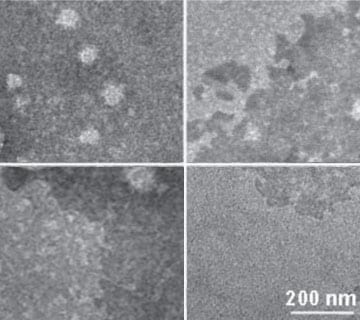
Jun Feng and collaborators address drug delivery challenges by applying boronic acid coupling and host-guest chemistry.
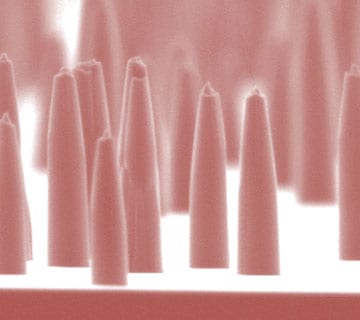
A dense diamond nanoneedle array for delivering fluorescent probes and drugs to a large number of cells for use on gene and cell therapy.
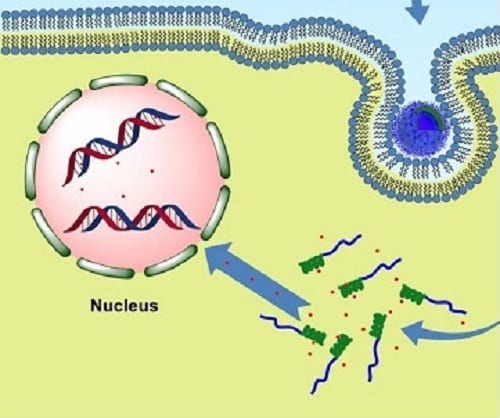
Polypeptide-based pH-sensitive polymersomes prepared by researchers from Changchun hold excellent promise as a drug delivery platform for cancer therapy.

Diagnosis of Dengue, targetting dendritic cells, thermal ablation of cancer, tissue adhesives, and the regenerative microenvironment for tissue healing.
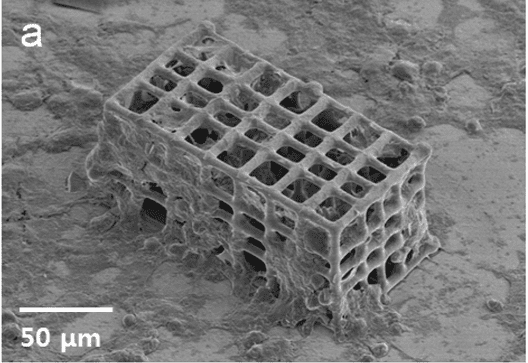
Microrobots offer huge potential in medicine, particularly in the field of drug delivery.


 Micron-sized hidden dimensions could solve two of physics’ deepest puzzles
 Turning Periods into Power: Menstrual Blood a Valuable Resource for Medical Diagnostics
 Surfactants Steer Supraparticle Structure
 Bone loss in obesity traced to gut microbiota
 Edible electronics realize safe, complex monitoring devices
 Fermilab Confirms Muon g-2 Measurements