May’s Advanced Healthcare Materials covers.


May’s Advanced Healthcare Materials covers.

New protocols for the isolation of UC-MSCs are explored, including several helpful, individual protocols to aid quality control and ensure that the UC-MSCs are characterized thoroughly while improving yield.

New research has revealed that a pair of catalytic enzymes, called extracellular signal-regulated kinases 1 and 2 (ERK1/2), may play an essential role in the development of corneal blindness. (Image credit: MJTH/Shutterstock).
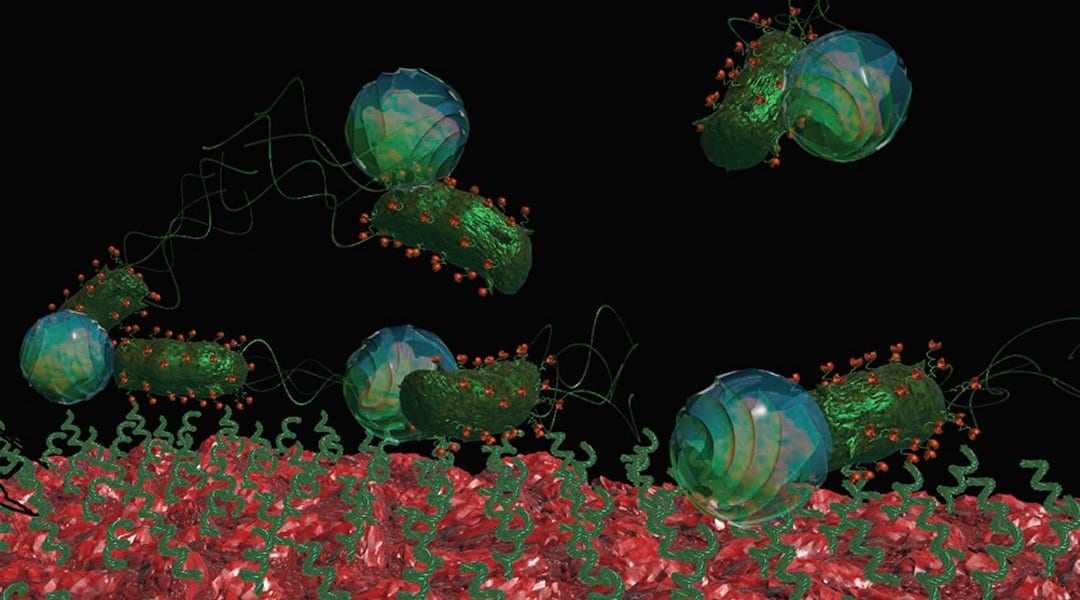
Bacteria-driven microswimmers can release the therapeutic drug specifically at the site of disease by attaching to a certain type of eukaryotic cell.

Polymeric materials to prevent blood coagulation. (Image credit: nobeastsofierce/Shutterstock)

Virtual endovascular treatment models (VETMs) have been developed with the view to aid interventional neuroradiologists and neurosurgeons to pre-operatively analyse the comparative efficacy and safety of endovascular treatments for intracranial aneurysms. Current deterministic computational simulations need to be extended with strategies for uncertainty mitigation, uncertainty exploration, and sensitivity reduction techniques.

April’s top Advanced Healthcare Materials papers.
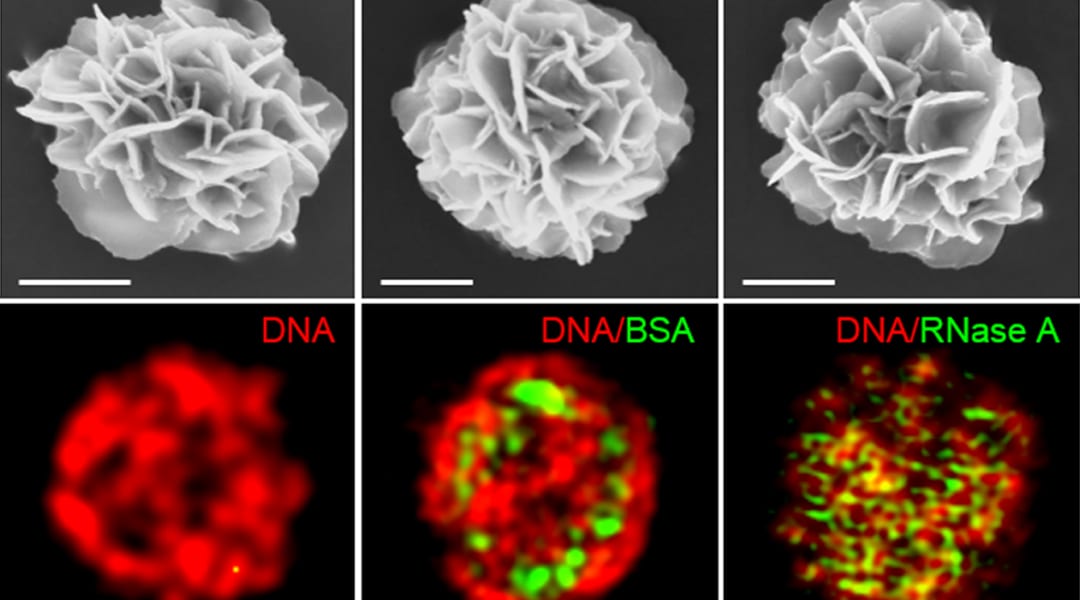
In-situ assembled flower-shaped DNA constructs can be used for an efficient intracellular protein delivery.

Investigating EV production and purification methods by mimicking the natural release process of EVs in blood capillaries with a bioinspired mechanical microfluidic method.

A new targeted chemotherapeutic nano-medicine NANOPt-pan, composed of Panitumumab and DACHPt (the active form of Oxaliplatin), could passively and actively target EGFR over-expressing tumors and effectively target both KRAS wild type- and mutant-tumors.
 New theory suggests gravity is not a fundamental force
 Higgs boson may be driving the Universe’s expansion
 Water-powered gadgets may be on the horizon thanks to new evaporation-based energy device
 Scientists discover a new class of antibiotics
 Micron-sized hidden dimensions could solve two of physics’ deepest puzzles
 A new type of dark matter could explain mysterious radiation from the Milky Way’s core