Cone-shaped gold nanoparticles are activated by ultrasonic waves, with applications in cost-effective targeted drug delivery.
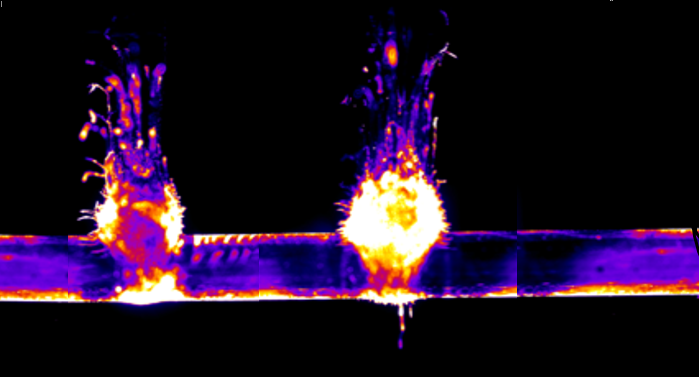

Cone-shaped gold nanoparticles are activated by ultrasonic waves, with applications in cost-effective targeted drug delivery.
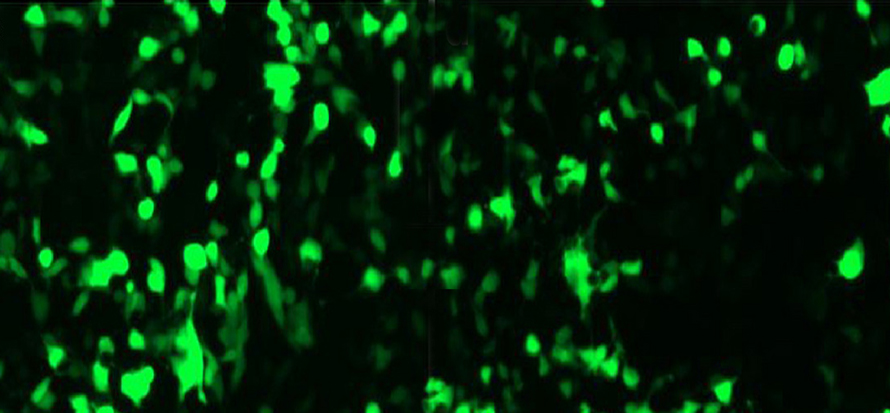
A possible relationship between commonly-occurring oral bacteria and the cancer-causing human papillomavirus (HPV).
![Microfluidic Devices for Affordable Personalized Healthcare [Video]](https://www.advancedsciencenews.com/wp-content/uploads/2018/04/adma201705759_ASN_image.jpg)
Muhammad Mustafa Hussain and co-workers from King Abdullah University of Science and Technology address the potential of complementary metal-oxide semiconductor (CMOS)-based microfluidic devices for affordable personalized healthcare.
![Early-Stage Cancer Detection with a Lanthanide-Based Metal Organic Framework [Video]](https://www.advancedsciencenews.com/wp-content/uploads/2018/04/adfm201707169_ASN_image_002.png)
Researchers from Nankai University and the Collaborative Innovation Center of Chemical Science and Engineering in Tianjin, China, demonstrate a luminescent sensor based on a lanthanide metal–organic framework (Ln-MOF) for early detection of cancer.
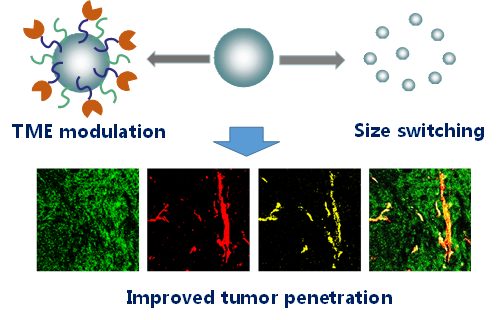
Rational design of nanoparticles with state-of-the-art strategies can effectively improve the penetration as well as therapeutic efficacy of cancer nanomedicines

An Israeli team of researchers found a self‐calibration point for near‐infrared human finger tissue measurements.

A team of researchers from the UK present the application of wavelength modulated Raman spectroscopy for the automated label‐ and fluorescence‐free classification of fixed squamous epithelial cells in suspension, such as those produced during a cervical smear test.
![Trans-Scale Biosensing Interface for Ultrasensitive Detection [Video]](https://www.advancedsciencenews.com/wp-content/uploads/2018/04/adfm201706981_ASN_image.jpg)
Dr. Fan Yang and Prof. Guo-Jun Zhang from Hubei University of Chinese Medicine, and co-workers, engineer a trans-scale biosensing interface capable of ultrasensitive microRNA detection.

A recent special issue of Advanced Materials, issue 45 in 2017, was dedicated to highlighting nature-inspired surface and materials research at Beihang University in Beijing, China.
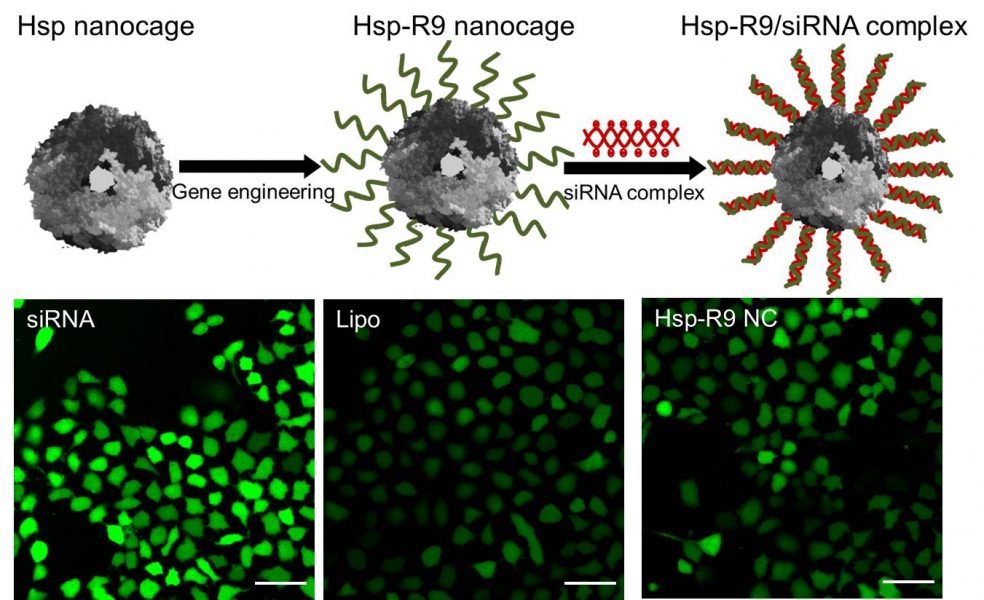
Green fluorescent protein (GFP) expression in HeLa EGFP cells is significantly downregulated by Hsp-R9/siRNA complexes
 New theory suggests gravity is not a fundamental force
 Higgs boson may be driving the Universe’s expansion
 Water-powered gadgets may be on the horizon thanks to new evaporation-based energy device
 Scientists discover a new class of antibiotics
 Micron-sized hidden dimensions could solve two of physics’ deepest puzzles
 A new type of dark matter could explain mysterious radiation from the Milky Way’s core