Could we be living without fossil fuels in just 30 years time? Professor Geoff Ozin looks at the likelihood of such a Utopian vision of the future.


Could we be living without fossil fuels in just 30 years time? Professor Geoff Ozin looks at the likelihood of such a Utopian vision of the future.
This review gives an overview how light-trapping mechanisms based on nanophotonics principles can enhance light absorption in thin-film solar cells.

Researchers have developed an innovative technique for depositing aluminum metal onto polymeric solar cells during large-scale roll-to-roll processing.
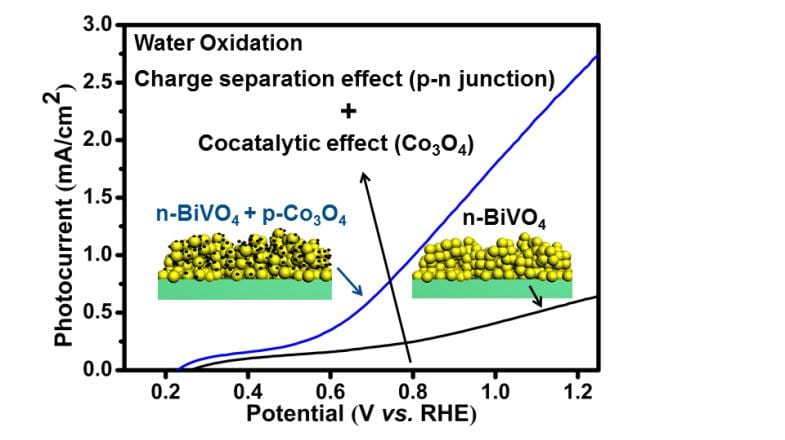
Prof. Jinlong Gong and his colleagues at Tianjin University are working on novel materials for photoelectrochemical water splitting.

The race is on to develop CO2-to-Fuel technology – in an invited editorial, Professor Ozin and co-workers give their view on the current state of the art.
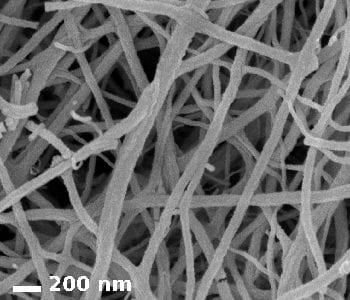
Prelithiated hematite nanofibers demonstrate exceptional cyclability as anodes towards high-powered Li-ion batteries for automotive applications.
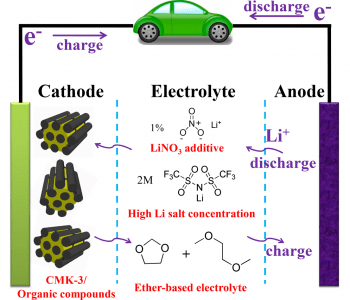
High performance organic Li-ion batteries have been demonstrated after optimization of the cathode, electrolyte, and protective additives.

Jim Yang Lee and colleagues have designed a clever method to apply the concept of traffic engineering to the electron transport in lithium-ion batteries.
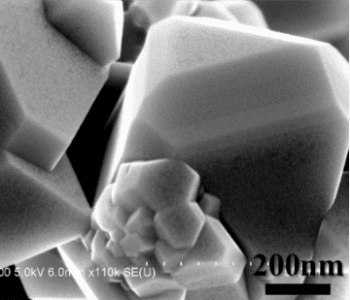
Stable, high-performance Li-ion battery cathodes have been demonstrated from powder precursors coated with an electrochemically active coating.
This month’s International Year of Light article reviews relevant advances and applications of plasmonic nanoparticles, from energy to health.
 New theory suggests gravity is not a fundamental force
 Higgs boson may be driving the Universe’s expansion
 Water-powered gadgets may be on the horizon thanks to new evaporation-based energy device
 Scientists discover a new class of antibiotics
 Micron-sized hidden dimensions could solve two of physics’ deepest puzzles
 A new type of dark matter could explain mysterious radiation from the Milky Way’s core