Edge-hydrogenation of carbon electrodes could further the quest for solid-state, single-molecule DNA sequencing.


Edge-hydrogenation of carbon electrodes could further the quest for solid-state, single-molecule DNA sequencing.
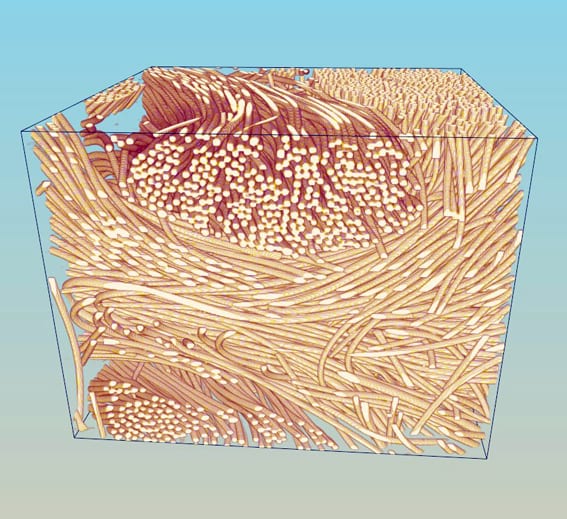
Carbon fiber-reinforced carbon has outstanding material properties and many applications but is extremely expensive – how to improve the processing of this useful material?
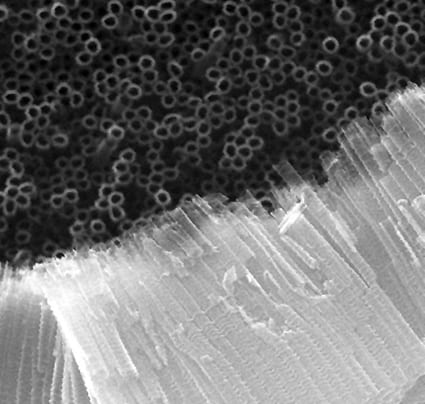
A new approach to the development of functional and biocompatible coatings for titanium metal implants aims to reduce their failure rates by altering the nano-morphology of the surface.

The addition of extremely small crystals to solid electrolyte material has potential to raise the efficiency of fuel cells. Researchers at TU Delft were the first to document this accurately.
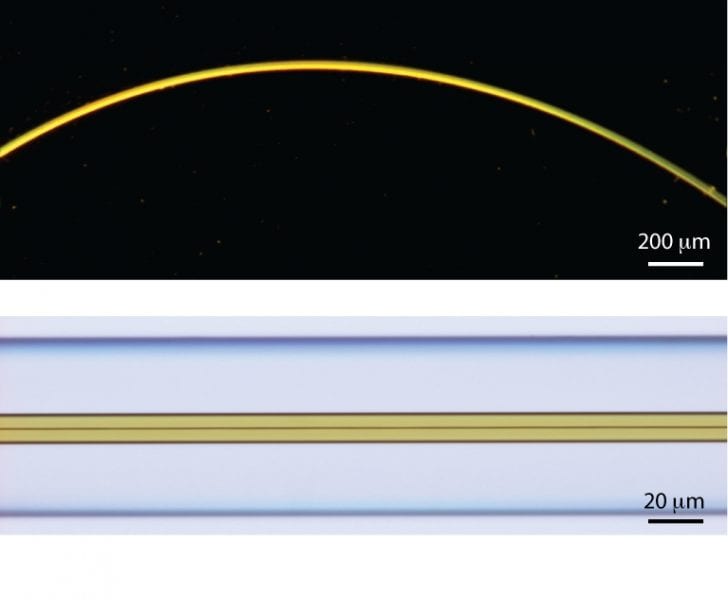
ZnSe is deposited in silica pores to produce the first compound semiconductor optical fiber waveguides.
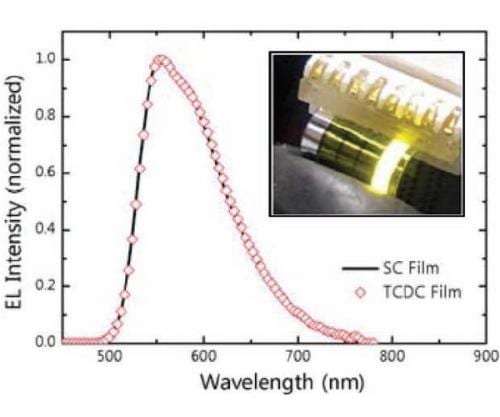
A novel polymer processing methodology to prepare thin films allows for increased crystallinity giving rise to improved properties.

What is the ideal nano-morphology for organic and hybrid solar cells? A progress report from a German research group sheds light on recent developments.
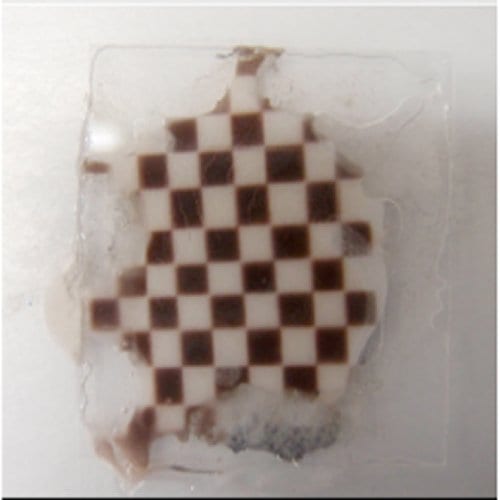
Conductive metallic 3D nanostructures can be made inside a single crystal of a photocatalytically active metal-organic framework, say Belgian scientists.
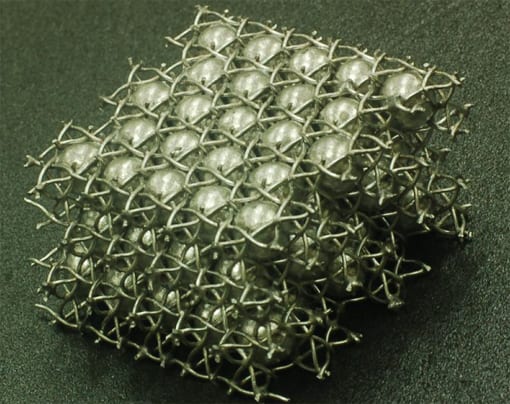
Researchers integrate energy absorbing metal hollow spheres into a wire-woven bulk Kagome structure. These hybrids show an outstanding energy absorption capability.

Established in 1962, the Polymers Division in the Material Measurement Laboratory of the National Institute of Standards and Technology (NIST) will soon celebrate its 50th year as a world leader in polymers research.
 New theory suggests gravity is not a fundamental force
 Higgs boson may be driving the Universe’s expansion
 Water-powered gadgets may be on the horizon thanks to new evaporation-based energy device
 Scientists discover a new class of antibiotics
 Micron-sized hidden dimensions could solve two of physics’ deepest puzzles
 A new type of dark matter could explain mysterious radiation from the Milky Way’s core