Micro/nanorobots to the rescue for environmental and medical applications.


Micro/nanorobots to the rescue for environmental and medical applications.
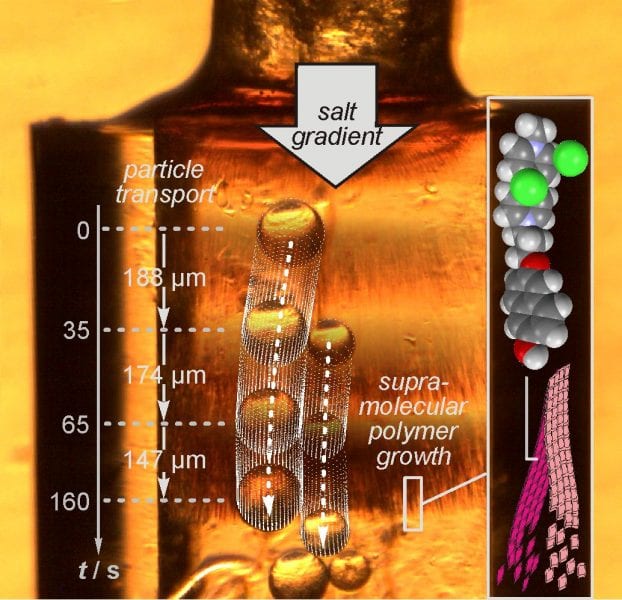
Directional motion and transport can be achieved using a salt concentration gradient and an appropriately designed self‐assembling system, without substantial synthetic effort or a matrix.
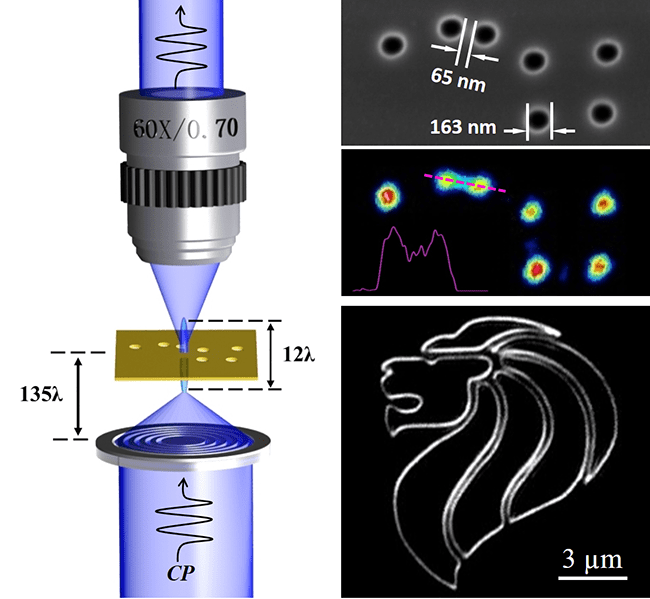
Minghui Hong and colleagues report super-critical-lens (SCL) optical label‐free microscopy, which clearly distinguishes a pattern with a feature size of 65 nm in air and with a 55 μm working distance.

A therapeutic thrombin-responsive patch to help with acute pulmonary thromboembolism.

Dancing polymer tree actuation!
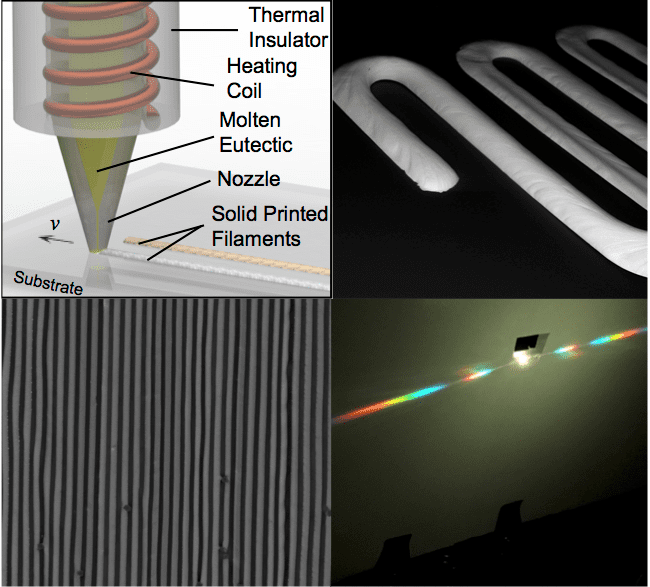
Jennifer Lewis and colleagues report a new process for creating mesoscale eutectic architectures, known as high operating temperature direct ink writing (HOT‐DIW).

Novel 4D printing produces a Sydney Opera House-like 3D structure.

Researchers from Pennsylvania State University, USA, have now revealed a magnetically transformable surface that can reversibly switch between the lotus and the pitcher plant modes
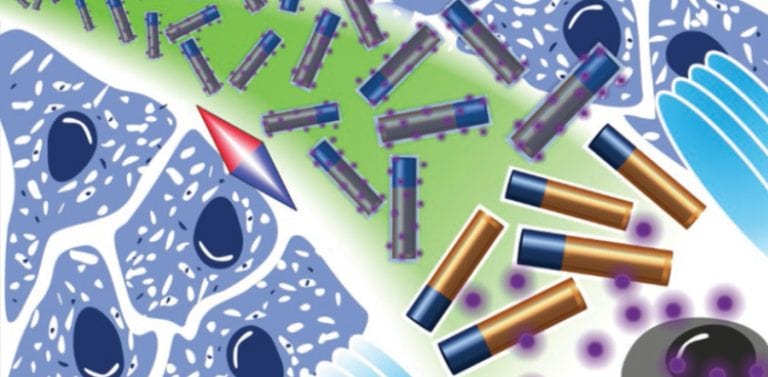
Salvador Pané and colleagues demonstrate core–shell magnetoelectric nanowires that can be triggered using different magnetic fields for targeted drug delivery to kill cancer cells.

Shuit-Tong Lee and Lifeng Chi have guest edited an issue of Advanced Materials, which provides an insight into the nanoscience research going on in and around Suzhou.

 Micron-sized hidden dimensions could solve two of physics’ deepest puzzles
 Turning Periods into Power: Menstrual Blood a Valuable Resource for Medical Diagnostics
 Surfactants Steer Supraparticle Structure
 Bone loss in obesity traced to gut microbiota
 Edible electronics realize safe, complex monitoring devices
 Fermilab Confirms Muon g-2 Measurements