Innovative device produced by STBL Medical Research using piezoelectric fibers from Empa.


Innovative device produced by STBL Medical Research using piezoelectric fibers from Empa.
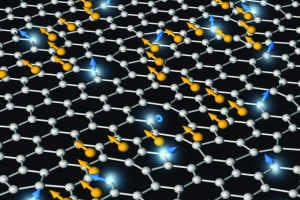
Graphene can be made magnetic and its magnetism switched on and off very simply, opening a new avenue towards electronics with very low energy consumption.
Sensor aims to detect homemade explosives made with hydrogen peroxide without false positives from substances such as toothpaste.
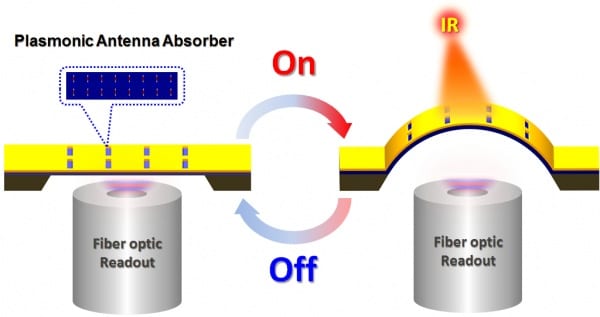
A team of University of Pennsylvania engineers has used a pattern of nanoantennas to develop a new way of turning infrared light into mechanical action.

We talk to Dr. Luc Scheres, CEO of Surfix BV, about issues with company startups, techniques in Surfix, and much more.

This special issue on low-dimensional carbon materials for Small is dedicated to the 20th anniversary of the Center for Nanochemistry at Peking University.
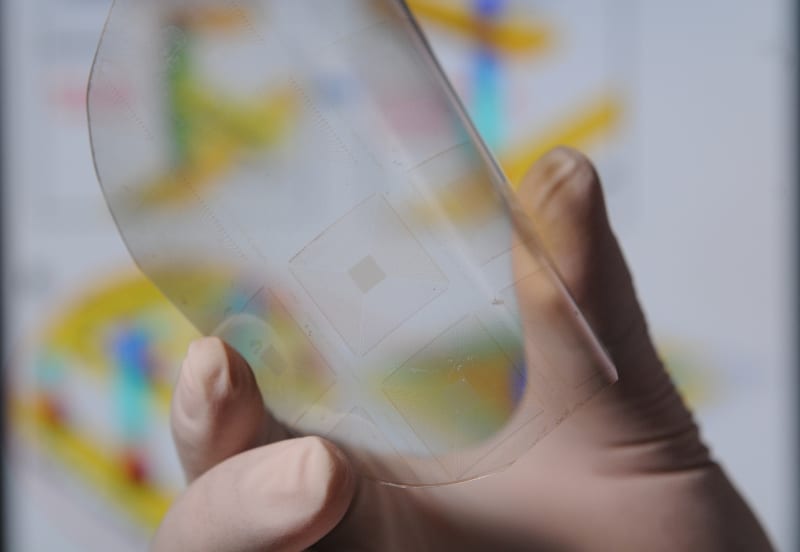
Researchers have fabricated arrays of piezotronic transistors capable of converting mechanical motion directly into electronic controlling signals.

The Journal of Polymer Science Part A: Polymer Chemistry highlights some important research in the latest issue.
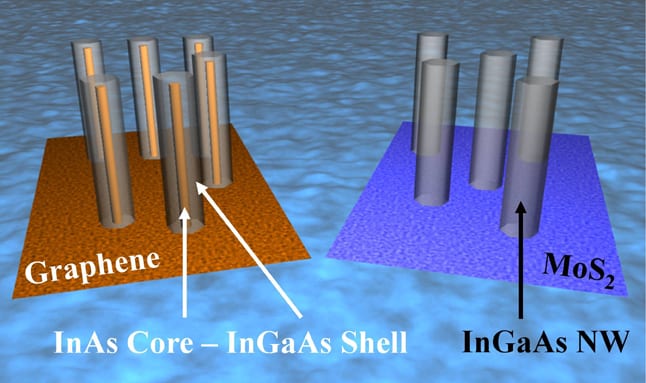
Discovery comes as researchers set out to grow nanowires of a compound semiconductor on top of a sheet of graphene.
Researchers have solved a long-standing materials science problem, making it possible to create new semiconductor devices using zinc oxide.
 New theory suggests gravity is not a fundamental force
 Higgs boson may be driving the Universe’s expansion
 Water-powered gadgets may be on the horizon thanks to new evaporation-based energy device
 Scientists discover a new class of antibiotics
 Micron-sized hidden dimensions could solve two of physics’ deepest puzzles
 A new type of dark matter could explain mysterious radiation from the Milky Way’s core