Professor Dmitri Golberg reviews the first volume of the new Polymer Nano, Micro- & Macrocomposites series, edited by Dr. Vikas Mittal.


Professor Dmitri Golberg reviews the first volume of the new Polymer Nano, Micro- & Macrocomposites series, edited by Dr. Vikas Mittal.
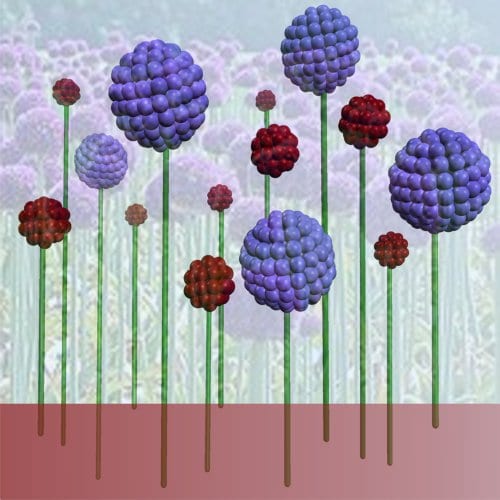
Small changes can have a big effect; a very small change in molecular structure can have a profound controlling effect on the size of gold nanoparticle superstructures.
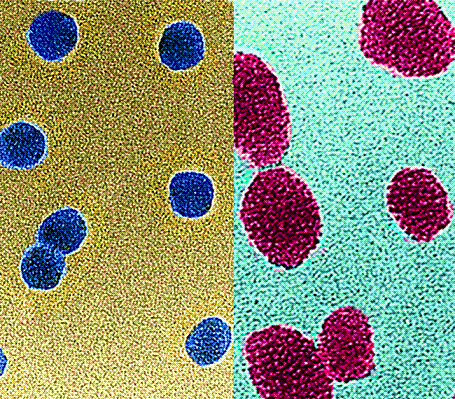
Ultrabright Fluorescent Mesoporous Silica Nanoparticles
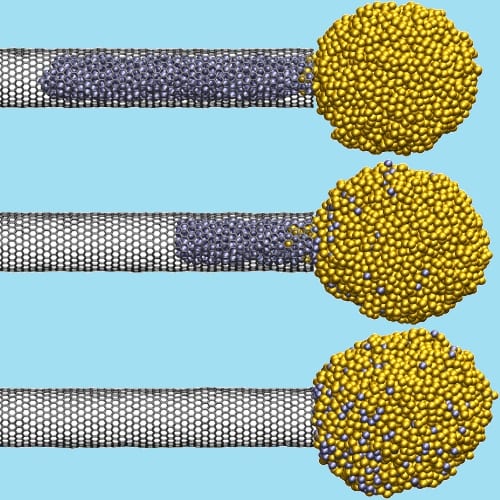
Encapsulated metal nanoparticles can be extracted from carbon nanotubes through reverse capillary action.
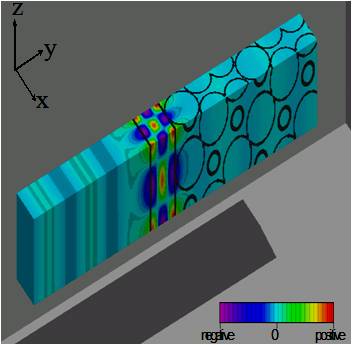
“It seems like the whole world is working on solar cells; trying to make them better, cheaper and safer to cope with the looming global energy drought.” Professor Geoffrey Ozin talks about the current state of solar cell research.
How can nanomaterials make a difference in the grand challenge: efficient and green global scale production, storage and use of energy? Professor Geoffrey Ozin from the University of Toronto gives his response to this question.
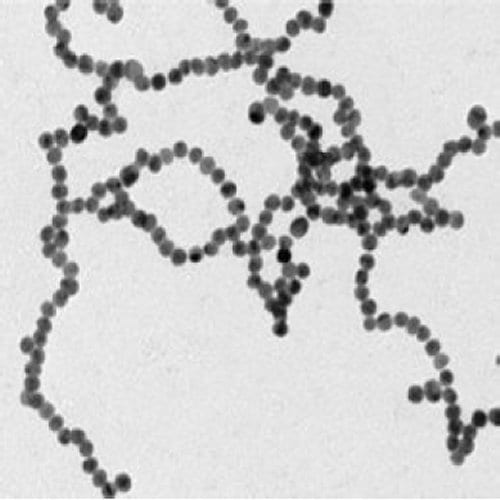
Assembly of metallic nanoparticles into chains or plasmonic networks is affected by temperature and kinetics.
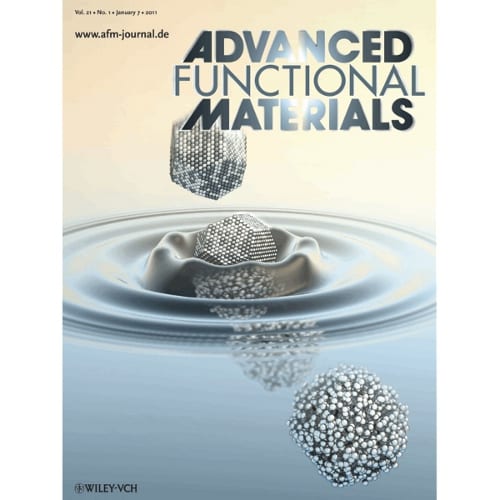
Systematic insights into well-defined platinum-alloy nanoparticles promise cheaper and more-efficient fuel cells.
So who owns nanochemistry? Should “all” the credit be given to chemistry pioneers of the past 20-30 years or were the foundations of nanochemistry already laid in the field of colloid chemistry, the origin of which can be traced to a century earlier?
Progress towards multifunctional biomedical applications for silica-based nanoparticles is described by Prof. Taeghwan Hyeon
 New theory suggests gravity is not a fundamental force
 Higgs boson may be driving the Universe’s expansion
 Water-powered gadgets may be on the horizon thanks to new evaporation-based energy device
 Scientists discover a new class of antibiotics
 Micron-sized hidden dimensions could solve two of physics’ deepest puzzles
 A new type of dark matter could explain mysterious radiation from the Milky Way’s core