Prof. Chunying Chen and her colleagues from the National Center for Nanoscience and Technology, China demonstrate that polyhydroxylated metallofullerenol can activate primary mouse macrophages to produce pro-inflammatory cytokines.
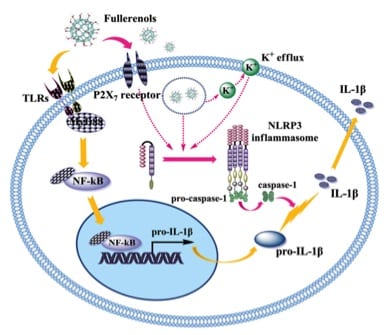

Prof. Chunying Chen and her colleagues from the National Center for Nanoscience and Technology, China demonstrate that polyhydroxylated metallofullerenol can activate primary mouse macrophages to produce pro-inflammatory cytokines.
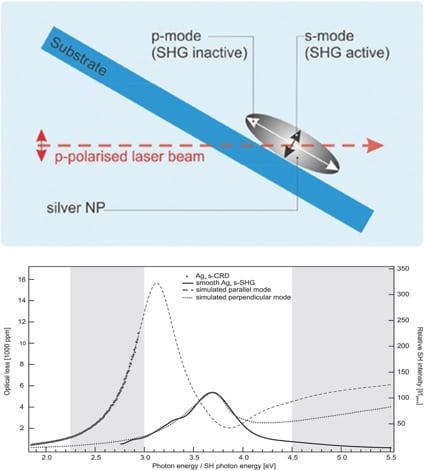
Employing s-SHG and s-CRD spectroscopy, German scientists shed light on silver cluster as small as tens of atoms.
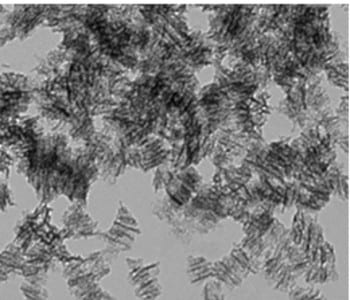
North American researchers have prepared luminescent core-shell nanoparticles from non-toxic silicon for use in biomedical imaging.

Researchers adapt mobile phones and smart phones to the carrying habits of their users.
Xuesi Chen and co-workers from the Changchun Institute of Applied Chemistry explore the potential of combining chemotherapy with antiangiogenic therapy.
We present the most downloaded papers of the pss journal family from May 2014.
The research article from Georgia Tech addresses an important issue in the current battle against cancer – the development of resistance to anticancer drugs, which leads to the loss of efficacy of chemotherapeutic treatment.
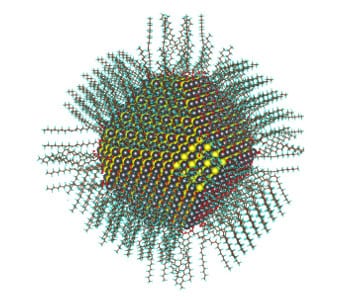
Results explain the passivation mechanism of semiconducting nanocrystal surfaces.
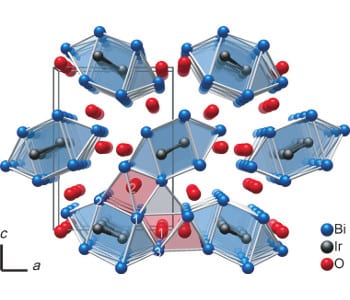
Unusual compound is the first metallic oxygen ion conductor of its kind, as well as the first that is active at room temperature.
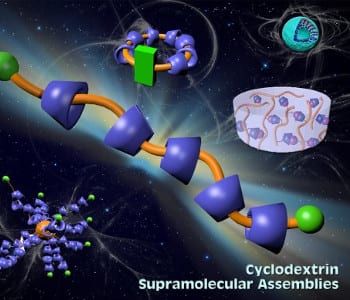
Here are the currently most read articles in Macromolecular Rapid Communications.
 New theory suggests gravity is not a fundamental force
 Higgs boson may be driving the Universe’s expansion
 Water-powered gadgets may be on the horizon thanks to new evaporation-based energy device
 Scientists discover a new class of antibiotics
 Micron-sized hidden dimensions could solve two of physics’ deepest puzzles
 A new type of dark matter could explain mysterious radiation from the Milky Way’s core