A scalable method for fabricating electronic whiskers (e-whiskers)—a class of electronic skin—for sensing a variety of external stimuli, including proximity, texture mapping, surface roughness, material stiffness, force, and temperature.
![3D e-Whiskers for Complex Sensing Applications [Video]](https://www.advancedsciencenews.com/wp-content/uploads/2018/03/adma201706733_ASN_image.png)

A scalable method for fabricating electronic whiskers (e-whiskers)—a class of electronic skin—for sensing a variety of external stimuli, including proximity, texture mapping, surface roughness, material stiffness, force, and temperature.
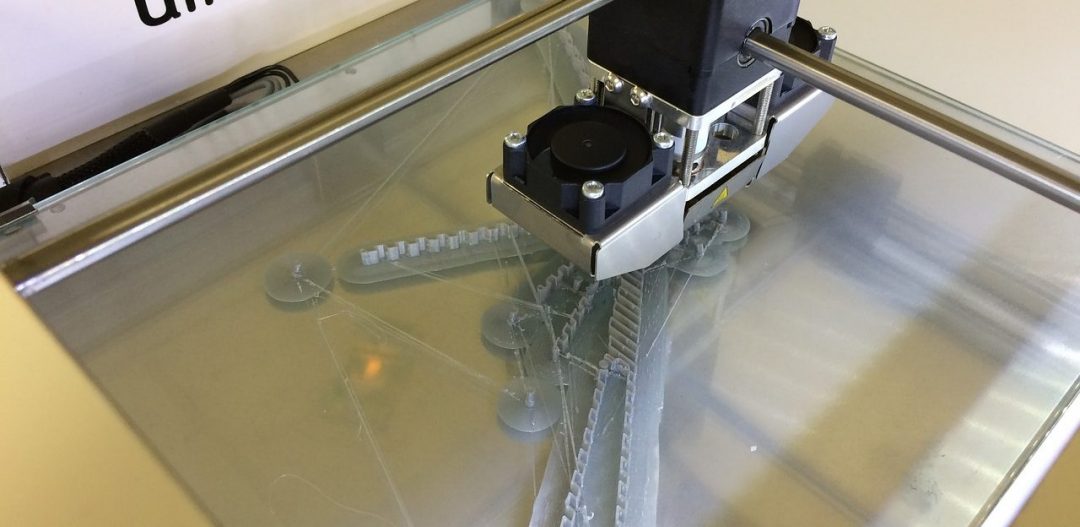
A team or Irish researchers evaluated the use of a barrel atmospheric plasma system for the treatment of the polymers acrylonitrile butadiene styrene and polylactic acid polymer particles used in 3D printing.
![Low-Power, High-Speed Analog Computing [Video]](https://www.advancedsciencenews.com/wp-content/uploads/2018/03/adma201705914_ASN_image-e1521125299316.png)
Researchers from the University of Massachusetts and Hewlett Packard Labs present a memristor platform for analog computations and forecast a device performance at least 16 times greater than purely digital solutions.

An interplay between two realms is the subject of the Focussed Session: Geometry- and Topology-Controlled Nanoarchitectures at the Joint Meeting of DPG (Deutsche Physikalische Gesellschaft) and EPS (European Physical Society) Condensed Matter Divisions on March 13, 2018 at the TU Berlin.
![Organic Ferroelectric Tunnel Junction for Memristive Devices [Video]](https://www.advancedsciencenews.com/wp-content/uploads/2018/01/ASN_featured_adfm201703273_001.jpg)
Researchers report a ferroelectric tunnel junction for organic-based memristors having a record-high tunneling electroresistance (TER) at room temperature, which could ensure large data integration density in computers.

An integrative approach of modeling and hydrogen-deuterium exchange helps to describe the enzyme that regulates glycogen levels in muscles and liver.

Latest Advanced Healthcare Materials covers.
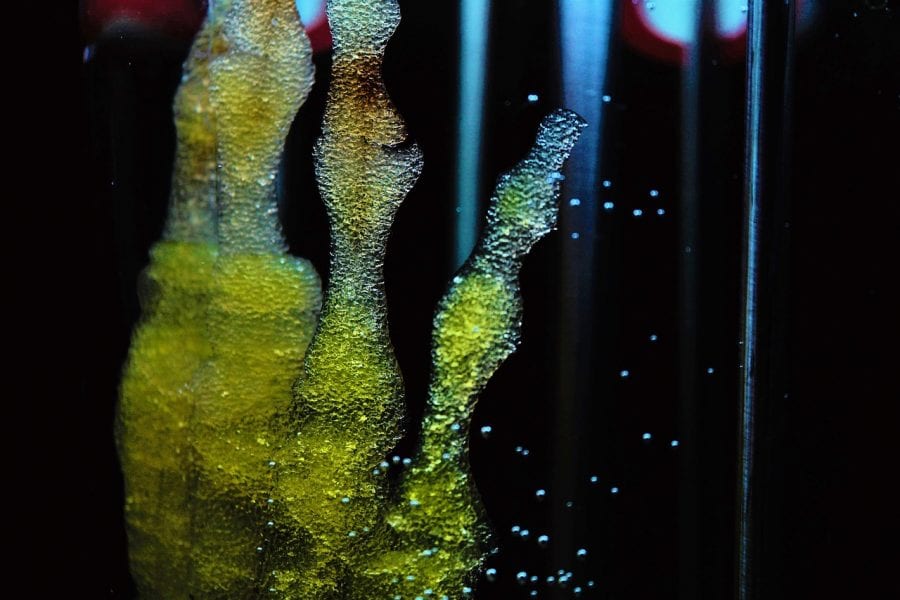
Advanced Healthcare Materials papers you have downloaded and read the most in the past two months.
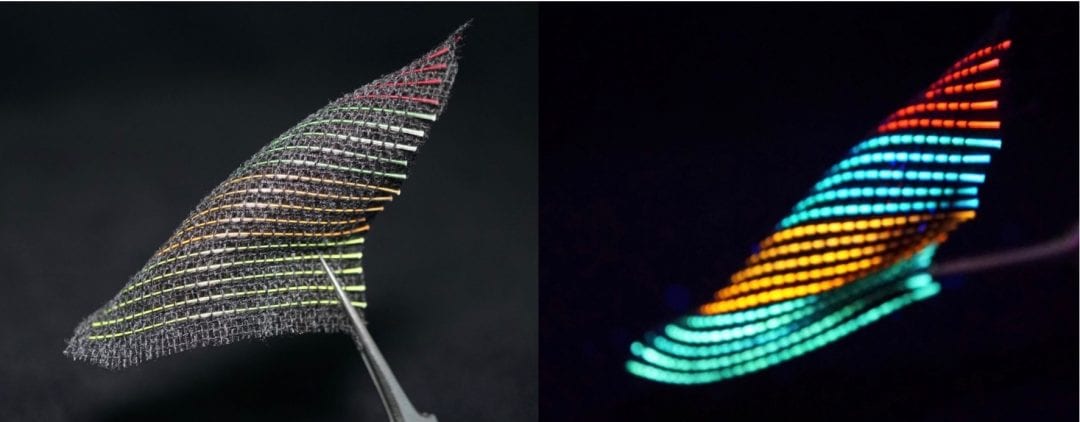
A novel family of colorful fluorescent supercapacitor fibers allows for continuous energy storage in flexible systems used in the dark.
A new review by Lennox et al discuss recent advances in our understanding of post-transcriptional regulation during embryonic cerebral cortex development.
 New theory suggests gravity is not a fundamental force
 Higgs boson may be driving the Universe’s expansion
 Water-powered gadgets may be on the horizon thanks to new evaporation-based energy device
 Scientists discover a new class of antibiotics
 Micron-sized hidden dimensions could solve two of physics’ deepest puzzles
 A new type of dark matter could explain mysterious radiation from the Milky Way’s core