A protocol for a unique high-throughput assay to identify novel small-molecule inhibitors of cell migration.
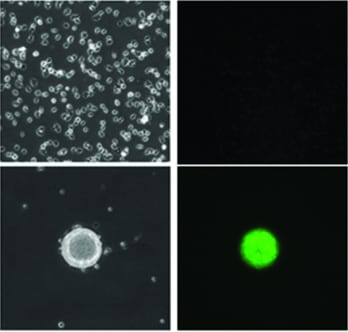

A protocol for a unique high-throughput assay to identify novel small-molecule inhibitors of cell migration.

Using a proteomics approach, Drs. Paulo and Gygi from the Harvard Medical School provide evidence that nicotine exposure changes the abundance of membrane proteins implicated in signal transduction and autophagy.
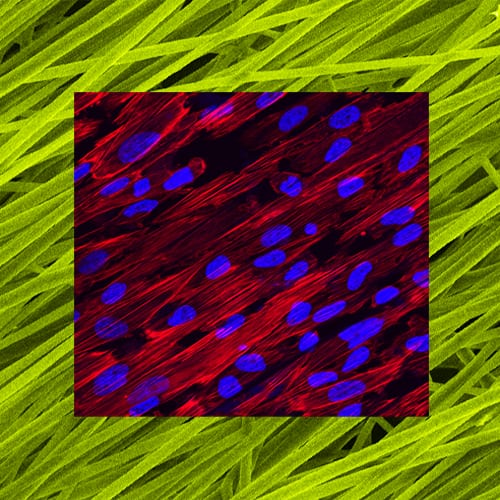
Researchers study new bioactive scaffolds based on PLA fibers, modified with a peptide sequence derived from fibronectin, an extracellular matrix component.
Eric Betzig, Howard Hughes Medical Institute, Stefan Hell, Max Planck Institute for Biophysical Chemistry, and William Moerner, Stanford University, share award for the development of super-resolved fluorescence microscopy.
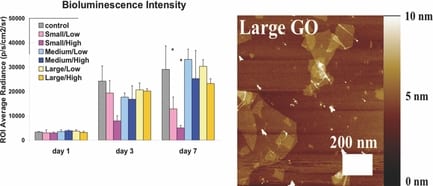
A team from Stanford University has investigated the effects of graphite oxide nanoparticles on mouse embryonic stem cells.
New work describes a strategy to produced hydrogels of precise stiffness for the organization of blood vessel cells into vascular structures.
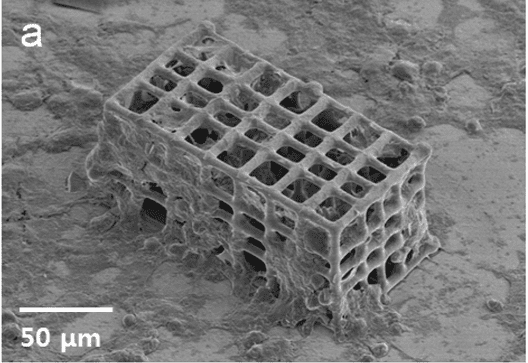
Microrobots offer huge potential in medicine, particularly in the field of drug delivery.
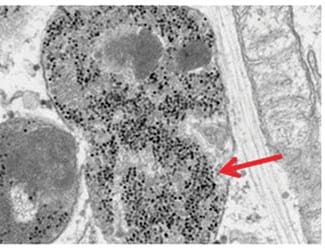
Treating cells with iron oxide nanoparticles allows them to be steered through the body by magnets.
Researchers reduce amount of growth factor needed to grow embryoid bodies by delivering it via gelatin-based microparticles.

Scientist-entrepreneur Prof. Elisseeff from Johns Hopkins University on her latest biomedical materials venture Aegeria and translating research to business.


 Micron-sized hidden dimensions could solve two of physics’ deepest puzzles
 Turning Periods into Power: Menstrual Blood a Valuable Resource for Medical Diagnostics
 Surfactants Steer Supraparticle Structure
 Bone loss in obesity traced to gut microbiota
 Edible electronics realize safe, complex monitoring devices
 Fermilab Confirms Muon g-2 Measurements