Researchers study new bioactive scaffolds based on PLA fibers, modified with a peptide sequence derived from fibronectin, an extracellular matrix component.
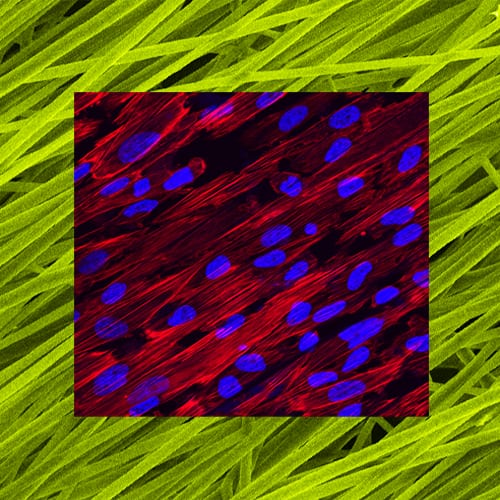

Researchers study new bioactive scaffolds based on PLA fibers, modified with a peptide sequence derived from fibronectin, an extracellular matrix component.
Eric Betzig, Howard Hughes Medical Institute, Stefan Hell, Max Planck Institute for Biophysical Chemistry, and William Moerner, Stanford University, share award for the development of super-resolved fluorescence microscopy.

A team from Stanford University has investigated the effects of graphite oxide nanoparticles on mouse embryonic stem cells.
New work describes a strategy to produced hydrogels of precise stiffness for the organization of blood vessel cells into vascular structures.
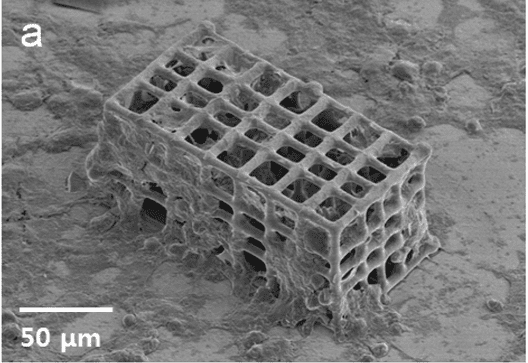
Microrobots offer huge potential in medicine, particularly in the field of drug delivery.
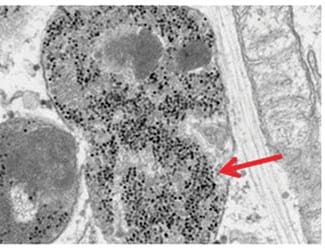
Treating cells with iron oxide nanoparticles allows them to be steered through the body by magnets.

Researchers reduce amount of growth factor needed to grow embryoid bodies by delivering it via gelatin-based microparticles.

Scientist-entrepreneur Prof. Elisseeff from Johns Hopkins University on her latest biomedical materials venture Aegeria and translating research to business.
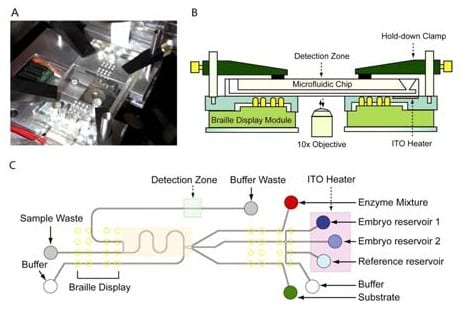
Lab-on-a-chip method, when combined with biophotonics, can be used to assay for metabolites, to separate gametes via optoelectrical tweezers, or to improve the vitrification of oocytes.
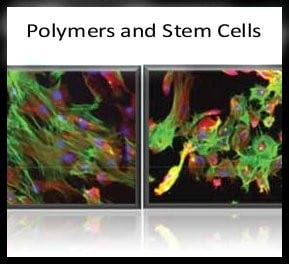
The second part of the series Advances in Polymers for Stem Cell Research by guest editor Suwan N. Jayasinghe is now complete and the last articles just have gone online.
 New theory suggests gravity is not a fundamental force
 Higgs boson may be driving the Universe’s expansion
 Water-powered gadgets may be on the horizon thanks to new evaporation-based energy device
 Scientists discover a new class of antibiotics
 Micron-sized hidden dimensions could solve two of physics’ deepest puzzles
 A new type of dark matter could explain mysterious radiation from the Milky Way’s core