Researchers have engineered a protein biomaterial to generate mimics of human skeletal muscle to study the effect of injury and disease on this tissue.
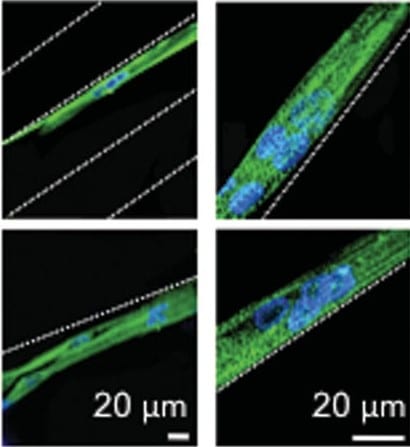

Researchers have engineered a protein biomaterial to generate mimics of human skeletal muscle to study the effect of injury and disease on this tissue.
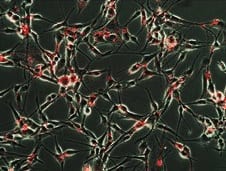
Researchers at Rutgers University have developed a method to generate an entire library of safe quantum dots quickly and efficiently.
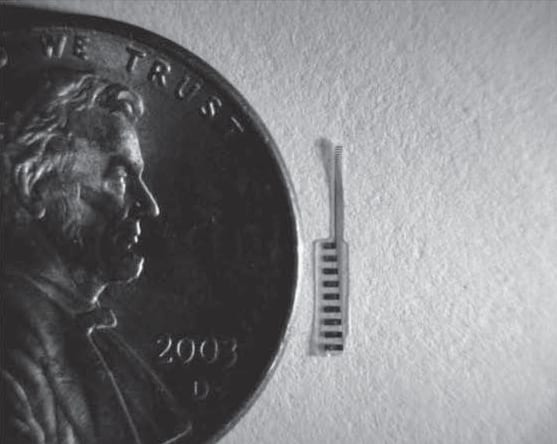
University of Texas researchers develop materials that are stiff for initial implantation, and then soften to better match the mechanical properties of brain tissue.
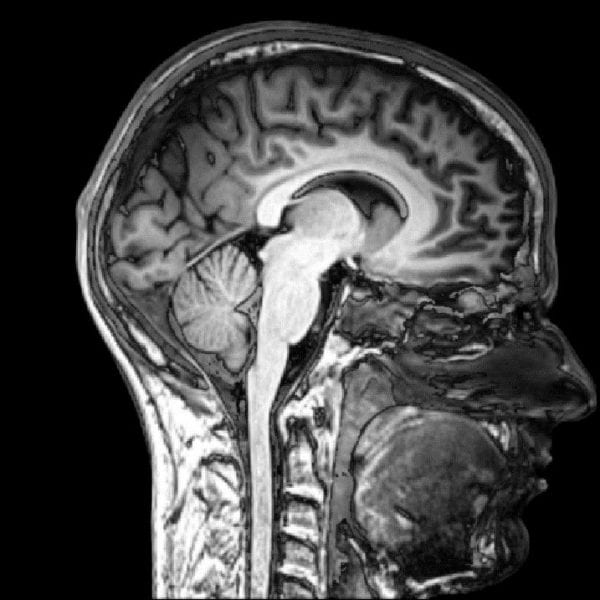
Gossuin, Sandre, et al. describe the design of magnetic nanoparticles with optimised relaxivity for magnetic resonance imaging (MRI).
Researchers demonstrate learning in a memristive device.

The International Center for Materials Nanoarchitectonics (WPI-MANA) features in a new special issue from Advanced Materials.
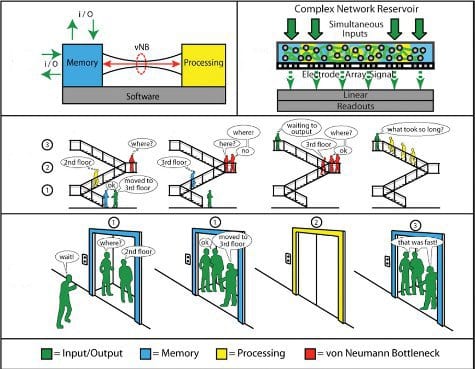
A computing network that exhibits emergent behavior similar to that in biological brains is hypothesized by Adam Z. Stieg of the California NanoSystems Institute

Biological synaptic behaviour related to short- and long-term memory creation is mimicked by inorganic devices.
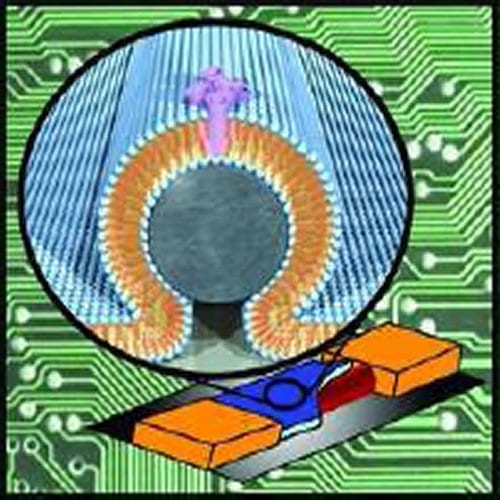
Science-fiction becomes science fact: How bionanoelectronics will revolutionize the world through medical and computational advances.

MaterialsViews catches up with Karen Gleason, Associate Dean of Engineering at MIT, to talk CVD, scientific jigsaws, and The Good Doctor.
 New theory suggests gravity is not a fundamental force
 Higgs boson may be driving the Universe’s expansion
 Water-powered gadgets may be on the horizon thanks to new evaporation-based energy device
 Scientists discover a new class of antibiotics
 Micron-sized hidden dimensions could solve two of physics’ deepest puzzles
 A new type of dark matter could explain mysterious radiation from the Milky Way’s core