This special issue provides a representative survey of the advances in bulk-nanostructured materials and shows the diversity of applications of SPD.


This special issue provides a representative survey of the advances in bulk-nanostructured materials and shows the diversity of applications of SPD.
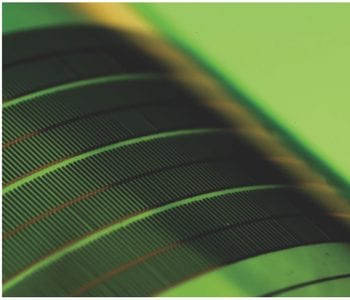
John Rogers and co-workers present recent progress in the development of optoelectronic devices and their implementation enabled by micro-transfer printing.
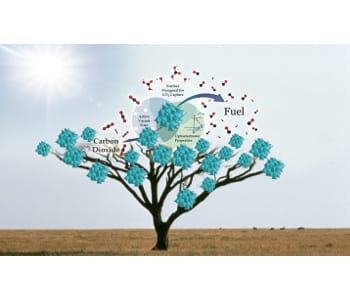
After publishing 50 opinion pieces with us at MaterialsViews, Professor Ozin reflects on his three years work at the UofT solar fuel cluster, and looks to the future.
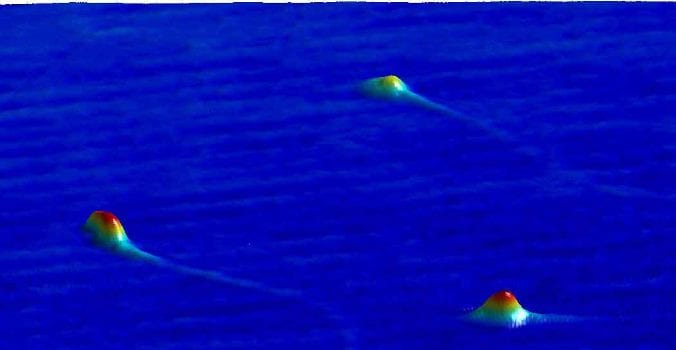
Holographic imaging reveals details about morphology, motility, and the concentration of sperm in semen analysis.

A completely biodegradable, seaweed-derived water container that avoids plastic packaging.
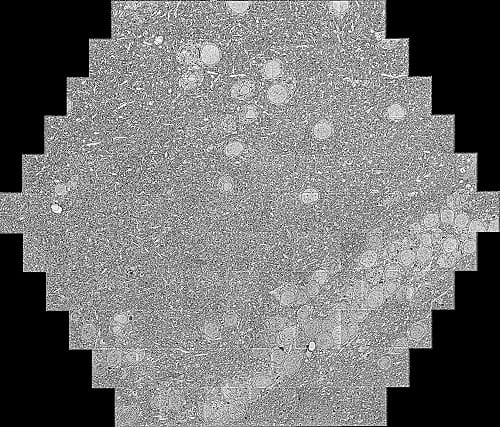
Zeiss introduced the the world’s fastest scanning electron microscope acquiring more than 2 Tera pixel per hour.
A new review in Advanced Science summarizes new nanotechnology-based potential diagnosis and treatment methods for triple negative breast cancer.
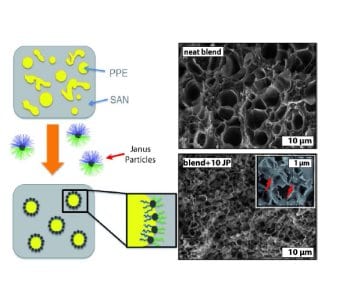
Foams with nano structured lamella and struts with remarkable properties from immiscible polymer blends compatibilized with Janus particles are developed.
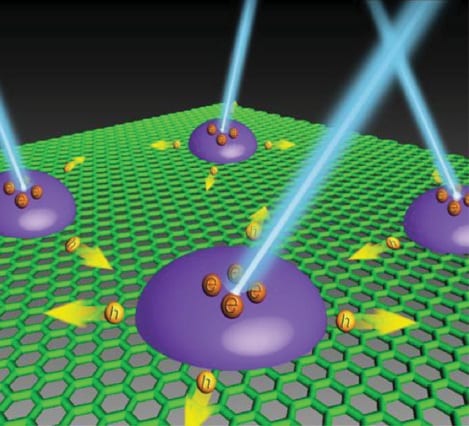
A group working on photodetectors has covered monolayer graphene with a thin layer of perovskite islands, leading to ultrahigh responsivity.

In this comprehensive review, the main research routes and technologies that are being followed to deliver high-performance electronic skin are discussed.
 New theory suggests gravity is not a fundamental force
 Higgs boson may be driving the Universe’s expansion
 Water-powered gadgets may be on the horizon thanks to new evaporation-based energy device
 Scientists discover a new class of antibiotics
 Micron-sized hidden dimensions could solve two of physics’ deepest puzzles
 Turning Periods into Power: Menstrual Blood a Valuable Resource for Medical Diagnostics