The future will witness a gradual shift in which computational models will play a progressively larger role in identifying new materials for specific purposes.
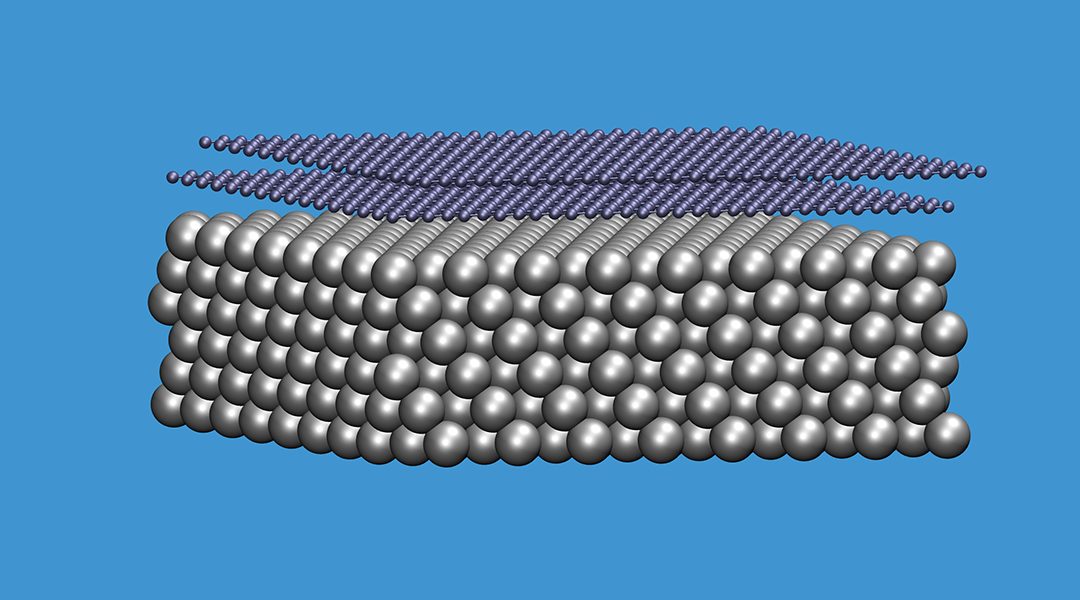

The future will witness a gradual shift in which computational models will play a progressively larger role in identifying new materials for specific purposes.

Taking a look at the past, present, and future of combinatorial chemistry in materials research.
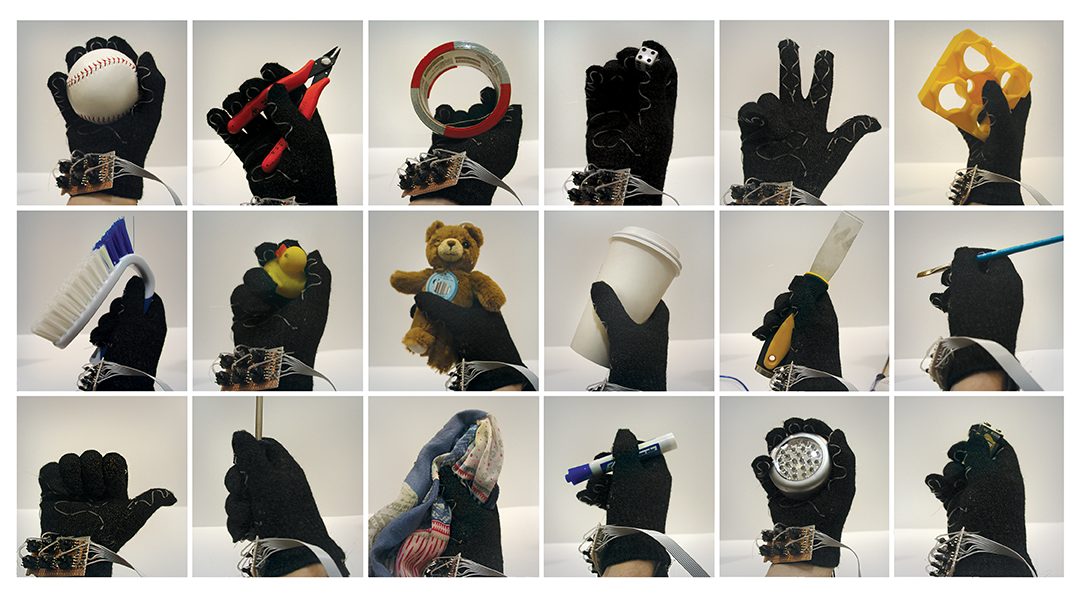
Using off-the-shelf components and simple fibre-based construction, a new smart glove captures the complex sensing and high-order reasoning of the human hand.

New quantum algorithms will have dramatic impact in computational molecular biology and bioinformatics and promise to impact a number of life science applications.

From cracking eggs to plating the finished dish, a team of engineers have trained a robot to prepare omelettes that actually taste good.

A team of data scientists has developed a general-purpose recommendation system for insurance based on Bayesian networks and deep learning.

Identifying patient-specific response to cancer immunotherapy is urgently needed to maximize therapeutic benefit for as many people as possible.

Controlling the probability of a series of seemingly random events is the key to mimicking the human brain to optimize neuromorphic learning.

A new, flexible, and self-powered sensor made by magnetoelectric materials can convert mechanical stimuli to electrical signals for robots with a “soft touch”.

Researchers have created and structured a collection of freely accessible global datasets to support future studies on floods, droughts, and their interactions with changing societies.

 Micron-sized hidden dimensions could solve two of physics’ deepest puzzles
 Turning Periods into Power: Menstrual Blood a Valuable Resource for Medical Diagnostics
 Surfactants Steer Supraparticle Structure
 Bone loss in obesity traced to gut microbiota
 Edible electronics realize safe, complex monitoring devices
 Fermilab Confirms Muon g-2 Measurements