Random mutagenesis of amelogenin creates a wide range of protein nanoparticles for biomedical applications.
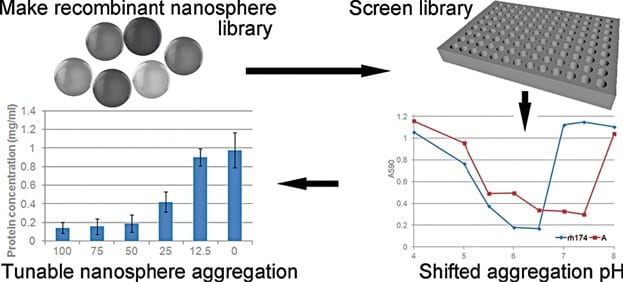

Random mutagenesis of amelogenin creates a wide range of protein nanoparticles for biomedical applications.
An outlook to the forthcoming MRS Spring Meeting, to be held from April 6-10, 2015 for the last time in San Francisco, California.
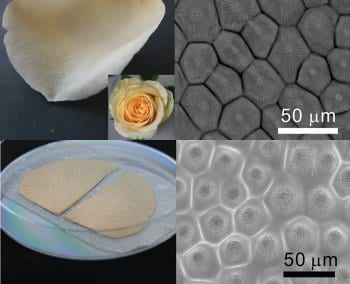
The use of natural substrates as masters to create elastomeric replicas for stretchable electronic devices is demonstrated.
A group seeks to reproduce the nanoparticle-synthesizing ability of magnetotactic bacteria.
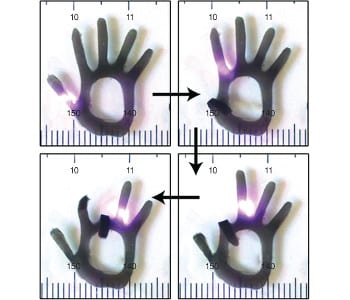
UC Berkeley researchers have published an overview of the use of mammalian elastin, collagen, insect-derived silk and resilin in biomaterials design.
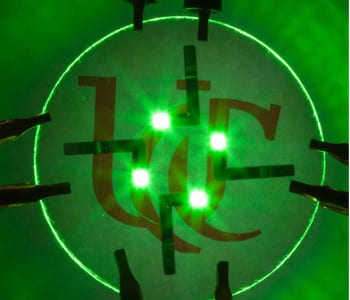
New research from an American group shows the incorporation of DNA and RNA bases in organic light emitting diodes.
The first issue in Macromolecular Bioscience is a special issue on “Peptide-based Materials for Nanomedicine” guest-edited by Neil Cameron and Tim Deming.
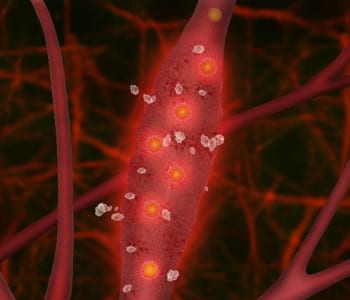
Researchers highlight the potential and current biological and biomedical applications of micro- and nanoparticle research.
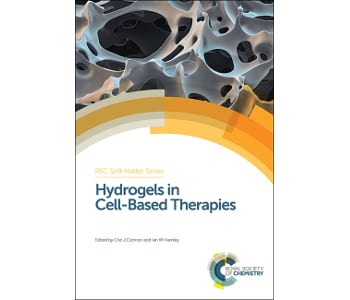
Professor Alexander Zelikin, Aarhus University reviews Hydrogels in Cell-Based Therapies from the RSC.
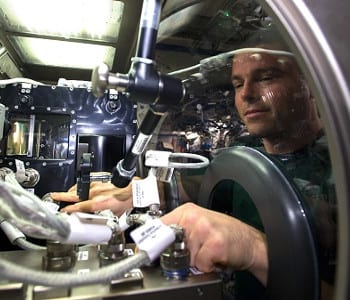
Fourth Capillary Channel Flow experiment on the ISS has successfully completed, revealing new possibilities for spaceflight technology and biomedicine.
 New theory suggests gravity is not a fundamental force
 Higgs boson may be driving the Universe’s expansion
 Water-powered gadgets may be on the horizon thanks to new evaporation-based energy device
 Scientists discover a new class of antibiotics
 Micron-sized hidden dimensions could solve two of physics’ deepest puzzles
 A new type of dark matter could explain mysterious radiation from the Milky Way’s core