New method allows researchers to directly measure nanoparticle degradation in real time within biological environments.
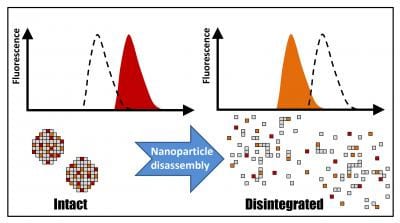

New method allows researchers to directly measure nanoparticle degradation in real time within biological environments.
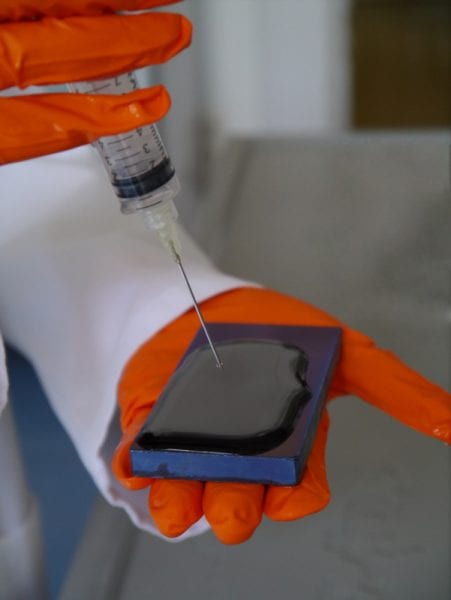
New gel to promote bone growth on implants used in orthopaedic and dental surgical procedures.
The need to develop biocompatible and biodegradable materials has intensified as the fields of bioengineering and regenerative medicine come of age.
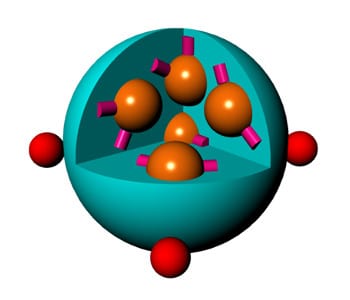
Korean scientists have developed a tumor-targeted, bioreducible nanoparticle system that can deliver cytotoxic anticancer drugs to tumor tissues.
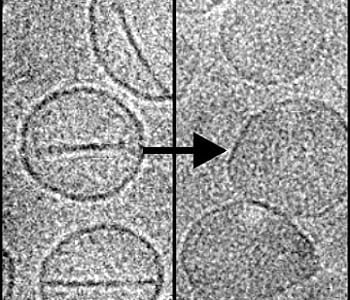
New drug delivery method targets cancer cells – not the entire body – and limits chemotherapy side effects.
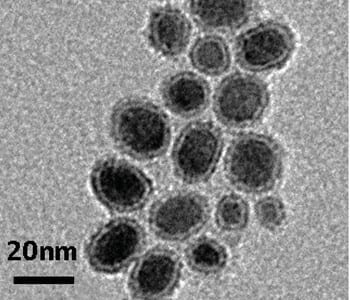
New core/shell structure nanoparticles have been reported by a team led by Peking University researchers.
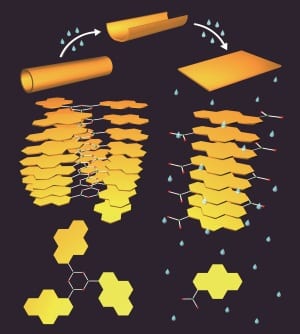
Structural transformations of nanoscale boroxines allow the controlled release of guest molecules.
A research team have coated biomaterial surfaces with a naturally expressed molecule that inhibit the inflammatory activation of immune cells.
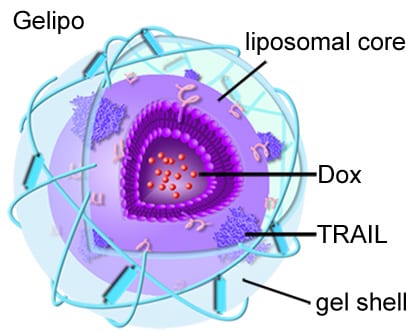
Nanoparticles can carry two different anti-cancer drugs and deliver them to separate parts of the cancer cell where they will be most effective.
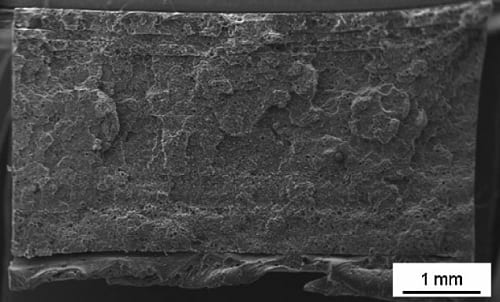
Researchers from Universities in Germany, Brazil, and Israel designed promising multilayer composites applicable as bone fracture fixation devices but also for other orthopedic applications.
 New theory suggests gravity is not a fundamental force
 Higgs boson may be driving the Universe’s expansion
 Water-powered gadgets may be on the horizon thanks to new evaporation-based energy device
 Scientists discover a new class of antibiotics
 Micron-sized hidden dimensions could solve two of physics’ deepest puzzles
 A new type of dark matter could explain mysterious radiation from the Milky Way’s core