Nanogold chains assemble into multifunctional micelles capable of a variety of biomedical applications.
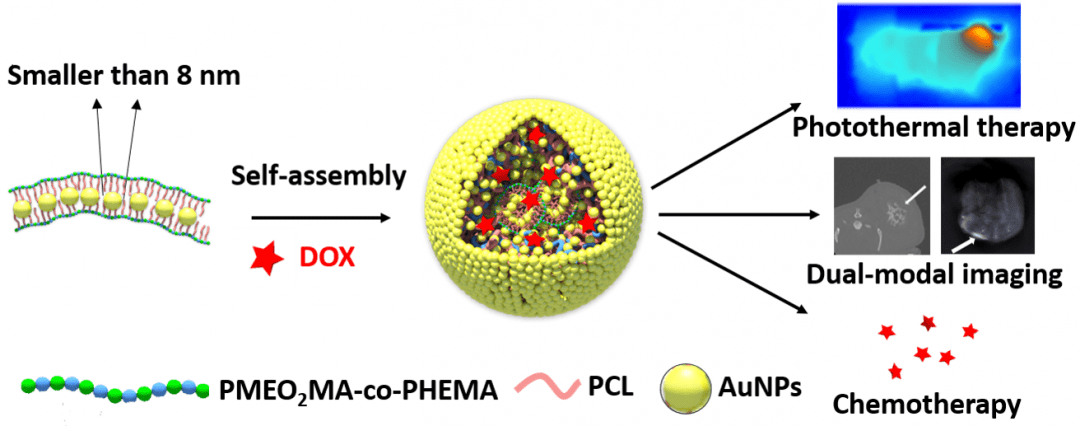

Nanogold chains assemble into multifunctional micelles capable of a variety of biomedical applications.
Based on a quick analysis of optical spectra, a practical approach for assessing the melanin and blood content of the skin was developed.
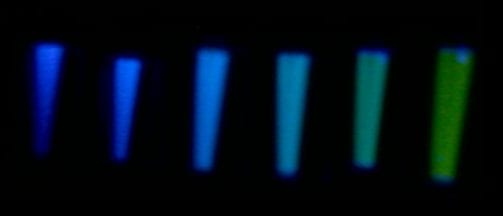
A team of researchers from Hefei, China use bee pollens in the synthesis of carbon dots with applications in bioimaging and catalysis.
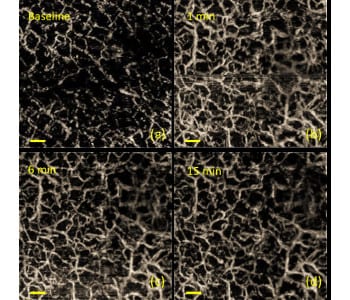
Optical microangiography (OMAG), based on optical coherence tomography, can be used to visualize the microvasculature network under inflamed skin condition.
A new approach enables rapid characterization of living suspension cells in 4 dimensions while they are immobilized and manipulated within optical traps.
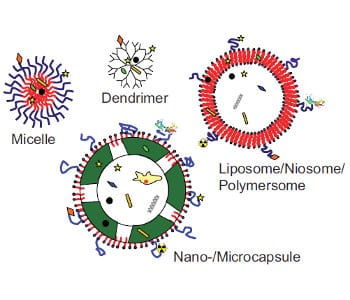
Anna Musyanovych and Katharina Landfester review the production and use of polymer-based drug carriers with particular focus on their use in biomedicine.
In the newest issue of Advanced Science, researchers from Nanjing expose the advantages of using conjugated polymer nanoparticles for DNA sensing.
A near-infraread-excitable persistent luminescence phosphor is synthesized using mesoporous silica nanoparticles as a template.
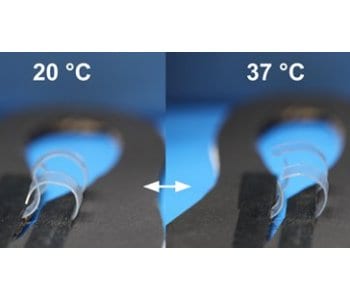
Researchers from Teltow (Germany) managed to shift the switching temperature of the reversible bidirectional shape-memory effect to the physiological range.
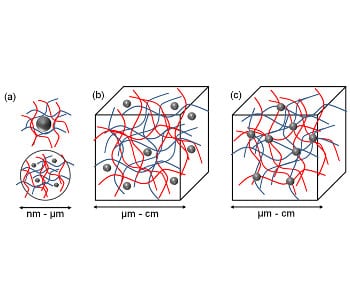
Nanoparticle-hydrogel composites have many potential uses. The new issue of Advanced Science reviews the concept, design, and application of such materials.
 French WEST reactor breaks record in nuclear fusion
 New theory suggests gravity is not a fundamental force
 Quantum entanglement visualized for the first time ever
 An anti-inflammatory peptide may hold the key to low-back pain relief
 “Cosmic vine” discovered by the James Webb Space Telescope
 Could a nuclear explosion set Earth’s atmosphere on fire?
 The Road to Better Presentation of Data: The Do’s and Don’ts
 The dramatic story behind general relativity’s Nobel Prize snub
 Calculating the true environmental costs of AI
 Ibuprofen’s effect on red blood cells: A prickly affair