Thin-film light absorbers are fabricated using an inkjet printer, and show power-conversion efficiencies of about 6.4%.
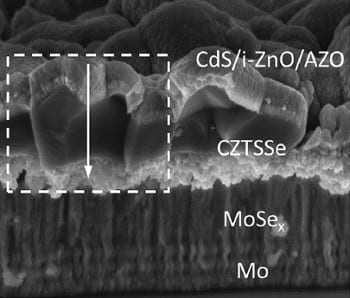

Thin-film light absorbers are fabricated using an inkjet printer, and show power-conversion efficiencies of about 6.4%.

Mercedes-Benz launches energy storage plants for private use.

Could we be living without fossil fuels in just 30 years time? Professor Geoff Ozin looks at the likelihood of such a Utopian vision of the future.
This review gives an overview how light-trapping mechanisms based on nanophotonics principles can enhance light absorption in thin-film solar cells.

Researchers have developed an innovative technique for depositing aluminum metal onto polymeric solar cells during large-scale roll-to-roll processing.
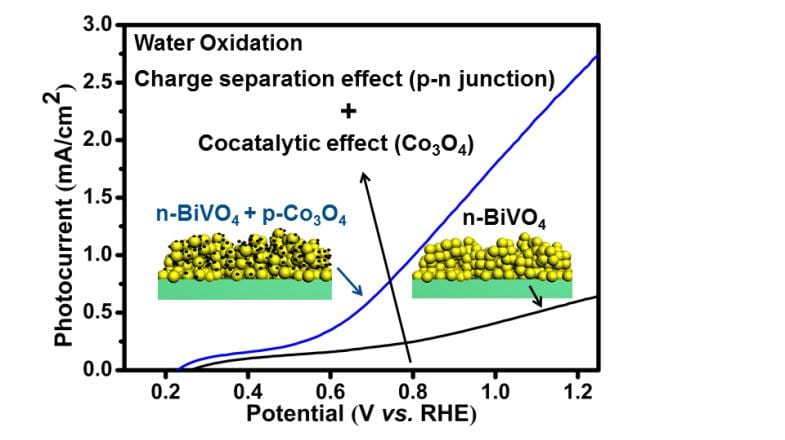
Prof. Jinlong Gong and his colleagues at Tianjin University are working on novel materials for photoelectrochemical water splitting.

The race is on to develop CO2-to-Fuel technology – in an invited editorial, Professor Ozin and co-workers give their view on the current state of the art.
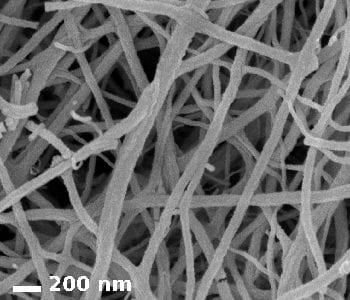
Prelithiated hematite nanofibers demonstrate exceptional cyclability as anodes towards high-powered Li-ion batteries for automotive applications.
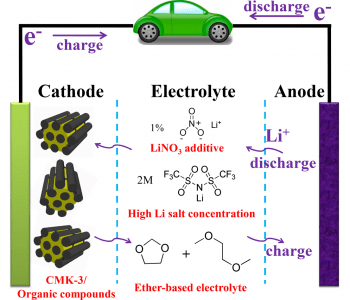
High performance organic Li-ion batteries have been demonstrated after optimization of the cathode, electrolyte, and protective additives.

Jim Yang Lee and colleagues have designed a clever method to apply the concept of traffic engineering to the electron transport in lithium-ion batteries.


 Micron-sized hidden dimensions could solve two of physics’ deepest puzzles
 Turning Periods into Power: Menstrual Blood a Valuable Resource for Medical Diagnostics
 Surfactants Steer Supraparticle Structure
 Bone loss in obesity traced to gut microbiota
 Edible electronics realize safe, complex monitoring devices
 Fermilab Confirms Muon g-2 Measurements