The properties of transparent glass sponges make them an ideal light source for photobioreactors for producing biofuels from algae.
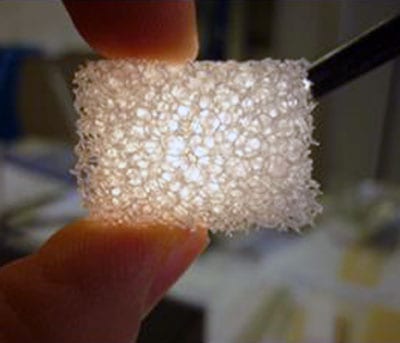

The properties of transparent glass sponges make them an ideal light source for photobioreactors for producing biofuels from algae.
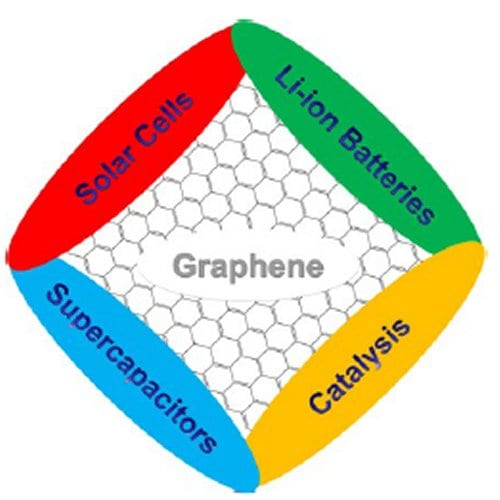
Graphene has the potential to solve many issues in vital energy research.

A giant magnetocaloric effect may increase performance in magnetic refrigeration and energy-conversion devices.

In situ crosslinked and n-doped semiconducting polymers are efficient electron-transporting materials in inverted polymer solar cells.

Research into waste management is a major part of international nuclear policy. New work offers an in-depth look into one solution, glasses.

Franco Cacialli talks to MaterialsViews about his research on supramolecular architectures, his recent book, and his coolest discovery.

Professor Geoffrey Ozin discusses what he believes may be the largest challenge of the century—the development of an artificial photosynthetic machine.
Carbon nanotube-enzyme composite electrodes are applied in glucose biofuel cells.
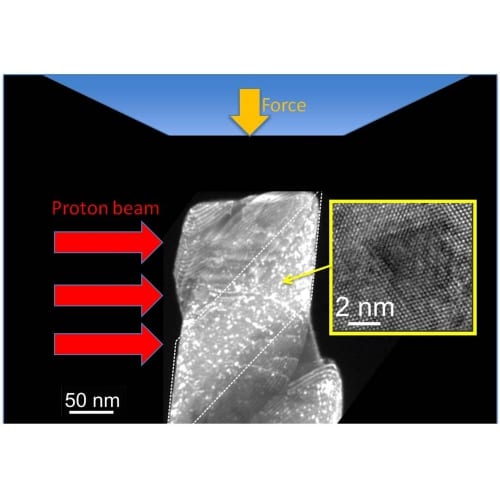
A new method for testing irradiated materials on the nanoscale could reduce the risk of a repeat of the recent events in Fukushima

The addition of extremely small crystals to solid electrolyte material has potential to raise the efficiency of fuel cells. Researchers at TU Delft were the first to document this accurately.

 Micron-sized hidden dimensions could solve two of physics’ deepest puzzles
 Turning Periods into Power: Menstrual Blood a Valuable Resource for Medical Diagnostics
 Surfactants Steer Supraparticle Structure
 Bone loss in obesity traced to gut microbiota
 Edible electronics realize safe, complex monitoring devices
 Fermilab Confirms Muon g-2 Measurements