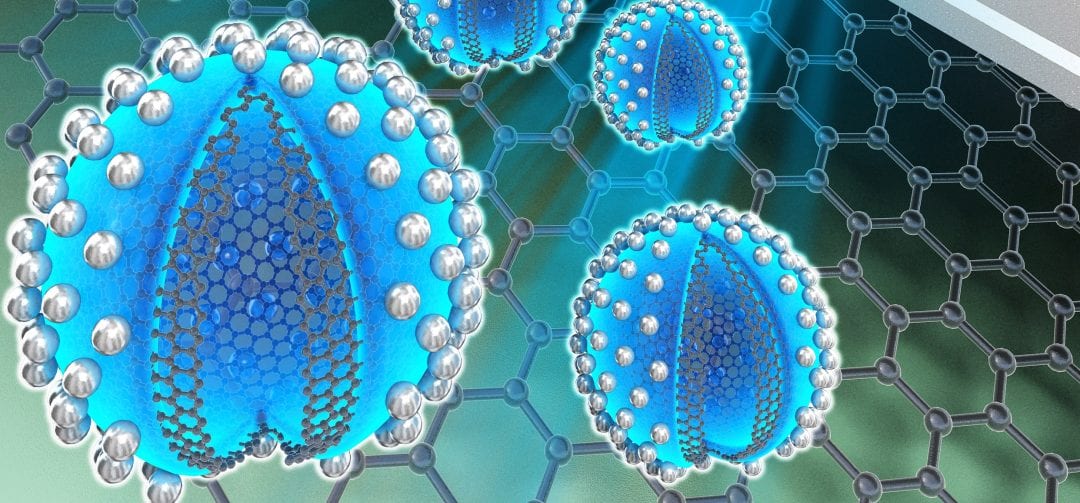
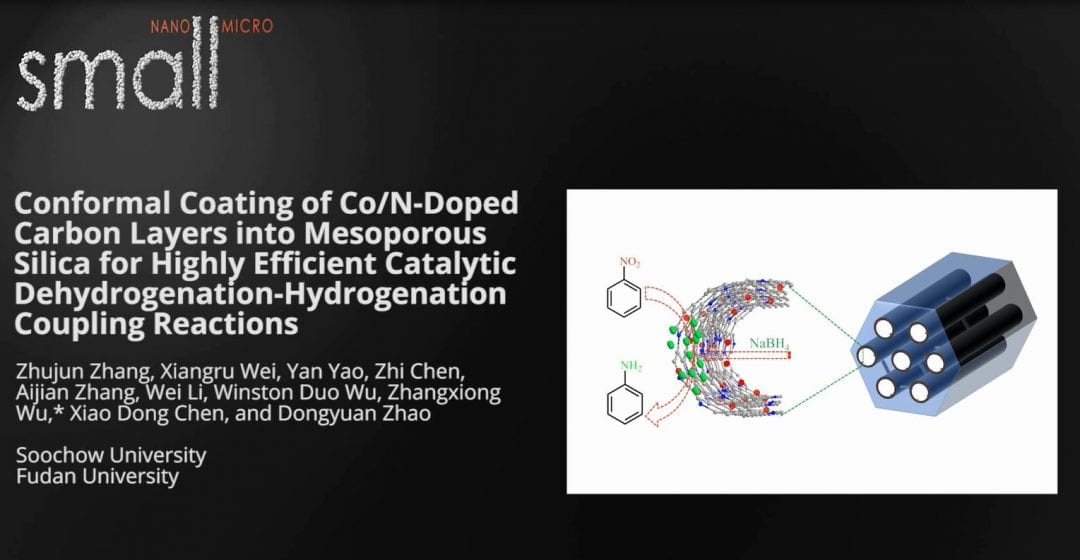
Researchers from the Suzhou Key Laboratory of Green Chemical Engineering, Soochow University, and from the State Key Laboratory of Molecular Engineering of Polymers, Fudan University, develop a one-step, solvent-free method to prepare a high-performance heterogeneous catalyst. The cobalt-based catalyst is highly dispersible in water and is effective for the tandem sodium borohydride dehydrogenation and nitrobenzene hydrogenation at room temperature.
New from Old: Auspicious Renewable Raw Material
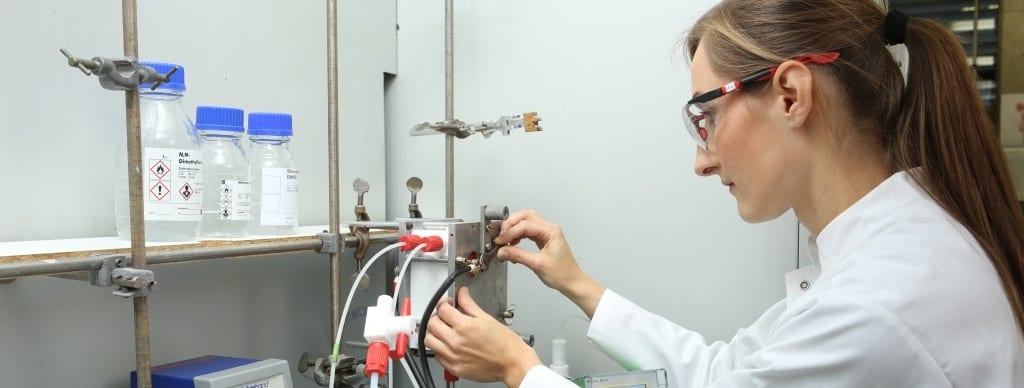
Waste from paper and pulp industry supplies raw material for the development of new redox flow batteries.
Confererence Report: TEDx Berlin
This year’s edition of TEDx Berlin, entitled “FOCUS”, was held on September 3rd and encompassed three sessions with invited speakers in different topics covering Digital Life and its challenges. Image copyright TEDxBerlin 2017.
Thermal Runaway-Induced Rupture Mechanisms of Lithium Ion Batteries
Batteries from a variety of manufacturers are examined using high-speed X-ray imaging to determine their failure mechanisms during thermal runaway.
Printing Flexible Graphene Supercapacitors
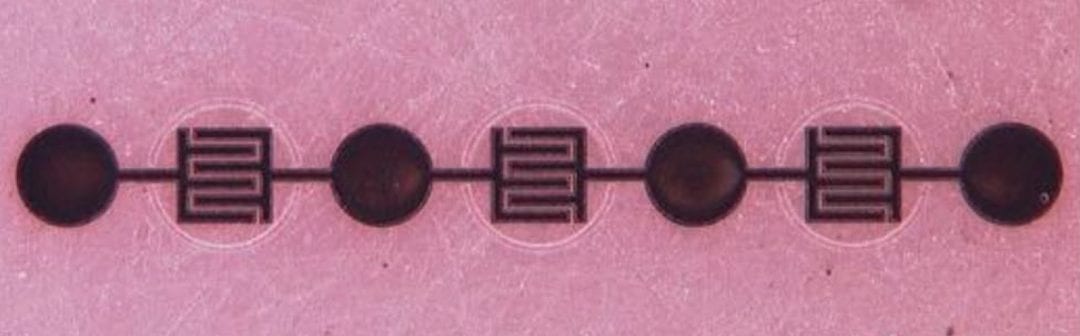
A new printing method produces flexible graphene microsupercapacitors with a planar architecture, suitable for integration in portable electronic devices.
Improving Sputtering Deposition for Better Photovoltaics
A new technique renders the low-cost process of sputtering a highly competitive fabrication method for photovoltaics.
Flexible Solar Cell for Wearable Electronics Produced by Green Printing Process
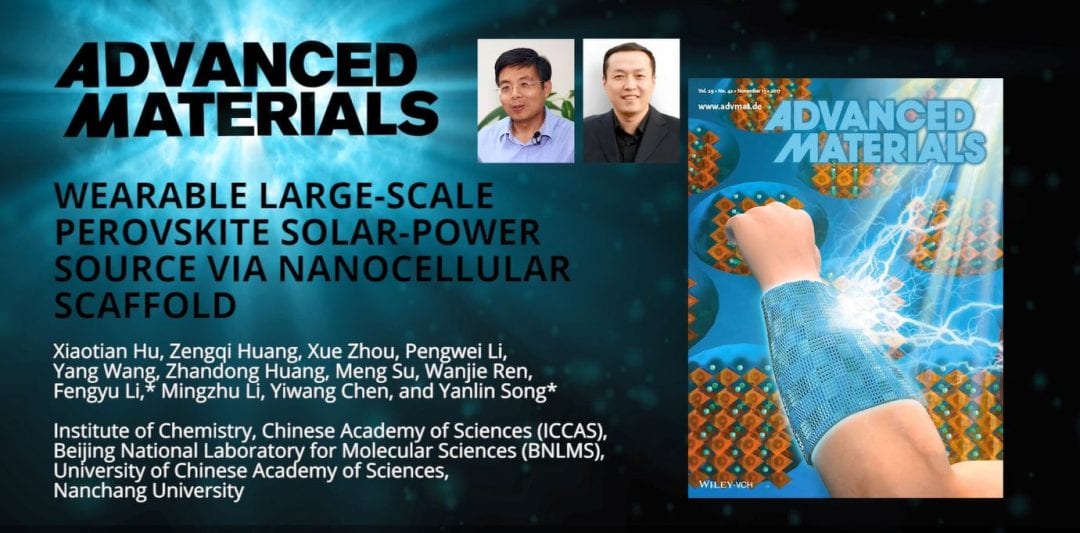
Fengyu Li and Yanlin Song from the Chinese Academy of Sciences, along with their co-workers, have designed high-performance flexible perovskite solar cells (PSCs) for wearable electronics using green printing technology.
Advanced Interface Materials: Don’t Miss These Highlights
AMI presents the impressive covers of its current issue, highlighting electrochemistry, acoustic streaming, superhydrophobicity, and precision APT.
Robust Nickel Composite for Lithium Ion Batteries
Researchers from Sun Yat-sen University, China, prepare a composite based on nickel nitride and sulfide nanosheets as the anode material for lithium ion batteries. The composite has enhanced cycle stability and lithiation capacity compared to the nitride and sulfide alone.
Low-Cost Battery from Waste Graphite
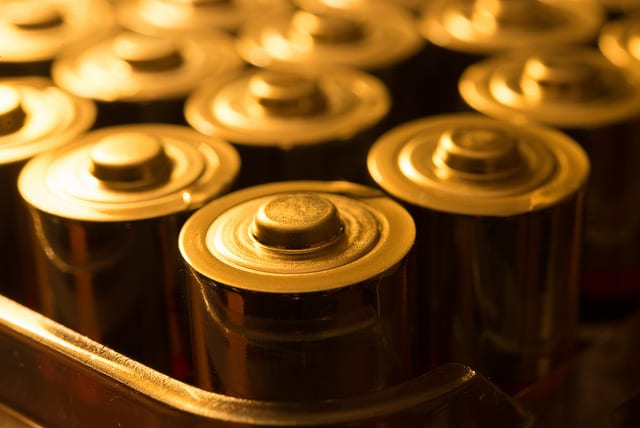
Swiss researchers have discovered a promising approach to how we might produce batteries out of waste graphite and scrap metal.