Directional motion and transport can be achieved using a salt concentration gradient and an appropriately designed self‐assembling system, without substantial synthetic effort or a matrix.
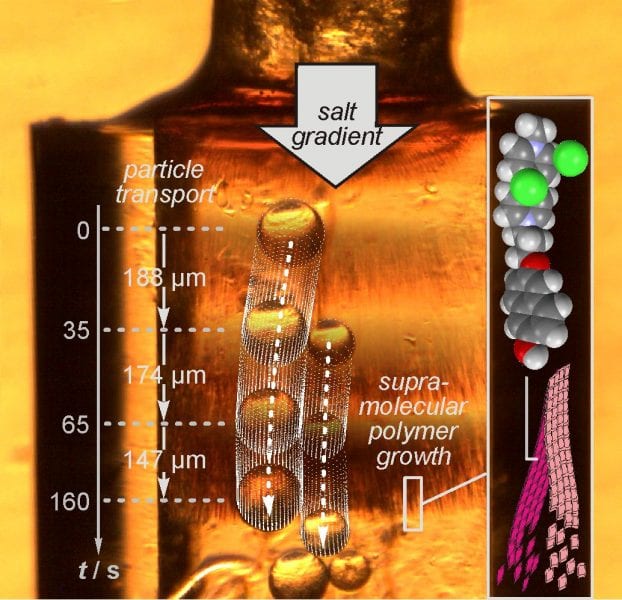

Directional motion and transport can be achieved using a salt concentration gradient and an appropriately designed self‐assembling system, without substantial synthetic effort or a matrix.
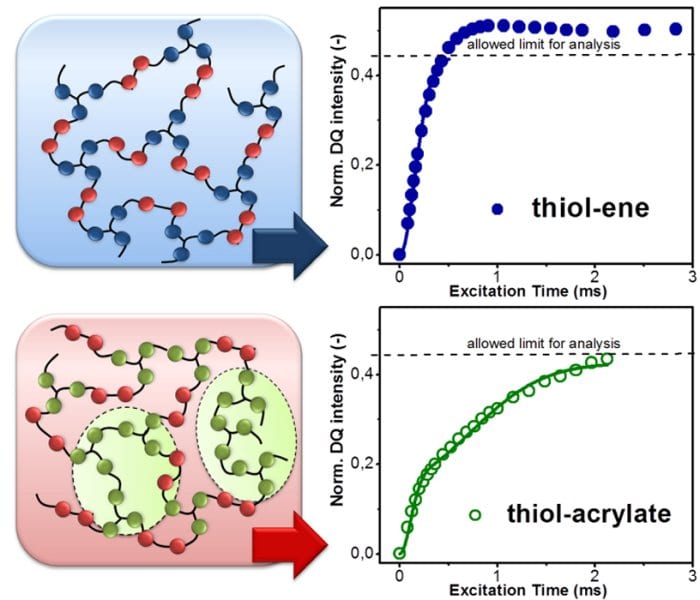
Thiol-ene photopolymers provide a uniform network structure due to the well-defined step-growth mechanism of the photopolymerization between thiol and alkene monomers.
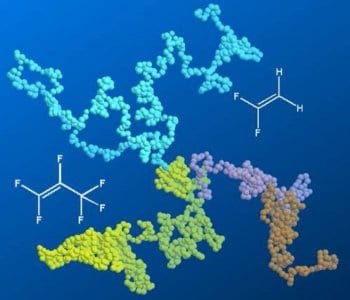
A self-avoiding random walk simulator for branched polymers allows to compare experimental data with simulation results.
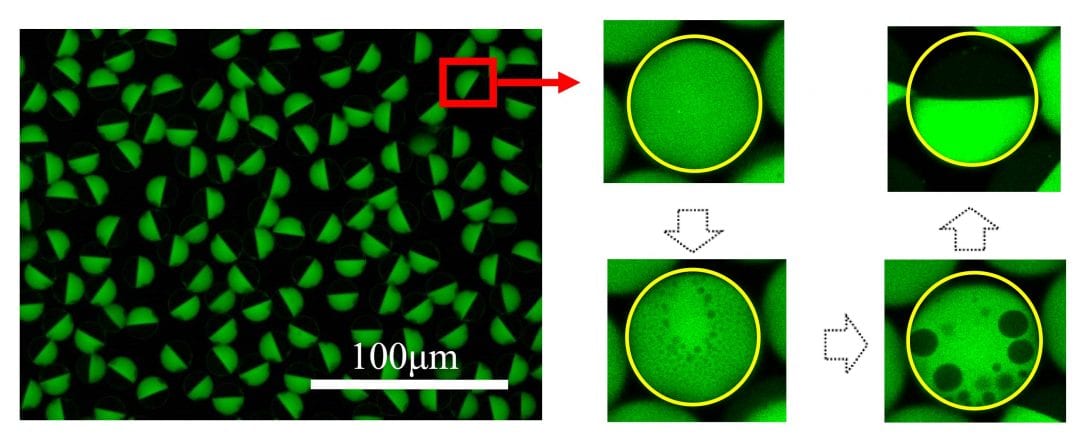
Researchers report on a new approach to generate Janus droplets.
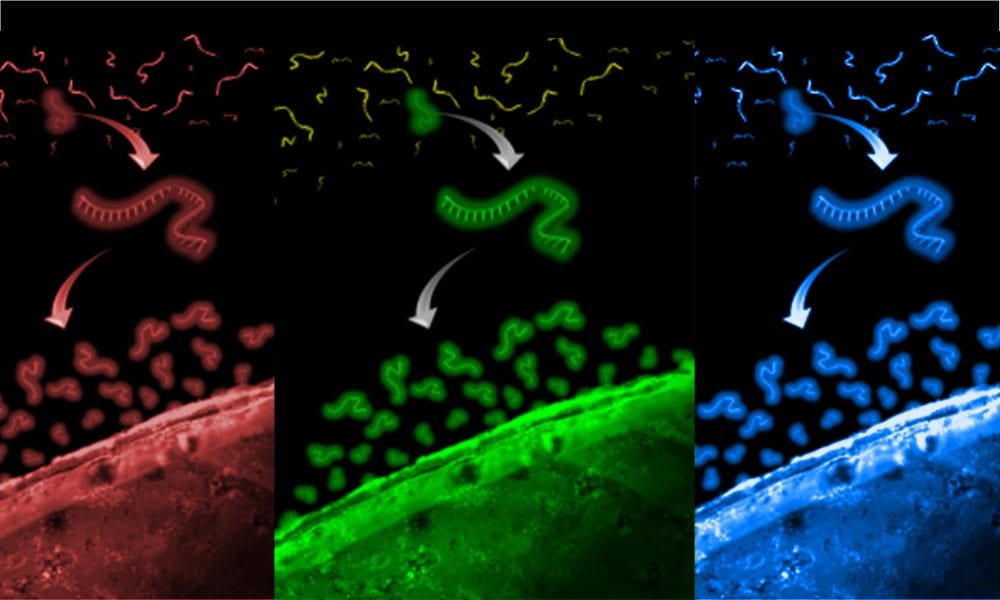
The group of Prof. Lendlein searched for polymer binding aptamers, which are able to selectively bind to specific material surfaces.
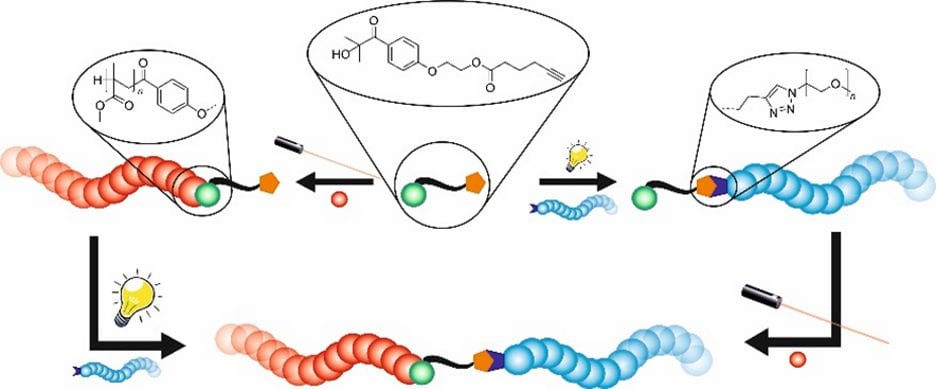
In a recent Communication in Macromolecular Rapid Communications, a study explores the possibility to control reactions by means of irradiation with specific wavelengths of light.
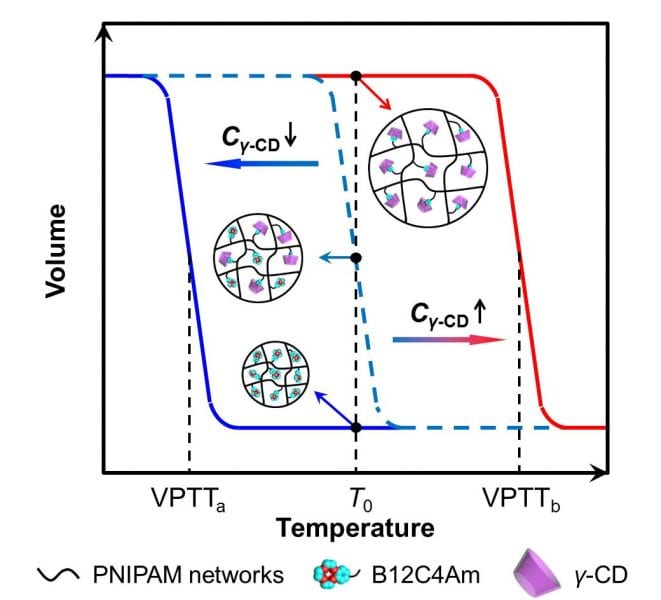
Combining the ion-recognition ability of crown ether units and the thermo-induced volume change behavior of poly(N-isopropylacrylamide) polymers, different kinds of ion-responsive hydrogels are developed.
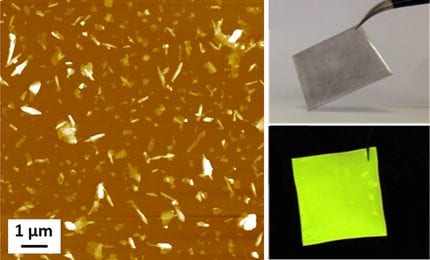
A multidisciplinary group led by Andrea Liscio at CNR, Bolgna, Italy, has reported that adding aromatic surfactants promotes the exfoliation of few-layers graphene nanosheets in low-boiling organic solvents.

The October issue of Macromolecular Symposia is dedicated to the 13th Brazilian Polymer Conference.
Nominations open for the 2017 Journal of Polymer Science innovation award.
 New theory suggests gravity is not a fundamental force
 Higgs boson may be driving the Universe’s expansion
 Water-powered gadgets may be on the horizon thanks to new evaporation-based energy device
 Scientists discover a new class of antibiotics
 Micron-sized hidden dimensions could solve two of physics’ deepest puzzles
 A new type of dark matter could explain mysterious radiation from the Milky Way’s core