Researchers are developing algorithms and machine learning methods to further our understanding of the quantum state space.
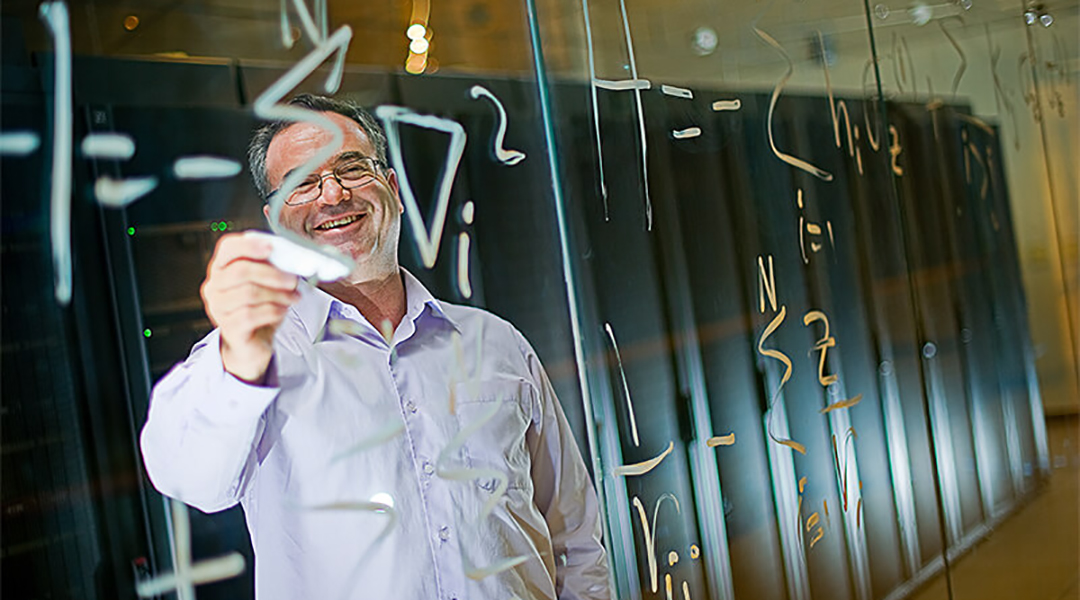

Researchers are developing algorithms and machine learning methods to further our understanding of the quantum state space.

Strong light-matter coupling is a new tool to mold chemical reactivity and material properties that intertwine material science and quantum mechanics.

An updated overlook at one of the most promising building blocks for quantum technologies: fast and efficient single photon detectors.
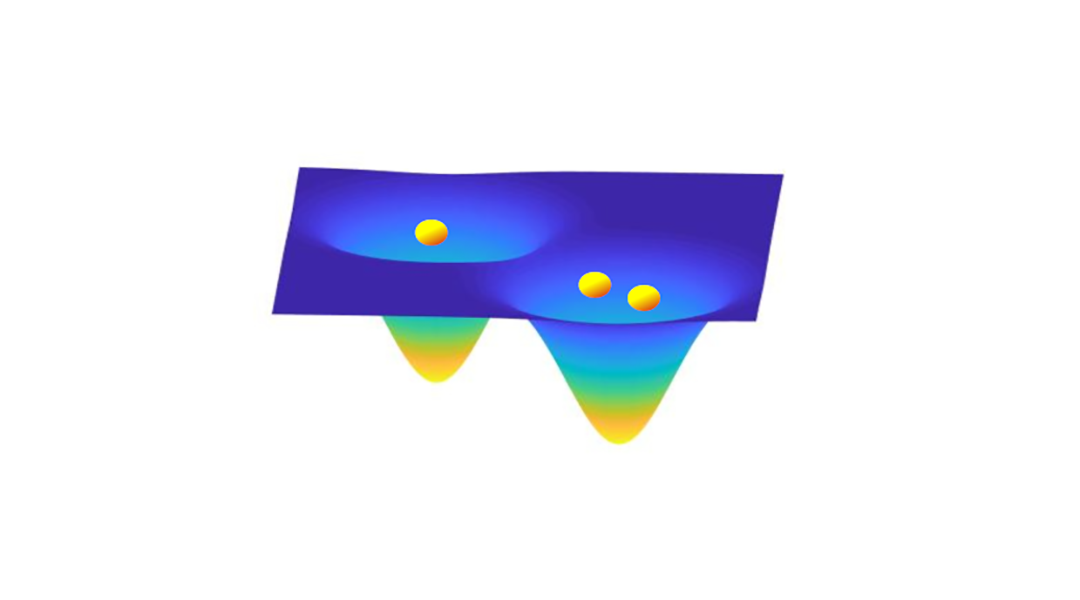
Predicting the experimental conditions that enhance coherence times for semiconducting quantum dot hybrid qubits.

A novel scheme for an ultrafast generation of a toroidal moment and a field-free vector potential is uncovered.

A quantum autoencoder via approximate quantum adders in the Rigetti cloud quantum computer is carried out employing up to three qubits.
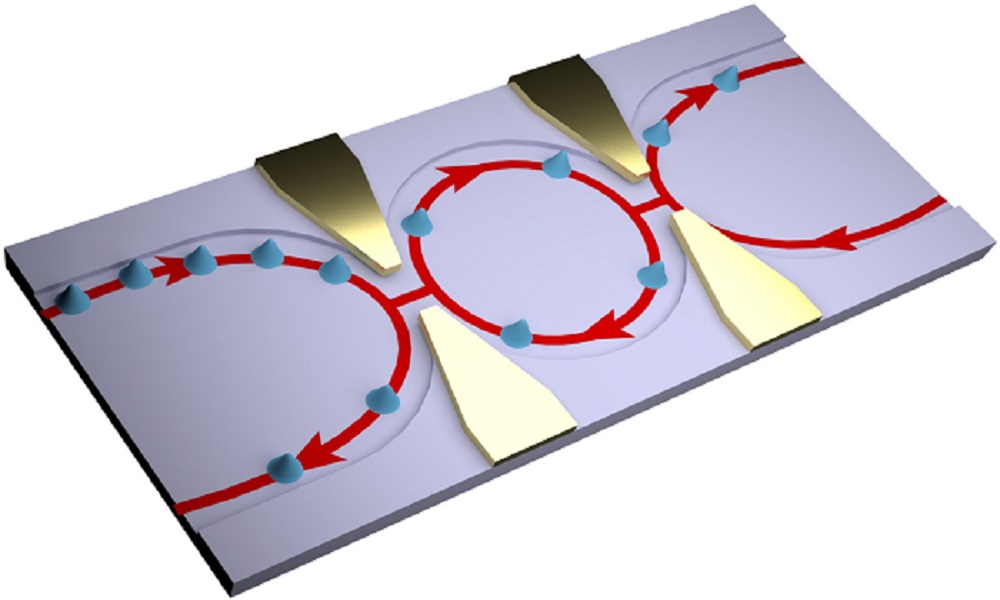
A train of single-electrons propagating on top of the Fermi sea of a mesoscopic conductor can be used for time-domain spectroscopy of quantum-coherent structures.

A theoretical study of electronic transport in a hybrid junction consisting of an excitonic insulator sandwiched between a normal and a superconducting electrode.

A useful guide for beginners in the field and a helpful reference for CV-QKD experimentalists who want to deepen their theoretical understanding of their setup.

Ultrafast generation of a field‐free vector potential that is tunable in duration, sign, and magnitude, allowing to impart non‐invasive, spatiotemporally controlled changes to the quantum nature of nanosystems.
 New theory suggests gravity is not a fundamental force
 Higgs boson may be driving the Universe’s expansion
 Water-powered gadgets may be on the horizon thanks to new evaporation-based energy device
 Scientists discover a new class of antibiotics
 Micron-sized hidden dimensions could solve two of physics’ deepest puzzles
 A new type of dark matter could explain mysterious radiation from the Milky Way’s core