A simple, robust, and versatile way of molding all-liquid objects with potential applications in materials and life sciences.

A simple, robust, and versatile way of molding all-liquid objects with potential applications in materials and life sciences.
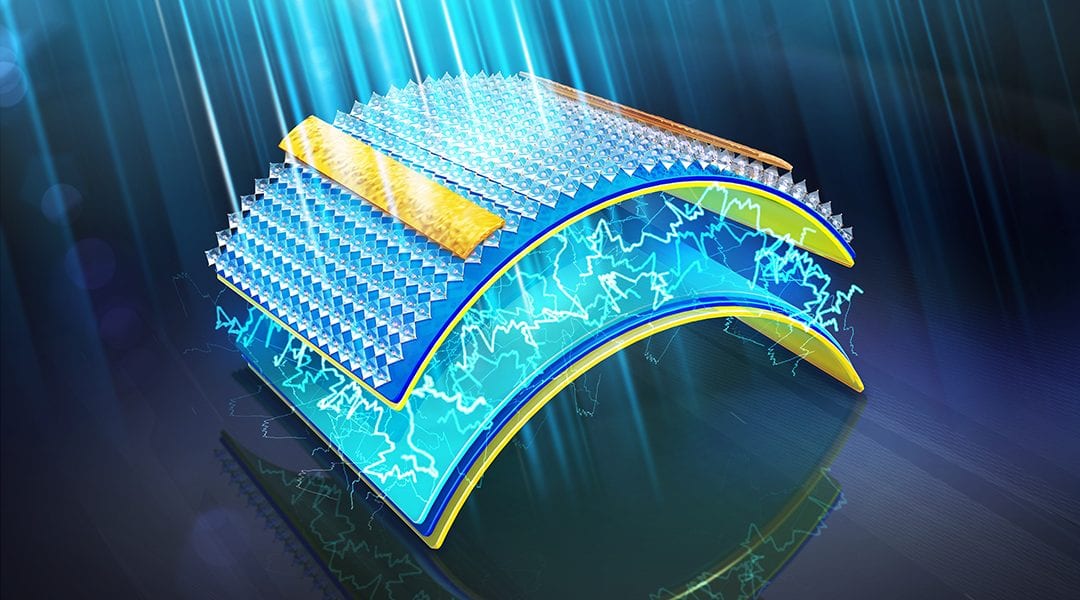
Next-generation electronics should be wearable, versatile, and energy-efficient. A new sensor systems combined with a triboelectric nanogenerator provides an excellent solution.

Self-healing of a phase change memory device with a metallic surfactant layer opens up new pathways in storage class memory.

Science fact catches up with science fiction: by exploiting magnetic levitation, biomanufacturing – creating living 3D structures – is now possible in zero gravity. Utkan Demirci discusses how this works.

Researchers in Barcelona have proposed a new mechanism for bone repair. They hope that the work might pave the way for advances in self-healing prostheses.
Special AM30 Symposium at NANO2018 in Hong Kong.

A hybrid thermochromic window coating with excellent visible transmittance and thermochromic performance at room temperature, opens new directions in plasmonic coatings.

Complex micro and nanodevices are fabricated using a simple strategy that enables sophisticated architectures to be produced.
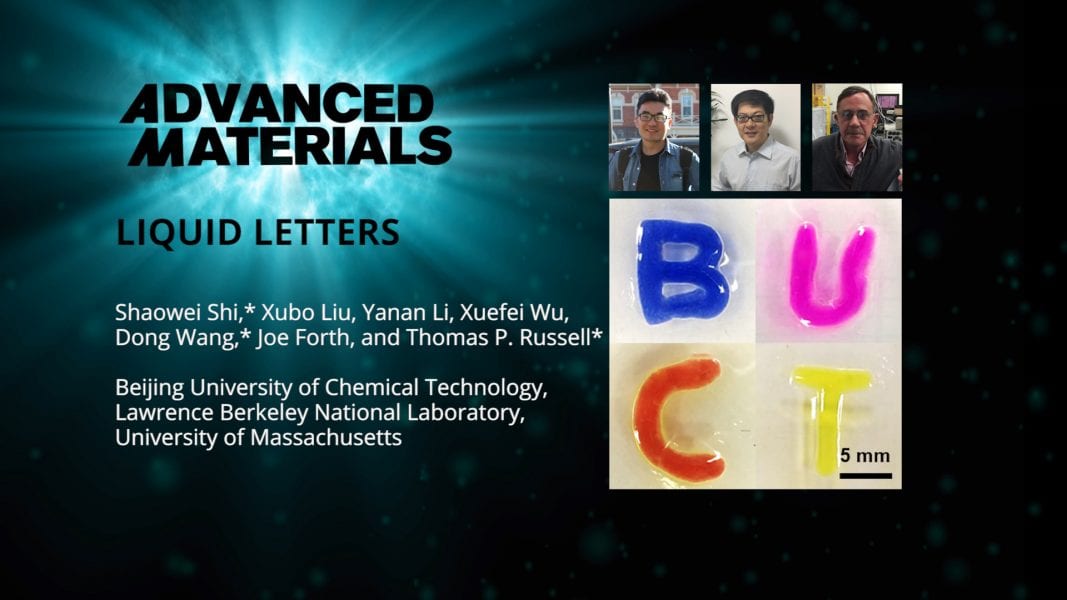
A team of researchers develop a unique molding process for generating all-liquid structures via interfacial jamming of cellulose nanocrystal (CNC) surfactants. The structures have long-term stability and can adapt or respond to external stimuli, allowing for potential applications in encapsulation, sensors, and liquid electronic devices.
Jingbi You explains how precisely adjusting the stoichiometry of planar architectures can affect the performance of perovskite devices, toward a PCE of over 21%.

 Micron-sized hidden dimensions could solve two of physics’ deepest puzzles
 Turning Periods into Power: Menstrual Blood a Valuable Resource for Medical Diagnostics
 Surfactants Steer Supraparticle Structure
 Bone loss in obesity traced to gut microbiota
 Edible electronics realize safe, complex monitoring devices
 Fermilab Confirms Muon g-2 Measurements