Researchers create green biocomposites for flexible, wearable electronic devices.


Researchers create green biocomposites for flexible, wearable electronic devices.

In this essay, scientists from Spain and Denmark delve into the spectrum of possibilities offered by wearable and implantable healthcare devices and provide new insight into the cyborganic era.

Researchers have found a way to produce advanced functional fabrics while retaining the wearability and durability of everyday fabrics.

Researchers create a soft robotic electronic skin with fingerprint-like patterns with future applications in prosthesis, wearable sensors, and medical devices.

A new study reports liquid-phase exfoliation of graphene, boron nitride, and tungsten disulphide nanosheets using Irish whiskey.

Thin, soft, and stretchable gallium-based sensors to accurately monitor human hand kinematics.
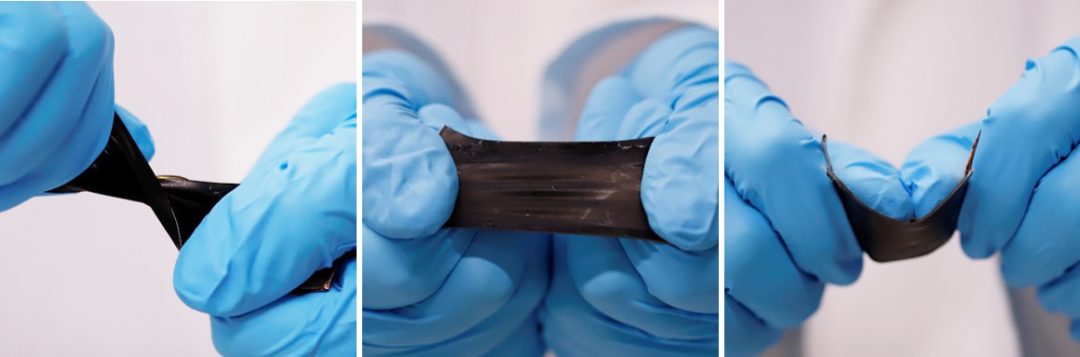
A Swiss team of researchers has developed an innovative new approach to creating flexible batteries using stretchable materials.

Researchers reproduce the soft, stretchable, and smart skin of cephalopods.

Physically connecting various sensors into a single intelligent system could bring AI closer to the sensing capacity of living creatures.

Graphene forms the basis of the world’s smallest accelerometer a team of scientists in Sweden and Germany has recently developed
 New theory suggests gravity is not a fundamental force
 Higgs boson may be driving the Universe’s expansion
 Water-powered gadgets may be on the horizon thanks to new evaporation-based energy device
 Scientists discover a new class of antibiotics
 Micron-sized hidden dimensions could solve two of physics’ deepest puzzles
 A new type of dark matter could explain mysterious radiation from the Milky Way’s core