Professor Ozin explores the feasability of a solar refinery for making fuels and chemicals from CO2, H2O and sunlight.
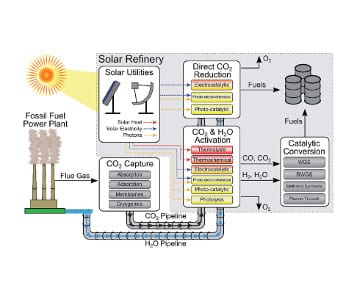

Professor Ozin explores the feasability of a solar refinery for making fuels and chemicals from CO2, H2O and sunlight.
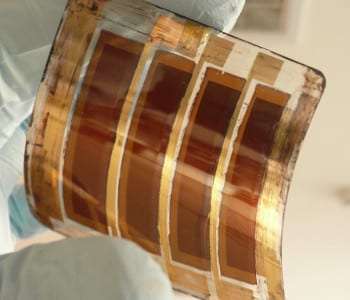
Newly published research describes the development and combination of low temperature deposition and processing techniques for perovskite devices.
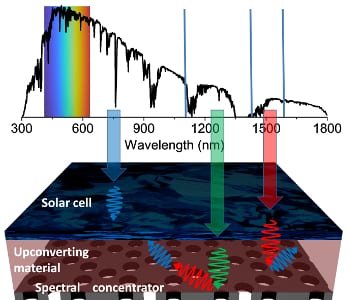
A research consortium from the UK, Spain, France and Germany is using photonic crystals to improve silicon photovoltaic performance.
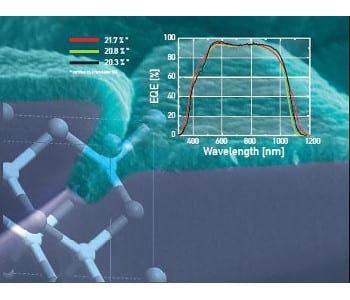
ZSW Stuttgart, Germany, has recently presented CIGS solar cells with conversion efficiencies up to 21.7%.
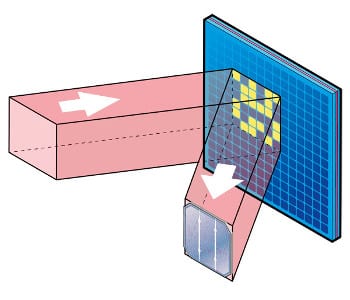
Scientists NPL have developed a new method for detecting defects in solar cells using a technique called ‘compressed sensing’.
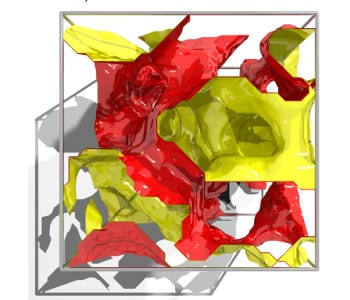
A new electrostatic model has been developed, which treats electrons and holes not as point charges or an average electrostatic density, but as delocalized Gaussian spheres.
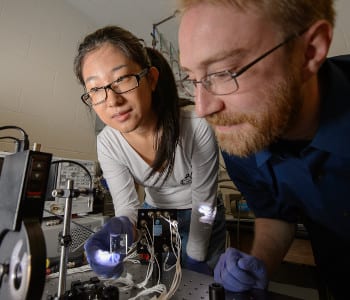
A team of researchers at Michigan State University has developed a new type of transparent solar concentrator.
High dielectric constant polymer solar cells found to behave as efficiently as their inorganic counterparts.
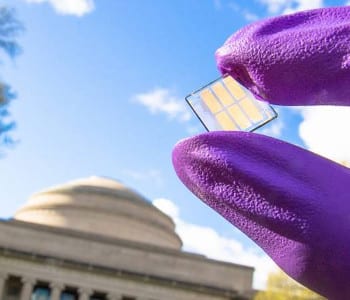
Rate of improvement of quantum dot devices is one of the most rapid seen for a solar technology.
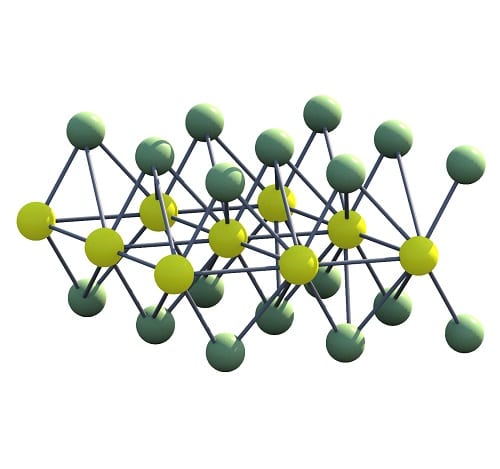
Ultrathin layers made of tungsten and selenium may be used as flexible, semi-transparent solar cells.
 New theory suggests gravity is not a fundamental force
 Higgs boson may be driving the Universe’s expansion
 Water-powered gadgets may be on the horizon thanks to new evaporation-based energy device
 Scientists discover a new class of antibiotics
 Micron-sized hidden dimensions could solve two of physics’ deepest puzzles
 A new type of dark matter could explain mysterious radiation from the Milky Way’s core